
History & Geography of Bhutan
Bhutan, officially known as the Kingdom of Bhutan, is a small, landlocked country nestled in the eastern Himalayas between India to the south and China (Tibet Autonomous Region) to the north. Despite its size, Bhutan possesses a rich history, deep spiritual traditions, and extraordinary geographical diversity that have shaped its unique identity.
Early History and the Arrival of Buddhism
Bhutan’s early history is deeply connected to the introduction and spread of Tantric Buddhism in the Himalayan region. Before the arrival of Buddhism, the people of Bhutan practiced Bon, an ancient indigenous belief system centered on nature and spirits.
In the 8th century, the great Buddhist master Guru Rinpoche (Padmasambhava) played a decisive role in establishing Buddhism in Bhutan. Guru Rinpoche traveled through Bhutan and spread Buddhist teachings. His visit is considered a spiritual turning point in Bhutanese history.
Earlier, in the 7th century, Tibetan King Songtsen Gampo had already laid the groundwork for Buddhism by constructing temples such as Kyichu Lhakhang in Paro and Jampa Lhakhang in Bumthang. Together, the contributions of Songtsen Gampo and Guru Rinpoche firmly rooted Buddhism in Bhutan, shaping the country’s spiritual, cultural, and historical identity.
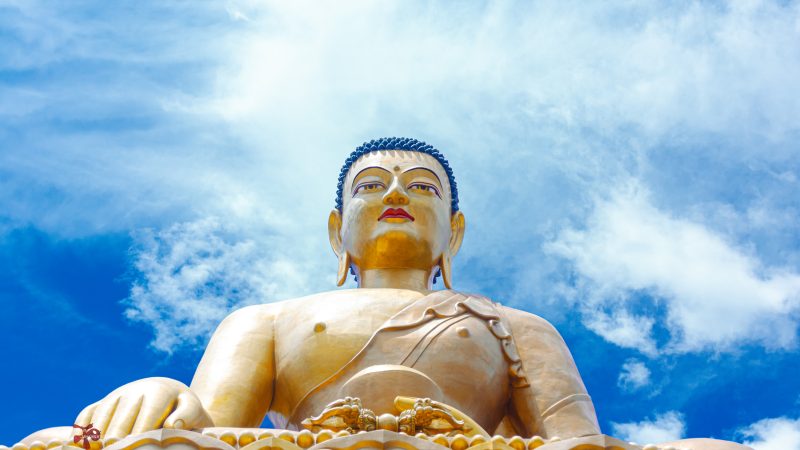
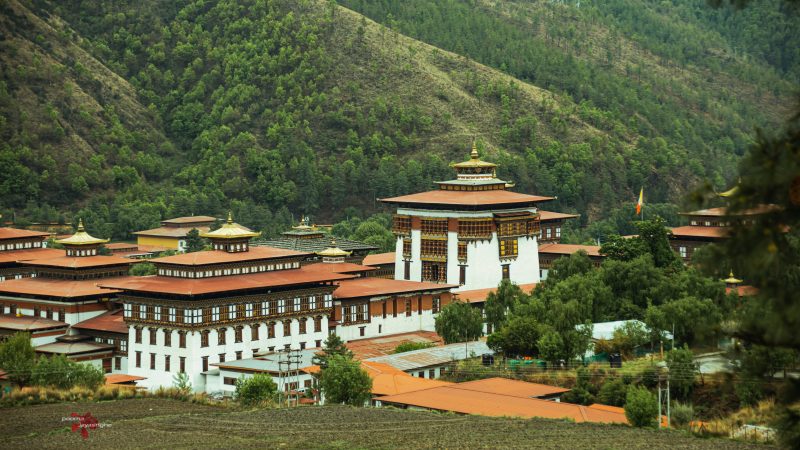
The Arrival of Zhabdrung Ngawang Namgyal
The most defining figure in Bhutanese history is Zhabdrung Ngawang Namgyal, who arrived in Bhutan in 1616. He unified the country for the first time, established a dual system of governance (religious and administrative), and constructed many of the iconic dzongs (fortress-monasteries) that still serve as centers of administration and religion today. His leadership laid the foundation for Bhutan as a sovereign state.
Death of Zhabdrung Ngawang Namgyal and Aftermath
The death of Zhabdrung Ngawang Namgyal in 1651 marked a significant turning point in Bhutanese history. To preserve political stability, his death was kept secret for many years. During this period, Bhutan was governed in his name, maintaining the systems he had established. Eventually, however, the absence of a strong unifying figure led to internal fragmentation.
Power struggles emerged between regional governors (penlops) and district administrators (dzongpons), weakening central authority. Multiple claimants to the reincarnation of the Zhabdrung further divided religious and political leadership, resulting in prolonged internal rivalry.
Rising Hostilities and External Conflicts
As internal divisions grew, Bhutan faced increasing external hostilities, particularly along its southern borders. Conflicts with neighboring regions, including Cooch Behar and later British India, intensified during the 18th and 19th centuries. Control over the fertile Dooars plains became a major source of tension.
A series of confrontations with British forces culminated in the Anglo-Bhutan War of 1864–1865. Bhutan’s internal instability at the time made it difficult to resist external pressure, leading to significant territorial and political consequences.
The Treaty of Peace and Friendship
The conflict with British India formally ended with the signing of the Treaty of Sinchula in 1865, often referred to as a treaty of peace and friendship. Under this treaty, Bhutan ceded control of the Dooars region to British India in exchange for an annual subsidy. While the treaty reduced Bhutan’s territorial extent, it also brought an end to prolonged hostilities and established a framework for diplomatic relations.
Later, Bhutan signed the Treaty of Friendship with India in 1949, which reaffirmed peaceful relations following India’s independence. This treaty recognized Bhutan’s sovereignty while establishing close cooperation in foreign affairs and defense. It laid the foundation for the enduring and friendly relationship between Bhutan and India that continues today.
Formation of the Monarchy
In 1907, Bhutan transitioned from a theocratic system to a monarchy with the coronation of Ugyen Wangchuck as the first Druk Gyalpo (Dragon King). Since then, the Wangchuck dynasty has guided Bhutan through gradual modernization while preserving its cultural heritage.
Modern Bhutan
Bhutan opened to the outside world only in the mid-20th century. The country joined the United Nations in 1971 and adopted a democratic constitutional monarchy in 2008. Bhutan is globally admired for its development philosophy of Gross National Happiness (GNH), which prioritizes well-being, culture, and environmental conservation over economic growth alone.
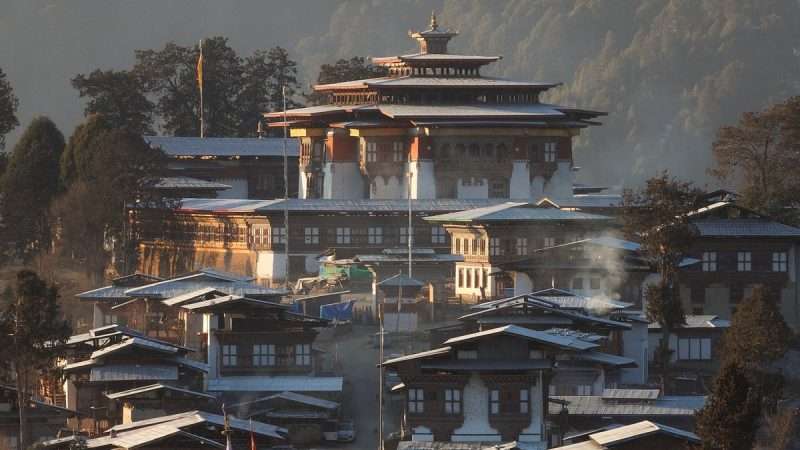
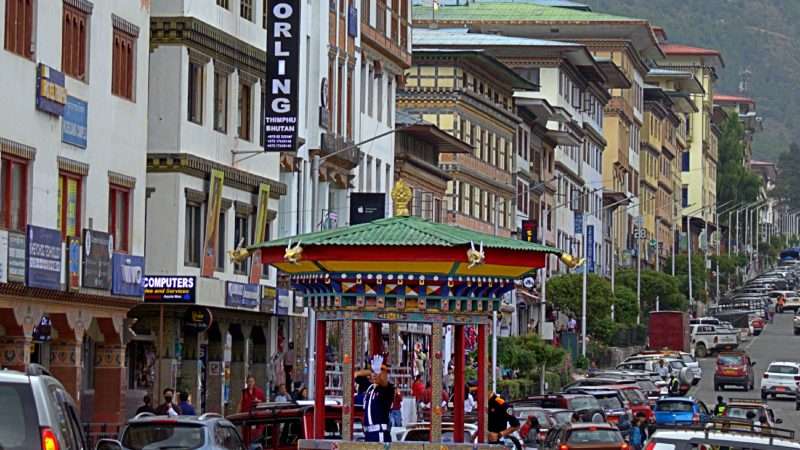
Geography of Bhutan
Location and Landscape
Bhutan lies in the Eastern Himalayas, covering an area of about 38,394 square kilometers. Its geography is dramatic and varied, ranging from subtropical plains in the south to snow-capped Himalayan peaks in the north.
Three Main Geographic Zones
Bhutan can be broadly divided into three distinct regions:
- Southern Foothills
- Low-lying plains with a subtropical climate
- Dense forests and fertile land
- Home to wildlife such as elephants, leopards, and hornbills
- Central Valleys
- Temperate climate with fertile river valleys
- Major towns like Thimphu, Paro, Punakha, and Bumthang
- Heartland of Bhutanese culture, agriculture, and settlements
- Northern High Himalayas
- Alpine terrain with peaks rising above 7,000 meters
- Includes Gangkhar Puensum (7,570 m), the highest unclimbed mountain in the world
- Sparsely populated, home to nomadic communities and rare wildlife such as snow leopards
Rivers and Climate
Bhutan is blessed with fast-flowing rivers such as the Wang Chhu, Punatsang Chhu, Mangde Chhu, and Drangme Chhu, all flowing south into India. These rivers support agriculture, hydropower, and ecosystems.
The climate varies by altitude:
- Subtropical in the south
- Temperate in central regions
- Alpine in the north
A Land Shaped by Nature and Faith
Bhutan’s history and geography are deeply interconnected. The rugged mountains protected the kingdom from external influences, allowing its culture, religion, and traditions to flourish largely undisturbed. Even today, Bhutan remains one of the world’s best-preserved cultural landscapes, where history, spirituality, and nature coexist in harmony.