
National Parks and Protected Areas in Bhutan
Bhutan National Parks & Protected Areas | A Complete Travel Guide
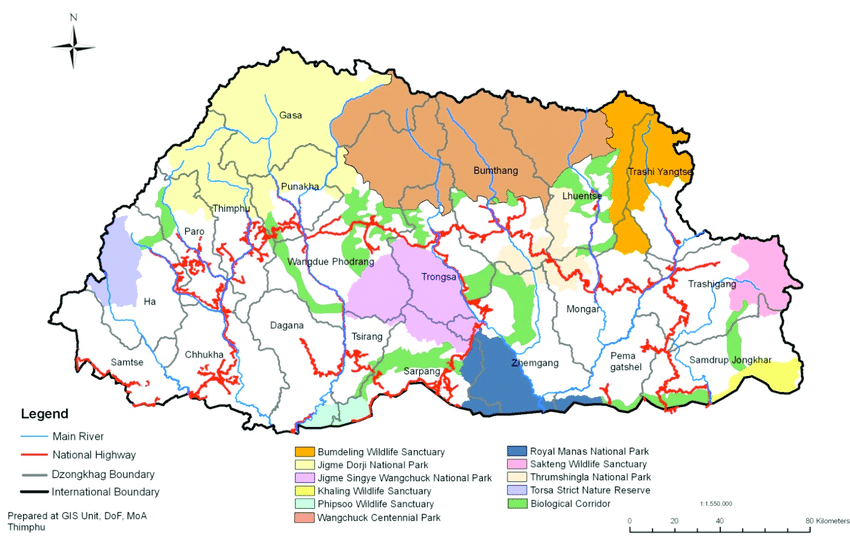
Imagine a country where protecting nature is written into its constitution. That’s Bhutan — a Himalayan kingdom where about 52% of its land is under some form of environmental protection. While the world races toward development, Bhutan slows down, listens to the trees, and breathes with the mountains. Its national parks and protected areas aren’t just lines on a map — they’re living, breathing ecosystems that reflect the nation’s soul.
The Royal Government of Bhutan has taken a unique approach to balancing conservation with community needs. Through its Integrated Conservation and Development Program (ICDP), people living within national parks and protected areas are allowed to continue traditional practices like farming, herding, gathering medicinal plants, and collecting firewood. This model supports both livelihoods and long-term ecosystem protection — a rare harmony in today’s world.
Unlike many countries where national parks are developed into commercial tourism hubs, Bhutan’s protected areas remain largely untouched. Most parks lack typical tourist infrastructure — you won’t find ticket booths, paved trails, large signage, campgrounds, or even formal entry gates in many places. In fact, you might pass in and out of a national park without even knowing it.
Jigme Dorji National Park
Bhutan’s second largest park, Jigme Dorji National Park is a spectacular wilderness stretching from the subtropical lowlands of Punakha to the alpine glacial peaks bordering Tibet. While it’s home to iconic species like the takin, snow leopard, and blue sheep, don’t expect a developed visitor experience.
Apart from the scenic drive to Gasa along the Mo Chhu river and trekking to Laya, you won’t find marked entrances, fancy campgrounds, or park offices. You’re more likely to see yak herders and local farmers than tourists. The road to Gasa is rough, winding, and slow-going — yet rewarding, especially for nature lovers and birdwatchers and the trek to Laya, considered one of the most culturally enriching adventures in Bhutan, takes you to Laya—the remotest nomadic village in the country.
Top Experiences in JDNP:
- The Laya–Gasa Trek: Ideal for experienced trekkers who want a mix of cultural and natural experiences.
- The Jomolhari Trek: One of Bhutan’s most scenic treks, with views of Mount Jomolhari.
- The Snowman Trek: Known as one of the world’s toughest treks, crossing 11 high passes through some of Bhutan’s most remote terrain.
Royal Manas National Park
Known as the “crown jewel” of Bhutan’s conservation areas, Royal Manas National Park is Bhutan’s oldest park and part of a transboundary reserve that connects with India’s Manas Wildlife Sanctuary. But it remains largely off-limits to regular tourists, with very few public facilities.
Access is limited, and even though the biodiversity is among the richest in the region — featuring tigers, elephants, golden langurs, clouded leopards, civets, and 350+ bird species. — the park is primarily focused on research, conservation, and community engagement, not mass tourism.
Locals continue to live in harmony with nature, harvesting plants and practicing traditional agriculture within permitted zones.
Visitors can enjoy elephant safaris, boat trips on the Manas River, and cultural experiences during local tsechus (festivals), especially in November.
Access routes are limited: Three to four-day treks from Gomphu to Panbang, with community-managed campgrounds.
Sakteng Wildlife Sanctuary
Tucked away in eastern Bhutan’s Trashigang District, Sakteng Wildlife Sanctuary is perhaps the most mythical of them all. Created in part to protect the habitat of the legendary “migoi” (Bhutan’s version of the yeti), this sanctuary features untamed rhododendron forests, red pandas, and Himalayan flora.
Tourism is still very new here. Facilities are basic or nonexistent. Most access is via multi-day treks, requiring camping equipment and experienced guides. Local Brokpa communities are integral to park conservation, and visitors often stay in tent camps or village homestays.
If you’re seeking isolation, folklore, and primal beauty — this is your spot.
Tourism here is limited and rugged. Travelers encounter semi-nomadic Brokpa herders who live in harmony with nature.
Popular trekking itineraries:
Jigme Singye Wangchuck National Park
A sprawling forested area across central Bhutan, Jigme Singye Wangchuck National Park is often referred to as the green heart of Bhutan. With no formal entrance gates or signage, it blends seamlessly into the surrounding villages and landscapes.
Many of the community-based treks (like the Nabji-Korphu Trail) take you through parts of the park. Along the way, you’ll see villages practicing sustainable agriculture. There’s minimal infrastructure for tourists, which helps protect the fragile forest ecosystem.
If you’re seeking genuine interaction with local life and undisturbed forest trails, this park delivers a soulful experience.
Phrumsengla National Park
Located in Bhutan’s rugged east, Phrumsengla National Park boasts dramatic elevation changes, alpine scenery, and lush coniferous forests. It’s one of the least visited parks, partly because of limited road access and virtually no tourist infrastructure.
There are no visitor centers or rest stops — only a scattering of forestry camps and remote trails. The park is a haven for birdwatchers and botanists, with rare species like the red panda and Himalayan monal quietly thriving here.
People residing within the park continue traditional grazing and herbal collection, showcasing Bhutan’s balance between people and nature.
Wangchuck Centennial National Park
The largest protected area in Bhutan, Wangchuck Centennial National Park spans glacier-fed rivers, high mountains, and forests. It was created not just to preserve wildlife, but also to safeguard critical water sources for Bhutan and its downstream neighbors.
Tourist development is minimal. There’s one eco-tourism center in Nasiphel, but most of the park is remote and undeveloped. Access is mainly through multi-day treks like the Snowman Trek, considered one of the toughest in the world.
Bumdeling Wildlife Sanctuary
Located in the far northeast, Bumdeling Wildlife Sanctuary is famous for being a winter roosting ground for the endangered black-necked cranes. It’s also one of the best places in Bhutan for cultural and eco-tourism, thanks to its blend of sacred sites, traditional festivals, and remote hamlets.
The sanctuary is peaceful and quiet, lacking obvious entry points or tourist hubs. Visitors typically stay in village homestays or local guesthouses, offering a rare look into Bhutanese rural life.
The residents farm organically, gather herbs, and help protect the cranes, earning income through tourism support roles like guiding and home cooking.
Khaling Wildlife Sanctuary (Now Merged)
Once a standalone sanctuary, Khaling is now administratively merged with nearby protected zones, but the region still retains its identity as a rich biodiversity pocket.
There’s very little human interference or tourism here — in fact, it’s one of the most inaccessible protected areas. Its main importance lies in the rare orchids, butterflies, and plant diversity found in the subtropical hills.
Biological Corridors: The Invisible Highways
Spanning over 3,660 square kilometers, Bhutan’s 12 biological corridors aren’t marked or signposted, yet they are some of the most important features in Bhutan’s conservation landscape. These corridors allow species to migrate safely between parks, maintaining genetic diversity and helping adapt to climate change.
These areas are not intended for tourism. In fact, when you walk through one — which often happens unknowingly during a trek — you might not even realize it’s protected land. That’s the quiet magic of Bhutan’s approach.
How to Explore These Parks
- Book with a licensed Bhutanese tour operator like OMSHA Travel
- Guided treks, cultural tours, and community homestays are the best ways to experience these areas.
- Visit during autumn (Sept–Nov) or spring (Mar–May) for the best weather and biodiversity sightings.
Final Travel Tips
- Some parks require special permits or additional road travel — plan ahead
- There are no large hotels in protected zones, but many offer authentic rural homestays
- Don’t expect flashy signage or maps — your guide is your best source of knowledge.
Ready to explore Bhutan’s natural treasures?
Let OMSHA Travel help you plan a custom trek, cultural trip, or eco-tour through the heart of Bhutan’s wilderness.
📩 Contact Us to get started today!