
Ever wondered what it’s like to live in a country where happiness matters more than GDP? Welcome to Bhutan – the tiny Himalayan kingdom where ancient traditions meet progressive policies, and every turn offers a new surprise. If you’re planning a trip or just curious, these fascinating facts about Bhutan will make you see the Dragon Kingdom in a whole new light.
Geography and Location
Where is Bhutan?
Bhutan is nestled between two Asian giants – India and China – but maintains a peaceful, low-key presence. Located in South Asia, this landlocked country is entirely mountainous, making it a paradise for trekkers and nature lovers.
A Landlocked Kingdom in the Himalayas
Ranging from subtropical plains in the south to snow-capped peaks in the north, Bhutan’s elevation varies dramatically – creating a diverse range of climates and ecosystems in a small area.
Diverse Topography from Subtropical to Alpine
Whether you’re walking through lush rice fields or climbing to monasteries perched on cliffs, Bhutan’s geography never fails to surprise. The pristine landscape is protected by national parks and strict environmental policies.
A Country of Happiness
Gross National Happiness (GNH)
Bhutan measures success not by economic growth but by Gross National Happiness – a concept introduced by the 4th King. This philosophy guides the country’s governance and daily life.
More Than Just an Index – It’s a Way of Life
GNH focuses on sustainable development, environmental protection, cultural preservation, and good governance. It’s not just a slogan – it’s how Bhutan runs its schools, hospitals, and even tourism.
Culture and Religion
Predominantly Buddhist
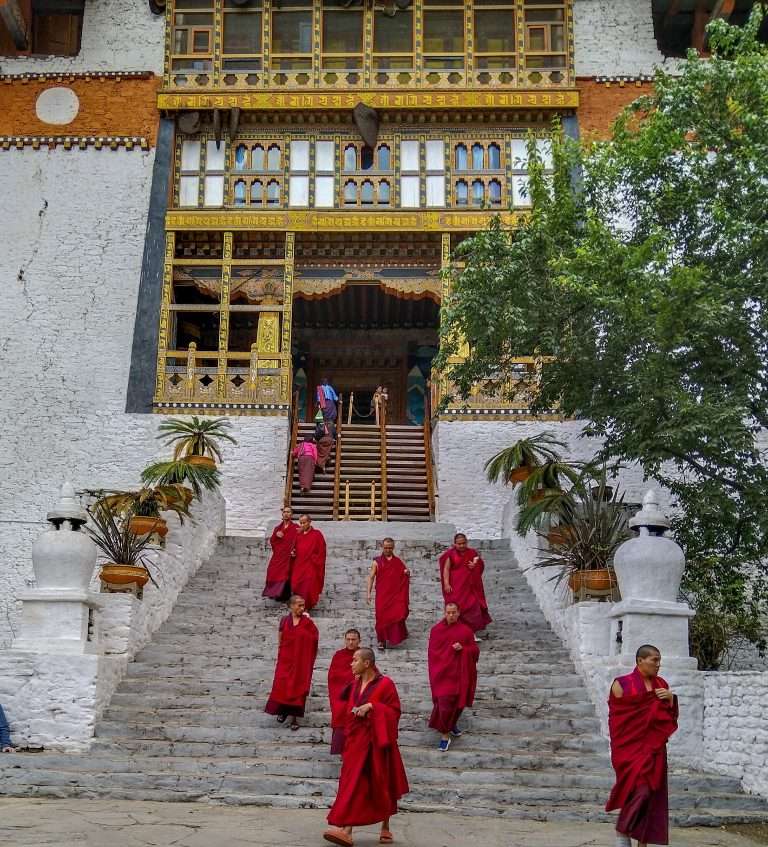
Bhutan is one of the last bastions of Vajrayana Buddhism. Monasteries dot the hills, monks chant prayers that echo through the valleys, and rituals are part of everyday life.
Colorful Festivals and Tshechus
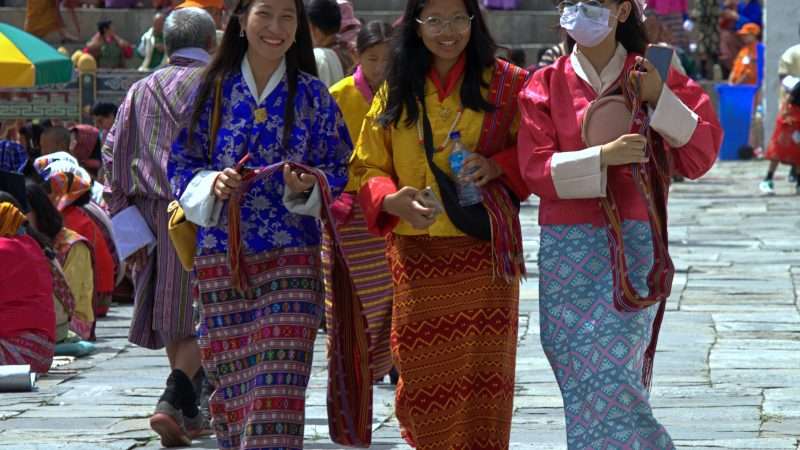
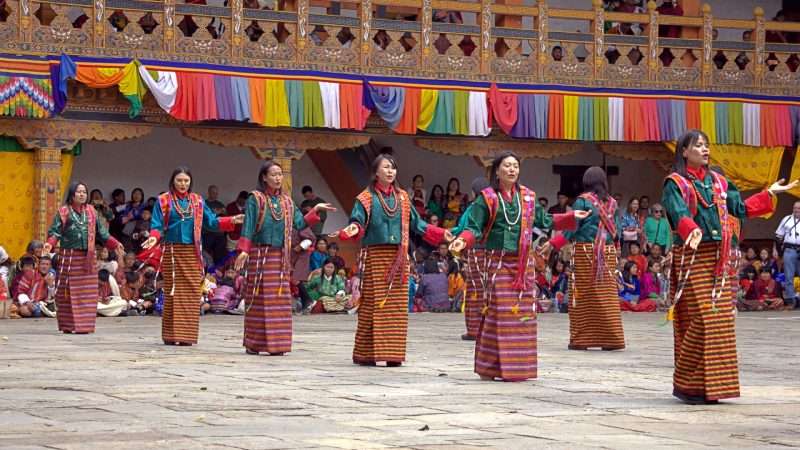
From masked dances to sacred chants, Bhutan’s festivals are not to be missed. Tshechus are celebrated in every district, drawing locals dressed in their finest attire.
Traditional Dress Code: Gho and Kira
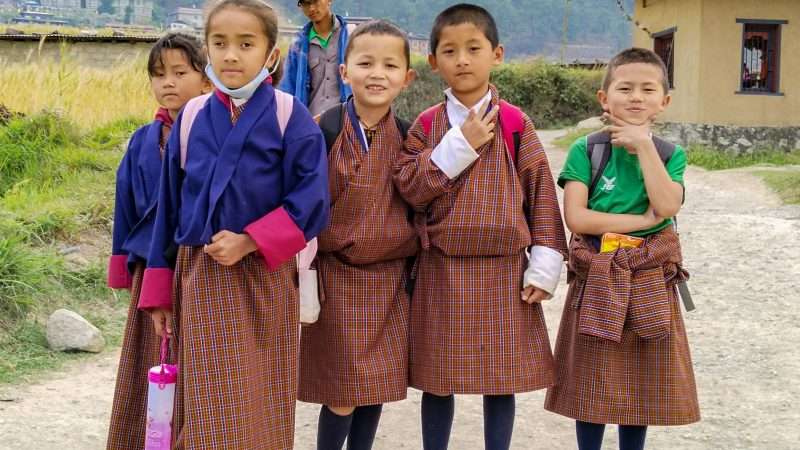
Visitors will notice that Bhutanese people wear their national dress daily. Men wear the gho, and women don the kira. Even school uniforms follow traditional styles.
Language and Communication
Dzongkha – The National Language
Dzongkha is the official language, written in the same script as Tibetan. It’s widely spoken, especially in government and schools.
English Is Widely Spoken
Thanks to its education system, most Bhutanese speak English fluently – making travel easier for international tourists.
Bhutanese Architecture
Dzongs – Fortresses That Still Function
Massive fortress-monasteries called dzongs serve as both administrative centers and spiritual hubs. Paro, Punakha, and Trongsa Dzongs are especially famous.
No Traffic Lights – But There’s a Traffic Cop
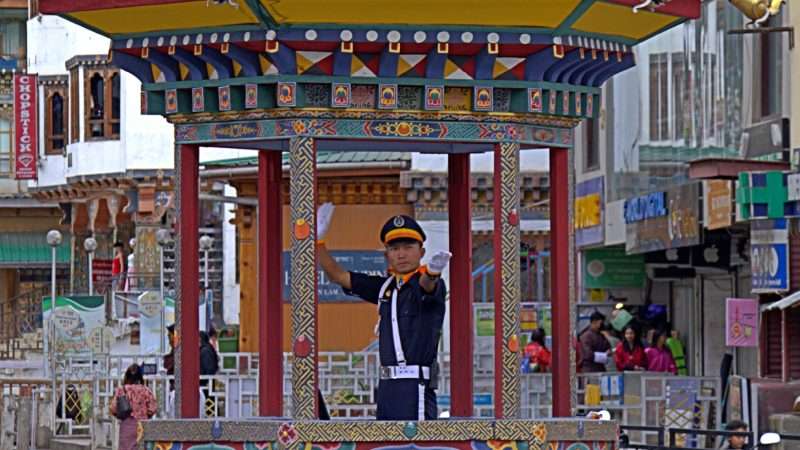
Thimphu, the capital, is the only capital city in the world with no traffic lights. Instead, a gloved traffic policeman directs cars with graceful hand gestures.
Environmental Conservation
First Carbon-Negative Country in the World
Bhutan absorbs more carbon dioxide than it emits. Thanks to hydroelectric power and strict emission policies, it’s the only carbon-negative country globally.
Over 70% Forest Cover Is Maintained
The constitution mandates at least 60% forest cover – but Bhutan currently has over 70%, making it a haven for biodiversity.
Tourism in Bhutan
High-Value, Low-Volume Tourism Policy
Bhutan carefully controls tourism to protect its culture and environment. Tourists must book through licensed tour operators and pay a daily Sustainable Development Fee (SDF).
Sustainable Development Fee (SDF)
The SDF goes toward healthcare, education, and infrastructure. While it makes Bhutan seem expensive, it ensures quality experiences and cultural preservation.
Unique Bhutanese Beliefs and Symbols
The Sacred Phallus Paintings
Phallus symbols painted on walls are blessings believed to ward off evil and promote fertility, inspired by the Divine Madman Lama Drukpa Kunley.
Mythical Creatures and National Animal: The Takin
The takin – part goat, part cow – is Bhutan’s national animal. Legend says it was created by the Divine Madman using bones and magic.
Food and Cuisine
Love for Spices – Especially Chillies
Bhutanese cuisine is bold and spicy. Chillies aren’t a seasoning – they’re the main ingredient.
Popular Dishes like Ema Datshi and Red Rice
Ema Datshi (chillies and cheese), Phaksha Paa (pork with radish), and red rice are staples. Don’t miss the butter tea (suja) and local ara (rice wine)!
Royal Family and Governance
Constitutional Monarchy
Bhutan transitioned to democracy in 2008 under the guidance of its beloved King Jigme Khesar Namgyel Wangchuck. The monarchy still plays an important unifying role.
A Beloved King and Modern Democracy
The King is known for his humility and dedication to his people. Bhutan’s blend of monarchy and democracy is one-of-a-kind.
Education and Healthcare
Free for Citizens
Both education and healthcare are free for Bhutanese citizens, funded largely by hydropower exports and international aid.
Focus on Holistic Development
Beyond academics, Bhutanese schools emphasize emotional well-being, ethics, and environmental stewardship – all aligned with Gross National Happiness.
Bhutan’s Isolation and Openness
TV and Internet Introduced in 1999
Bhutan was one of the last countries to allow television and the internet. It now balances tradition with tech, cautiously integrating modern influences.
Carefully Managed Modernization
From infrastructure to social media, modernization is gradual and community-driven – with a strong focus on maintaining cultural identity.
Festivals and Celebrations
Paro Tshechu and Mask Dances
Held annually in spring, Paro Tshechu is Bhutan’s most popular festival, famous for its mask dances and sacred displays like the thongdrel.
Public Participation and Spiritual Meaning
These festivals aren’t tourist shows – they are deeply spiritual events with active local participation and prayerful devotion.
Conclusion
Bhutan isn’t just another destination – it’s a living, breathing philosophy in the form of a country. From its untouched landscapes to its reverence for happiness, Bhutan leaves a lasting impact on all who visit. These facts are just the beginning. Want to experience this magical kingdom for yourself? There’s only one way to truly understand it – come and feel the magic.
Join our private tour, we are passionate about sharing our love for this unique kingdom with our clients, and our goal is to create immersive and meaningful travel experiences.
We are Bhutan’s Unique Travel Designer and Exclusive Tour Service Provider. We create personalized itineraries tailored for family, friends, couple & Solo.
Book your Bhutan holiday today and reserve the spot with OMSHA Travel
FAQs
1. Is Bhutan expensive to visit?
Yes, Bhutan is considered a premium destination due to the daily SDF. But the experience is rich, immersive, and worth every penny.
2. Do I need a visa to enter Bhutan?
Yes, all foreign tourists (except Indian, Bangladeshi, and Maldivian nationals) require a visa processed through a licensed Bhutanese tour operator.
3. What is the best time to visit Bhutan?
Spring (March-May) and autumn (September-November) offer the best weather and vibrant festivals.
4. Can you travel independently in Bhutan?
No, solo travel without an organized tour is not permitted for most foreign nationals. All trips must be arranged through licensed operators.
5. Is Bhutan safe for tourists?
Absolutely. Bhutan is one of the safest travel destinations in the world, with friendly locals and very low crime rates.