
EXCELLENTVerified Excellent and authentic experience to Bhutan We have traveled with OMSHA Travel from 2 till 10 of November to Bhutan. The experience was unique and really authentic and we totally loved this country. The tour was perfectly organized by Nawang. The hotels, the transfers, everything was high standard. I think that the cost for value is the best in Bhutan, without reducing the quality of services. We did some things off the beaten track and it was an awesome experience. Our guide Sonam and driver Namgay were really awesome, very polite, helpful and mostly perfect at their job. I think we have some friends now there. I totally recommend the OMSHA Travel 👏Posted onVerified 6 days pivate bhutan tour Thanks a lot to my agency snd to my guide and driver who made that 6 days private tour unforgetable with thousands of good memories and without any trouble. Everything worked out very well incl all the organizational things and the tour itinerary. I've seen lots of different places within a very short time and we even stopped at more spots which were not listed. I got an insight inti the culture and could interact with local people. I always could trust my guide and my driver and we had a great and funny time together. Would always do that tour again and try to spend more days next time. See you soon!Posted onVerified Unforgettable Bhutan Trip with OMSHA Travel I had a very special milestone to celebrate last month and when trying to find a unique place to visit, I decided upon Bhutan. While researching and communicating with various tour operators, one company stood out: OMSHA Travel. Their communication was quick, efficient and they answered every question I had with superb details. I felt no pressure at all to book and their explanations were very thorough, so I felt fully comfortable booking the tour. Once I arrived, I immediately knew I made the correct decision. My guide Lhazin, driver Ngawang and I were a perfect fit. Their service was flawless in every way. They were safe, informative, flexible and most importantly FUN. They addressed everything I could think of with thoughtful intent, so my trip was stress free. Both had a great personality that made my experience as a solo traveller unforgettable. It truly felt like I was traveling with two friends that I have known for years and I sincerely appreciate their efforts to make my trip one of a kind.I fully recommend OMSHA travel for any trip to Bhutan and I am 100% certain that when I return in the future, I will book through them!!!!!Posted onVerified Gracious and knowledgeable hosts made my visit a pleasure I enjoyed my multi-day tour of Bhutan and learned a lot about the culture and the people of this unique country. The tour was expertly organized by Nawang, who allowed for a large degree of flexibility and customization. He handled all logistics, so all I had to do was show up and enjoy.My tour guide was Namgay, who had deep knowledge and expertise on seemingly every area of Bhutanese culture and history and also was a pleasure to be around. Our driver (also named Nawang) was exceedingly smooth and safe, which made the experience very comfortable and enjoyable.I'd strongly recommend OMSHA for anyone interested in exploring Bhutan. They are consummate professionals and I greatly appreciate and respect the level of thoughtfulness and care they put into hosting me.Posted onVerified Great tours and amazing guides Amazing trip - Everything was perfectly well organized and I got to see so much of Bhutan in 7 days. Grateful to have my guide Sonam and driver Yeshey who took great care of me and was a joy to be with. It felt like I was travelling with friends more than a tour!Posted onVerified Excellent Incredible experience with OMSHA. Owner Nawang was kind, intuitive and detail focused. Tour guide Ugwen top notch and driver Tsewang navigated the roads perfectly. Top notch. Recommended without hesitation.Posted onVerified Wspaniała przygoda w Bhutanie. Mimo, że natrafilismy na 4 dni deszczu i nie moglismy zobaczyc Tiger Nest ze wzgledu na zamkniecie szlaku, jestesmy zachwyceni Bhutanem. Omsha zorganizowali wspaniałą wyprawę. Nasz przewodnik i kierowca byli wspaniali i bardzo pomocni. Robili wszystko co w ich mocy, żeby nasza wizyta w Bhutanie była udana, mimo niesprzyjających warunków pogodowych. Profesjonalna i bardzo miła obsługa. Hotele i wyżywienie na bardzo dobrym poziomie. Bardzo polecamy usługi Omsha. Zamierzamy ponownie odwiedzić Bhutan z tą firmą w przyszłym roku.Posted onVerified An enriching adventurous and soulful experience An incredible visit to Bhutan, I came back richer with experience with a yearning to be a better human being. Can’t thank enough OMSHA travels, Nuwang, Sonam and Tasha was taking me through the mesmerizing Bhutan and its beautiful lifestyle. The trip was very well organized, very comfortable and flexible. Sonam and Tashi are a delight to be around and both of them went effortlessly the extra mile to ensure my experiences are absolutely top notch. I would Highly recommend OMSHA travels for an amazing trip to Bhutan.Many Many Thanks to all of you 🙏Posted onVerified Perfect Bhutan Experience with OMSHA We recently travelled to Bhutan for six days with OMSHA Travel. The booking experience was extremely smooth and the owner, Mr. Nawang, was extremely responsive and accommodative of our needs. The pricing was very competitive and the ability to choose our own dates and utilise flexible payments really set them apart from the competitors.Whilst in Bhutan, our guide, Namgay, was exceptional in going above and beyond to ensure that we were comfortable and had a memorable experience. In particular, Namgay's extensive knowledge and ability to accurately respond to all queries was extremely impressive. Beyond that, her constant concern for our wellbeing and her joyous personality meant that she was very easy to get along with, resulting in the feeling of being taken around by a friend who was also an expert guide. Namgay is a true asset to the company and was one of the primary reasons why we enjoyed the tour so much - certainly the best tour guide that I have experienced in any country.We were also provided with exceptional service by our driver, Tshewang, who was highly reliable and a very nice man to deal with. It was an honour to be driven by him.All in all, we will definitely visit Bhutan again and will certainly utilise OMSHA as our tour company due to the perfect service received from Namgay, Tshewang and Mr. Nawang.Posted onVerified Cultural immersion in Bhutan Omsha created a custom itinerary for our tour to Thimpu, Paro and Punakha. Our guide Namgay met us at the airport and was courteous, friendly and hospitable throughout. Her knowledge of temples and dzongs was extremely thorough and her enthusiasm to share stories of her culture and good humour made for a truly memorable trip. She took us to some truly spectacular locations and made it a fantastic trip. We will be coming back to Bhutan and hope to see Namgay and our driver Tsewang in future!
Bhutan Tour Packages:
Travel Tips:
Blog Posts:
Contact us:
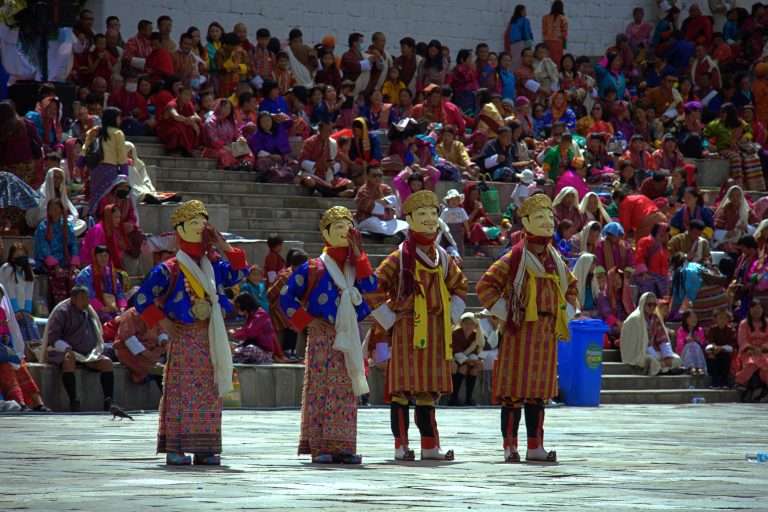
Bhutan’s festival season is one of the most captivating times to experience the kingdom’s living heritage. Sacred mask dances, ancient rituals, and colorful traditional attire bring dzongs and monasteries to life, offering visitors a rare glimpse into Bhutan’s spiritual and cultural soul. However, visiting Bhutan during festival season—especially peak periods—requires careful planning.
Here’s everything you must know before booking your Bhutan festival journey.
Understanding Bhutanese Festivals (Tshechus)
Bhutanese festivals, known as Tshechus, are religious celebrations held in honor of Guru Rinpoche (Padmasambhava), the saint who introduced Buddhism to Bhutan in the 8th century. These festivals are not performances for tourists, but sacred community gatherings where locals come to receive blessings, socialize, and pass on traditions to younger generations.
Major Tshechus take place in Paro, Thimphu, Punakha, Bumthang, Trongsa, and other regions across Bhutan.
Peak Season Reality: Spring and Autumn
The best-known time to visit Bhutan for festivals is during spring (March–May) and autumn (September–November). Travelers during these months are rewarded with:
- Clear skies and postcard-perfect Himalayan views
- Pleasant daytime temperatures ideal for travel
- Bhutan’s most famous and elaborate Tshechus in Paro, Thimphu, Punakha, and Bumthang
However, peak season also comes with challenges. Flights into Paro are often fully booked months in advance. Boutique and luxury hotels in Paro, Thimphu, and Punakha sell out quickly. During major festivals, access inside dzongs may be restricted due to crowd control measures.
Planning early with a licensed Bhutan tour operator helps secure better flight options, preferred accommodations, and a more relaxed festival experience.
Is Peak Festival Season Right for You?
Peak season is ideal if you:
- Are visiting Bhutan for the first time
- Want to experience the most famous festivals
- Prefer the best weather conditions
But if you value quieter experiences and deeper cultural interaction, alternative festivals may be a better fit.

Alternative Festivals: Fewer Crowds, Deeper Connection
Bhutan hosts many meaningful festivals outside the main tourist rush. These festivals offer the same spiritual richness with fewer visitors and a more intimate atmosphere.
Recommended alternative festivals include:
- Nimalung Tshechu (Bumthang) – One of Bumthang’s most important festivals, held in a beautiful rural setting with strong local participation and a peaceful atmosphere.
- Trongsa Tshechu – Celebrated at the impressive Trongsa Dzong, offering history, spirituality, and stunning views without heavy crowds.
- Dechenphug Tshechu (Thimphu) – A lesser-known, community-focused festival near Dechenphug Lhakhang, ideal for authentic cultural experiences.
- Druk Wangyel Tshechu – Held at Dochula Pass, this unique festival celebrates Bhutan’s military history and national unity against a backdrop of Himalayan peaks.
- Haa Summer Festival – A vibrant showcase of nomadic culture, traditional sports, and local cuisine in the scenic Haa Valley.
These festivals are perfect for travelers seeking:
- Easier access to festival venues
- Better availability of flights and hotels
- More personal interaction with locals
A calmer, more immersive journey
Practical Tips Before Booking
Before confirming your Bhutan festival tour:
- Check festival dates carefully, as they follow the lunar calendar
- Book 6–9 months in advance, especially for October and November
- Secure flights to Paro as soon as your dates are finalized, especially for peak months
- Dress modestly and respectfully at festival sites
- Arrive early on festival days for the best experience
- Travel with a knowledgeable guide to understand the rituals and symbolism
Essential Festival Etiquette Tips
Bhutanese festivals are sacred religious events. Following proper etiquette ensures a respectful and enjoyable experience:
- Dress modestly—cover shoulders and knees
- Arrive early to avoid crowds and secure good viewing spots
- Ask permission before photographing monks or locals
- Avoid stepping over religious objects or sitting on sacred ground
- Keep noise to a minimum during rituals
- Follow your guide’s instructions inside dzongs
Respectful behavior is appreciated and often rewarded with warm smiles and genuine hospitality.
Understanding SDF, Visas, and Permits
When comparing Bhutan festival tour packages, it’s important to keep the following points in mind:
- Sustainable Development Fee (SDF): A daily contribution that supports Bhutan’s healthcare, education, and environmental conservation efforts.
- Visa or entry permits: International travelers require a visa, which must be arranged through a licensed local tour operator. Indian travelers may obtain an entry permit and pay the SDF upon arrival when entering by road.
- Internal travel permits: Certain regions beyond Paro and Thimphu require additional permits to visit.
OMSHA Travel typically includes all of these requirements within your itinerary. We handle the paperwork, approvals, and formalities, allowing you to focus on your travel dates and experiences rather than administrative details.
Final Thoughts
Visiting Bhutan during festival season is a once-in-a-lifetime cultural experience, but the key lies in choosing the right timing and planning well ahead. While spring and autumn offer iconic festivals and ideal weather, alternative celebrations like Nimalung Tshechu, Druk Wangyel Tshechu, Trongsa Tshechu, and Dechenphug Tshechu provide a quieter, more authentic glimpse into Bhutanese life.
With respectful etiquette, smart booking, and local expertise, your Bhutan festival journey will be both meaningful and unforgettable.