
Bhutan Birding Tours
Bhutan Birding Tours: A Himalayan Paradise for Bird Lovers
With over 770 species of birds recorded across a variety of ecosystems—from subtropical forests to alpine meadows—Bhutan is a dream destination for birdwatchers. Thanks to its rich biodiversity, pristine environment, and strong conservation policies, the kingdom offers one of the finest birding experiences in the Eastern Himalayas.
At OMSHA Travel, we offer expertly guided Bhutan Birding Tours that take you deep into the most rewarding habitats, where you can spot rare, endemic, and migratory species in their natural surroundings.

Why Go Birding in Bhutan?
- High Avian Diversity: Bhutan’s altitudinal range (from 150m to over 7,000m) supports an incredible variety of bird species—from tropical to high alpine.
- Protected Natural Habitats: Over 70% of Bhutan is covered in forest, and more than half of the country is protected as national parks or biological corridors.
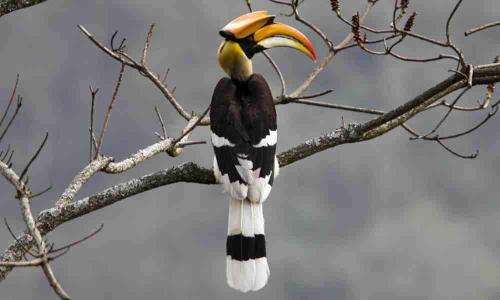
- Rare & Endangered Species: Bhutan is home to globally threatened birds like the White-bellied Heron, Rufous-necked Hornbill, Ward’s Trogon, and the magnificent Black-necked Crane.
- Unspoiled Birding Trails: With minimal pollution and low tourist density, Bhutan offers a peaceful birding experience with unmatched scenic beauty.
Best Time for Birding in Bhutan
- Spring (March–May): Ideal for migratory birds and breeding season, with forests bursting in song and color.
- Autumn (September–November): Clear skies and excellent visibility, great for spotting high-altitude species.
- Winter (November–February): Best for viewing the endangered Black-necked Cranes and lower elevation species.
Top Birding Destinations in Bhutan
Bhutan’s unique geography and forest cover provide ideal habitats for a wide variety of bird species, making it a true birder’s paradise. Whether you’re seeking elusive forest dwellers or rare high-altitude species, these birding hotspots in Bhutan promise an unforgettable experience.
Zhemgang – Tingtibi to Panbang
Often referred to as the “birding capital of Bhutan,” the Zhemgang region, especially the stretch from Tingtibi to Panbang, is one of the richest lowland birding zones in the country. The subtropical broadleaf forests here are teeming with rare and endangered birds.
Key Species:
Yongkola to Namling and Tshamang – Eastern Bhutan
The eastern slopes between Yongkola, Namling, Tshamang, and Lingmethang are among the most rewarding birding circuits in all of the Eastern Himalayas. These areas feature dense, untouched forests and a remarkable range of altitudes, making them ideal for both lowland and mid-altitude birding.
Key Species:
Yotongla Pass hosts a rich array of avian species. Birdwatchers can admire Great and Brown Parrotbills, Red-headed Bullfinches, Streaked-breasted and Slender-billed Scimitar Babblers, Scaly-breasted and Bar-winged Wren Babblers, Green-tailed and Mrs. Gould’s Sunbirds, and the elusive Satyr Tragopan—a sought-after sighting in Bhutan.
Lingmethang
Located in the lower region of Mongar, Lingmethang offers great opportunities for lowland birding in lush subtropical forests. The quiet trails and proximity to rivers attract a wide variety of birdlife, including several endemics and migratory species.
Key Species:
- Black-throated Sunbird
- Himalayan Cutia
- Bhutan Laughingthrush
- Black-eared Shrike-babbler
Dochula – Lamperi Botanical Garden
The mixed forests around the pass and the botanical park are full of flowering plants, mossy trees, and vibrant Himalayan species. Birders especially love this spot in spring when rhododendrons bloom. Covering 47 square miles (120 km²), it connects Jigme Singye Wangchuck National Park and Jigme Dorji Wangchuck National Park. Birding within the central area offers a delightful hour-long walk where visitors can encounter key species like Darjeeling and Rufous-bellied Woodpeckers, Brown Parrotbill, Streaked-breasted Scimitar Babbler, and Black-tailed Crake. Seasonal sightings include Golden-breasted and Black-throated Parrotbill. In winter, the park hosts species such as Alpine Thrush, Blue-fronted and Hodgson’s Redstart, and Rufous-breasted Accentor. Ward’s Trogon is a highlight species, alongside 46 species of rhododendrons.
Let OMSHA Travel Craft Your Ideal Birding Journey
Our Bhutan Birding Tours are led by expert guides who understand both the birds and the terrain. Whether you’re a seasoned birder or a nature lover just beginning, we’ll design a trip that fits your pace, interests, and comfort level—with handpicked lodges, flexible itineraries, and responsible travel practices.
Ready to hear the call of the wild?
Get in touch today to plan your unforgettable birding adventure in Bhutan with OMSHA Travel.
FAQs – Birding Tours in Bhutan
1. Why is Bhutan a top destination for birdwatching?
Bhutan is a biodiversity hotspot with over 700 bird species, including rare and endangered ones like the Black-necked Crane, White-bellied Heron, and Ward’s Trogon. Its pristine forests, varied altitudes, and protected areas make it ideal for both amateur and professional birders.
2. What are the best months for birding in Bhutan?
The best time for birding tours is during spring (March to May) and autumn (October to early December). These seasons offer mild weather and peak bird activity, including breeding and migration periods.
3. Which bird species can I expect to see?
Depending on the season and location, you may spot:
- Satyr Tragopan
- Himalayan Monal
- Rufous-necked Hornbill
- Fire-tailed Myzornis
- Ibisbill
- Black-necked Crane (in winter)
- White-bellied Heron
- Blood Pheasant
…and hundreds more!
4. Are the birding tours suitable for beginners?
Yes. We offer tailored tours for all skill levels—beginners, photographers, and expert birdwatchers. Our guides are trained in bird identification and can help you get the most out of your experience.
5. Do I need to bring my own birding gear?
We recommend bringing your own binoculars, spotting scopes, and field guides. However, some tours may provide shared scopes and checklists. Let us know your preferences in advance.
6. Are birding guides included?
Yes, all our birding tours include expert Bhutanese birding guides who are familiar with local habitats, species, and calls. They’ll assist in spotting, identification, and photography support.
7. What’s included in the birding tour package?
Our birding tours typically include:
- Accommodation and meals
- Experienced birding guide
- Private vehicle and driver
- Entry permits and park fees
- Bhutan visa assistance
- Sustainable Development Fee (SDF)
8. How physically demanding are the tours?
Some tours may involve easy forest walks, while others include longer hikes in varying terrain and altitudes. We tailor the itinerary based on your fitness level and interests.
9. Can birding tours be combined with cultural sightseeing?
Yes. We can customize your tour to include visits to monasteries, dzongs, festivals, and cultural villages along with prime birding sites.
10. How do I book a birding tour with you?
Simply contact us with your preferred travel dates, interests, and experience level, and we’ll design a personalized birding itinerary for you.
Real Stories, Real Experiences with OMSHA Travel!
Hear What Our Thrilled Travelers Have to Say