
18 Day Bird-Watching Across Bhutan
17 Nights / 18 Days
Bird watching in Bhutan is a treat for nature enthusiasts due to its diverse ecosystems ranging from subtropical forests to alpine meadows. Bhutan is a fantastic destination for bird watchers due to its diverse range of habitats, including subtropical forests, alpine meadows, and Himalayan peaks. The country is home to a rich variety of bird species, some of which are rare and endemic to the region.
Note: Consider this as a general guide to give you an idea of the tour. If needed, the itinerary can be further customized based on the season, your interests, group size, and preferred tour duration.
EXCELLENT Based on 155 reviews
 Posted on Tripadvisor
 Kornel P23 August 2026Superb experience in the land of the thunder dragon Absolutely amazing experience, our guide was extremely knowledgeable and had a superb ability to talk about all that he knew. We learned a lot about Bhutan and truly enjoyed every part of our 4 day stay it was quite extensive. Highly recommend to anybody looking to visit and understand Bhutan.Posted on Tripadvisor
 Kierthini N22 August 2026An Authentic, Meaningful Bhutan Experience Thank you, Omsha Travel, for making this journey so much more than just an itinerary. I’m was a solo female traveler from Malaysia and I stayed in Bhutan for 8 days. I had done my own research and revised the itinerary based on the places and experiences I wanted to cover. Mr. Nawang took that and made it happen while also adding in experiences I could have easily missed. That was the best part. He understood what I wanted from this trip and helped me experience and explore Bhutan more wholesomely, with so much thought and hospitality along the way. And then came Mr. Lhazin, quite possibly the best guide I could have asked for. This trip truly became a spiritual journey for me. We spoke about so many things; religion, beliefs, life and perspectives and it was refreshing to exchange opinions and have meaningful conversations. His knowledge of nature was mind blowing, and I genuinely learnt so much from him. Then there was Mr. Tashi, who drove me through all the “scenic” roads I kept requesting because I wanted to experience Bhutan in its rawest form. And he made it happen, while constantly making sure I was safe. These two made sure I ticked off my bucket list while keeping me safe, exactly what my family is always worried about. So, fam, that part was well taken care of! I came to Bhutan looking for an experience, but I’m leaving with stories, perspectives, knowledge and two people I’ll genuinely remember. Thank you, Omsha Travel, Mr. Nawang, Mr. Lhazin and Mr. Tashi, for making my journey through Bhutan so wholesome.Posted on Tripadvisor
 Rivet L22 August 2026A trip of a lifetime with the perfect team I had an amazing time with OMSHA Travel in Bhutan. Since the first email exchange I have felt very well taken care of, they were incredibly responsive and willing to accommodate each and every of my adjustment requests and travel plan changes. After arriving in Bhutan my lovely guide Sonam picked me up from the airport together with the driver Nawang. Sonam is very kind and knowledgeable, I had so many questions about the culture, every day life, food, Buddhism, and she always had an answer to satisfy my curiosity. As it was a private tour, they gave me the flexibility to adjust our route as we were going too! Nawang is a great driver and such a sweet person! The car was very comfortable and all the accommodation chosen for me beautiful and picturesque. People surrounding me were all so very nice, it really felt like making good friends while exploring this beautiful country. I'm definitely coming back some time in the future and I'm definitely recommending OMSHA to all my friends! Thank you Sonam and Nawang!Posted on Tripadvisor
 Tomasz P16 August 2026Mindful experience and more Great experience and exploring of Bhutan with lovely people. We had a tailor made offer for our near 4 day stay. Appreciate the flexibility and helpfulness in organization of our trip and the full package. Friendly and knowledgeable guide helped us to understand the country, culture and people. We enjoyed every moment of this fascinating trip.Posted on Tripadvisor
 Jorg H12 July 2026perfect days in Bhutan We were so lucky to have Sonam as our guide for our 8 day tour of Bhutan. Everything along the way was perfect and we had no difficulties at all. Sonam was friendly, funny and entertaining, but what really blew us away was her knowledge of the history of Bhutan and Buddhism and her ability to tell the stories and legends of the various characters in Buddhism that we encountered. He knowledge really helped to enhance our enjoyment of Bhutan as well as our other travels into Tibet and China. I also want to mention our driver Nawang. He was a very calm and careful driver and we appreciated his driving over some challenging roads. We never felt scared or nervous and he never lost his cool, or became frustrated with other drivers. Overall, our guide and driver team made our trip to Bhutan easy, educational, fun, interesting, safe and fantastic!! The tour itself was well thought out, customized according to our interests, competitively priced and communication with Ngawang (not sure about spelling) the owner was very timely and clear.Posted on Tripadvisor
 Rita D3 July 2026Excellent Price to Value Tour Fabulous Tour! We appreciated that OMSHA was responsive from inquiry to final booking. Price to value was excellent. We liked the selected itinerary and appreciated that we could make changes as needed. Our guides Sonam and Tashi were knowledgeable and professional and we had great conversations. It felt more like traveling with friends than with a tour. I would highly recommend OMSHA. You won't be disappointed!Posted on Tripadvisor
 Michael S16 June 2026Hassle free and flexible Communication was quick and clear from the start. Personable. Individualized itineraries but hassle free. Flexible. Tour guide was great at adjusting plans to better fit my style as the trip progressed. Undoubtedly the way to go. No regrets!Posted on Tripadvisor
 rayaro15 June 2026Marvelous Bhutan We had a group of friends and family on 7 days tour of Western Bhutan. Level of service provided by OMSHA travel was unmatched in many areas. From the pick up at the airport, Sonam and Ganesh kept our exploration of Bhutan flawless. Our requests to visit specific areas and activities were accommodated. We spent a night in a homestay in Gasa, visited hot springs, had a lovely riverside birthday picnic and attended Folklore Show that was a highlight of our trip. Nawang handled all communications and financial details thoroughly and transparently.Posted on Tripadvisor
 Wander340623001438 June 2026Amazing Bhutan We traveled to Bhutan in June 2026, and Omsha Travels made our holiday a truly wonderful experience. From the very beginning, the booking process was seamless and professional. The entire trip was planned to perfection, allowing us to relax and fully enjoy the beauty, culture, and unique environment of Bhutan. A special thanks to the owner for the warm hospitality and excellent arrangements. We are also grateful to our tour guide, Lhazin Dorji, whose knowledge and enthusiasm helped us gain a deeper understanding of Bhutan’s rich culture and way of life. He was really accommodating and helped fulfill our every wish. Our driver was equally wonderful, ensuring a safe, comfortable, and enjoyable journey. This holiday gave us unforgettable memories and a genuine glimpse into the amazing lifestyle and traditions of Bhutan. We are very happy clients and would highly recommend Omsha Travels to anyone planning a visit. We look forward to returning again in the future!Posted on Tripadvisor
 Anya B7 June 2026Unforgettable trip to Bhutan! A wonderful experience from start to finish! One of the most memorable trips we have taken. Sonam was knowledgeable, attentive & passionate about sharing Bhutan. We appreciated the warmth and kindness shown throughout the journey. We leave Bhutan with wonderful memories and a much greater appreciation for this remarkable country.
Bhutan Tour Packages:
Adventure
Festivals
Travel Tips:
Blog Posts:
- How to Get to Bhutan in 2027: Best Flight Routes via Kathmandu, Delhi, Bangkok & More
- Inside Amankora Bhutan: A Private Journey Through the Himalayas
- Planning to Visit Bhutan for Festivals in 2027? Best Festivals, Dates & Planning Guide
- Bhutan Travel Guide 2027: Everything You Need to Know Before You Go
- Visit Druk Wangyel Festival in December: A Guide to Dochula Pass
Contact us:
Tour Highlights
Explore Zhemgang’s Pristine Forests
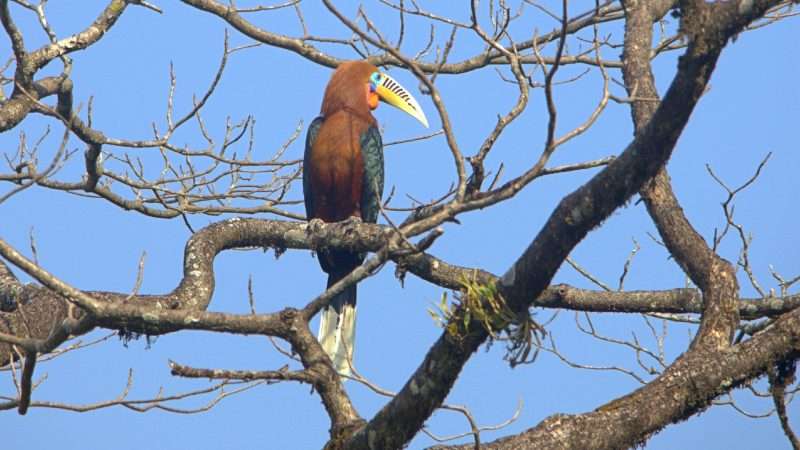
Discover Bhutan’s premier birding hotspot, with chances to spot the Beautiful Nuthatch, Rufous-necked Hornbill, and the elusive White-bellied Heron along the Tingtibi–Panbang stretch.Bird Eastern Bhutan’s Hidden Gems
Traverse the lush forests of Yongkola, Namling, Tshamang, and Lingmethang, home to rare species like Ward’s Trogon, Satyr Tragopan, and Golden-breasted Fulvetta.Tropical Forests of Gelephu
Begin or end your journey in Gelephu, where tropical species such as Great Hornbill, Red-headed Trogon, and Blue-bearded Bee-eater await in the dense lowland jungle.High-Altitude Birding at Chele La Pass
Spot Himalayan species like the Himalayan Monal, Blood Pheasant, and Fire-tailed Myzornis amidst stunning alpine scenery.Visit Phobjikha Valley – Home of the Black-necked Cranes
Witness the elegant Black-necked Cranes during their winter migration and enjoy peaceful birding in one of Bhutan’s most beautiful valleys.
Itinerary
You will arrive at Guwahati from Kolkata where OMSHA Travel, Indian representative will receive you at the Guwahati airport and travel 110 km to Samdrup Jongkhar.
Arriving at the border town of Samdrup Jongkhar in Bhutan, your Bhutanese guide will welcome you and process your Bhutan visa after which we will drive to our hotel.
Our hotel is situated in a good birding location where we may find Red Junglefowl, Asian Koel, the localized Pale-chinned Flycatcher, White-rumped Shama (little songster) and Yellow-vented Flowerpecker to name a few.
At nightfall we can scan the hotel area for Oriental Scops Owl and the localized Large-tailed Nightjar (rare). Overnight in Samdrup Jongkhar
Today we will explore the varied tropical forest of Samdrup Jongkhar and Deothang which is one of the finest birding areas in the Himalayas and so we hope to encounter the incredible Wreathed Hornbill (often seen in pairs), the scarce Blyth’s Kingfisher and the localized Golden-fronted Leafbird, Blue-eared Barbet (rare), Black-hooded Oriole, Black-backed Forktail, Thick-billed Warbler, Red-whiskered Bulbul, Little Spiderhunter, Puff-throated Babbler, the stunningly iridescent Asian Fairy Bluebird, Ruby-cheeked Sunbird, Great Tit and Pin-striped Tit Babbler.
Other regular species in the area include Plaintive Cuckoo, Chestnut-tailed Starling, Aberrant Bush Warbler, Siberian Rubythroat (adult males have jewel-like red throat-stunning!), Little Pied Flycatcher, Common Iora, Greater Racket-tailed Drongo, Oriental White-eye, Jungle Myna, flocks of Greater Necklaced Laughingthrush and perhaps with a bit of luck the rare vagrant Rosy Starling.
Overnight in Deothang
We will continue our travel to Trashigang, an area little visited by tourists. The road climbs quite steeply through dense sub-tropical broad-leafed forest – a wildlife paradise where we look in particular for the impressive Rufous-necked Hornbill (globally vulnerable but fairly uncommon and widely distributed in Bhutan), Lesser Cuckoo, Red-rumped Swallow (fairly common in the town of Deothang), Pied Harrier (our first Bhutan’s record in 2015 birding tour), Long-tailed Broadbill, Scaly-breasted Munia and the elusive Blue-winged Laughingthrush.
Arriving in Morong valley we will scan the warm broad-leafed forests looking for one of the top targets for Bhutan the Beautiful Nuthatch (another globally vulnerable species), Black Eagle, Mountain Tailorbird, White-browed Shrike Babbler, White-throated Bulbul, White-throated Fantail, Coral-billed Scimitar Babbler often seen together with Greater Rufous-headed (White-breasted) Parrotbill, Tickell’s Leaf Warbler, Alpine Thrush, Small Niltava (a view of a glowing male is not to be missed), and flocks of Striated Yuhina, Silver-eared Mesia and the localized Long-tailed Sibia.
After a hot picnic breakfast set up by our catering crew we will drive through the road, known as Melong Brak which is hewn out of a solid cliff face, to the market town of Narphung. We cross-mountain passes where there are panoramic views of mountain ranges, rolling into the distant valleys before reaching the high pass at Kharung La at 2,350m, stopping along this section should produce, Crimson-breasted Woodpecker, Black-winged Cuckooshrike, Short-billed Minivet, the photogenic Bar-throated Siva, Common Tailorbird, Ultramarine Flycatcher, Golden Babbler, Yellow-breasted Greenfinch and the attractive Gold-naped Finch.
Our journey continues through more valleys and over mountain passes to Yonphu La at 2,570m and our final descent to Sherubtse College before winding its way through terraced fields to Trashigang, once the centre of important trade with Tibet.
Overnight in Trashigang
We will leave the hotel at the early hour, which will take us through Sheri Chhu valley from where the road climbs by means of 10 hairpin bends, known as the Yadi Loops, in just 10 km!
From here we continue to the little village of Yadi where the road then passes through cool broad-leafed forests to Kore La, 2,450m along which we will look for birds such as, Hill Partridge, Asian Barred Owlet, the superb Grey-sided Laughingthrush, the dazzling Scarlet Finch, White-collard Blackbird, Fire-capped Tit, Black-chinned Yuhina, Rufous-winged Fulvetta, the secretive Brown-flanked Bush Warbler, Chestnut-crowned Warbler, Dark-sided and Grey-headed Canary Flycatchers.
Crossing the pass we descend through cool broad-leafed forests, with rhododendron undergrowth to the eastern town of Mongar. Here we will stop briefly to walk around this beautiful town before driving to Yongkola stopping along Lingmethang road to look for the rare and globally vulnerable Steppe Eagle, the rare Blue-naped Pitta (rare), Rufous and Grey-headed Woodpeckers, the impressive Speckled Piculet, the only near endemic bird in for the country Bhutan Laughingthrush, Hair-crested (Spangled) Drongo, the localized Himalayan Bulbul and Crested Bunting, Bar-winged Flycatcher Shrike, Barn Swallow (in Mongar town), Black-throated Prinia, Grey-throated Babbler, Common Stonechat and the beautifully plumaged Orange-headed Thrush and Blue-capped Rock Thrush.
Overnight in Yongkola
The areas of Yongkola, Namling, Tshamang and Lingmethang are considered to be one of the finest birding locations in the world.
Therefore we have two full days to explore the pristine forests of Thrumshing La national park using a paved yet rarely used road and it is in this birding hotspot that we look for some of Bhutan’s most sought-after birds such as the globally vulnerable Chestnut-breasted Partridge, the handsome Ward’s Trogon (another top attraction for Bhutan), the strange Long-billed Thrush (rare), the amazing Yellow-throated and Golden-breasted Fulvettas, the weird looking Sikkim Wedge-billed Babbler, Long-billed and Rufous-throated Wren Babblers (all three are very rare in the world), the localized Black-headed Shrike-babbler, the exquisite Himalayan Cutia (another top bird), Spotted Elachura (formally known as Spotted Wren Babbler), Broad-billed, Grey-cheeked and Black-faced Warbler, Nepal House Martin (big nests on a overhanging cliff near Namling waterfall), Scaly Laughingthrush, Orange-bellied Leafbird, Scaly (White’s) Thrush, Gould’s Sunbird, Yellow-bellied fantail, Lesser Shortwing, White-gorgeted and Pygmy Blue Flycatchers.
After birding in the upper region of Yongkola, we have time to explore the wonderfully rich, warm broad-leafed forests of Lingmethang road where we hope to find the near threatened Rufous-bellied Eagle, the colourful Asian Emerald Cuckoo, the secretive Red-faced Liocichla, Rufous-chinned Laughingthrush, Maroon Oriole, Grey-bellied Tesia, Striated Prinia, White-bellied Erpornis, Rufous-capped Babbler, Grey-headed Parrotbill, Brown-throated Treecreeper, Mountain Bulbul, Rufous-bellied Niltava, Common Rosefinch (on Tshamang road), Spot-winged Grosbeak and the restless flocks of Rusty-fronted Barwing.
On one evening, we will take a short night drive hoping to find Bhutan Giant Flying Squirrel (which has been regularly seen on our birding tours to Yongkola), Owls and frogmouth we will look for include very localized Hodgson’s Frogmouth, Brown Wood Owl (rare), and the common but difficult to find Mountain Scops Owl.
Overnight in Yongkola
This morning we will bird along the cool broad-leafed forests of Namling region, here we can look for the rare altitudinal migrant species Gould’s Shortwing (mega species for Bhutan), Black-eared Shrike Babbler, the much wanted Slender-billed Scimitar Babbler, Chestnut-bellied Rock Thrush and Black-throated Parrotbill amongst many other regular birds.
After breakfast we will continue our birding along Sengor valley, looking for special birds from this higher mid temperate forest, such as the attractive Satyr Tragopan often seen feeding by the roadside providing us with excellent close-up views, Solitary Snipe (rare), the exquisite Fire-tailed Myzornis, Tickell’s Thrush, Fire-tailed Sunbird (no doubt it is one of the most special sunbirds in the world) and we will take our only chance to see the localized Bar-winged Wren Babbler.
From Sengor we will drive up to the high pass of Thrumshing La at 3,799m, where on clear days, we have breathtaking views of the eastern Himalayas.
From the pass we descend through forests of towering hemlocks, spruce, Silver fir and larch where we have good chance for the fantastic Blood Pheasants, often seen in flocks feeding by the roadside, the altitudinal migrant White-throated Redstart, Black-throated Thrush, the scarce Rufous-breasted Bush Robin, Hoary-throated Barwing (fairly uncommon along here but very range restricted to Eastern Himalayas), the attractive Himalayan Bluetail, Himalayan Vulture, Winter Wren, Goldcrest, Whistler’s Warbler, Black Bulbul, the noisy Spotted Nutcracker, Oriental Skylark, Dark-rumped Rosefinch, Brown Bullfinch, Little Bunting and flocks of Stripe-throated Yuhina, Coal, Grey-crested and Rufous-vented Tits.
We travel through the picturesque village of Ura and gradually descend to Bumthang valley for the night. As night falls we can listen out for Himalayan Owl which is a species previously thought to be Tawny Owl.
Overnight in Bumthang
This morning we make an early start to be at Tharpaling Monastery in the early hours as we hope to witness the monks feeding the spectacular Himalayan Monals, where the birds have become accustomed to this practice.
Other species we will look in the area include the rarely seen White-bellied Redstart, Alpine Accentor, Himalayan Beautiful Rose-finch, flocks of Red-billed Chough, Black-billed Magpie (endemic to Bumthang valley in Bhutan), Black-faced Laughingthrush and Plain Mountain Finch. With luck on our side, we should also find the rare vagrant Godlewski Bunting.
After breakfast we will descend to Gattsa valley and continue to Yotong La (3450m) for some high-altitude birds such as the chunky White-winged Grosbeak, the little-known Great Parrotbill, Red-headed Bullfinch, Red Crossbill, Crimson-browed Finch, Whiskered Yuhina and the bamboo specialist Hume’s Bush Warbler.
Arriving in Trongsa we have the option to visit the historic Trongsa Dzong (fortress) built in 1637, and the Ta Dzong or Watch Tower, which is now the National Museum.
Overnight in Trongsa
Today we drive along the quiet, forest road towards Tingtibi. Blue Whistling Thrushes fly off the road at regular intervals, and we keep a sharp lookout for Spotted Forktail at the beautiful mossy waterfalls that are a feature of the journey.
The whole section of today’s journey is spectacular as we look for an amazing variety of rare and special birds in the mixed broad-leafed forests that stretch from 2000m down to 700m. This is also home to the Endangered Golden Langur, which can be seen in small groups along the roadside forests.
In the early part of the morning we will look for top attractions like, Lesser Yellow nape, the incredible Bay Woodpecker, the scarce Eurasian Woodcock, dazzling Scarlet Minivet, the localized Spot-winged Starling, Sapphire and Ferruginous Flycatchers, Large Niltava, Scaly-breasted Wren Babbler, Barred Cuckoo Dove, Wedge-tailed Green Pigeon, Large Hawk Cuckoo, the noisy Great Barbet, Yellow-cheeked Tit, Blyth’s Leaf Warbler, White-tailed Nuthatch, Rusty-flanked Treecreeper, Rufous-breasted Accentor, Blue Rock Thrush, Chestnut-headed Tesia, Tibetan Siskin and several flocks of White-throated Laughingthrush. The forest also holds raptors like Mountain Hawk Eagle and Crested Goshawk.
Arriving in the warmer sub-tropical areas of Tingtibi, we will look for Eurasian Sparrowhawk, Peregrine Falcon, Common Cuckoo, Crested Kingfisher, the rare vagrant Daurian Redstart, the colorful Emerald Dove, Streaked Spiderhunter, Ashy Bulbul and Rufous-necked Laughingthrush.
Overnight in Tingtibi
After a quick tea/coffee at our hotel, we will drive along the Tingtibi – Panbang road, exploring the rich bamboo forests, looking for the area’s top birds such as the little known White-browed Piculet, White-hooded Babbler (the only known site in Bhutan), Rufous-faced Warbler (rare), the secretive Pale-headed Woodpecker, White-browed Scimitar Babbler often seen together with Lesser Rufous-headed Parrotbill, Blyth’s Paradise Flycatcher (previously thought to be Asian Paradise Flycatcher which has been split into three separate species), Pin-tailed Green Pigeon, White-rumped Munia, the rare Smoky Warbler, and along the Mangde chhu (river) we will look for perhaps the rarest bird seen in Bhutan the critically endangered White-bellied Heron, the population of this birds is estimated at only 60 individuals left in the wild.
Overnight in Panbang
After tea/coffee in our hotel, we will bird along the tropical forest between Panbang and Nganglam looking for some of Bhutan’s rare and sought-after species such as Grey Peacock Pheasant (very rare in the world), Buff-breasted Babbler (recorded for the first time in Bhutan in 2019 on our birding tour), Eye-browed Wren babbler (Panbang is the only known site for this species in Bhutan), Rufous-vented Laughingthrush (another species that is found only in this region), Collared Treepie (another rare species), Silver-breasted Broadbill, Green Cochoa, Rufous-backed Sibia, Oriental Dwarf Kingfisher and Hooded Pitta seeing any of the above brings an excitement to the experience.
Other regularly birds include Crested Serpent Eagle, Mountain Imperial Pigeon, Spotted Dove, Lineated Barbet, Eurasian Wryneck, Grey-capped Pygmy Woodpecker, Greater (Flameback) Goldenback, Red-breasted Parakeet, Plaintive and Grey-bellied Cuckoos, Lesser Racket-tailed Drongo, Great Myna, Red-headed Trogon (surely one of the prettiest trogons in the world), Black-naped Monarch, Grey Bushchat, Snowy-browed Flycatcher, Asian House Martin, Yellow Wagtail and White-throated Bulbul.
Overnight in Panbang
This morning we will explore the forest road towards Manas National Park office in Panbang looking for the areas top attractions such as Large Woodshrike, Chestnut-headed Bee-eater, Jerdon’s Baza (rare), Thick-billed Green Pigeon, Indian Cuckoo, Greater Coucal, Savanna Nightjar, Dollarbird, Lesser Necklaced Laughingthrush and the rare Citrine Wagtail.
Other relatively common birds include Grey-hooded Warbler, Bank Myna, Eurasian Collared Dove, Blue-winged (Siva) Minla, Cattle Egret, Striated Yuhina, Slaty-backed Flycatcher, Plain Flowerpecker and House Sparrow.
The forests along here also hold mammals such as Asian Elephant, Wild Water Buffalo, Clouded Leopard, Wild Boar, Jungle Cat, Sambar, Golden Langur and Indian Palm Civet encounters of any of which can be a big highlight of the trip.
After breakfast we will retrace our journey back to Tingtibi, stopping along the areas we missed on our way in.
Overnight in Tingtibi
Our first wonderful birding area is at Tama La (pass), 1,660m, where we hope to see new birds such as, Chestnut-winged Cuckoo, Fork-tailed Swift, Greater Yellownape, Long-tailed Minivet, Red-billed Leiothrix, Slaty-bellied Tesia, Lemon-rumped Warbler, Pale Blue Flycatcher, and White-tailed Robin. Raptors may well include Oriental Honey Buzzard and Shikra.
Overnight in Gelephu
Today we will visit the Gelephu sewage pond for our morning birding, here we can look for the very localized species such as Cinnamon Bittern, Great Thick-knee (rare), Pin-tailed Snipe (rare), Sand Lark, Black Baza (rare), Black Stork (rare), Lesser Whistling Duck and Red-naped Ibis (rare), including regular species such as Indian Pond Heron, Little Egret, White-breasted Waterhen, Yellow-wattled and River Lapwings, Common and Green Sandpipers.
After breakfast we will drive along Tsirang road, where we can track-down Indian Peafowl, the superb Oriental Pied Hornbill, Red-collared Dove, Yellow-footed Green Pigeon, another near-threatened Rose-ringed Parakeet, Hodgson’s Hawk Cuckoo, Bonelli’s Eagle, Lesser Coucal, the brightly coloured Indian Roller, Coppersmith Barbet, Fulvous-breasted Woodpecker, Ashy Woodswallow, Brown Shrike, Rufous Treepie, the very shy and secretive Large Scimitar Babbler, Lesser Necklaced Laughingthrush, the attractive Common Hill Myna, Taiga Flycatcher, Fire-breasted Flowerpecker, Grey Wagtail and the colourful Crimson Sunbird. Abundant species in the area include House Crow, Jungle Babbler, Asian Pied Starling and Oriental Magpie Robin.
Overnight in Gelephu.
Today we will visit the Gelephu sewage pond for our morning birding, here we hope to find all our target species such as Black Baza (rare), Black Stork (rare), Lesser Whistling Duck, Red-naped Ibis (rare), Cinnamon Bittern (rare elsewhere in Bhutan), Indian Pond Heron, Little Egret, White-breasted Waterhen, the strange looking Great Thick-knee, Yellow-wattled Lapwing (rare), Pin-tailed Snipe (rare), Common Sandpiper and Sand Lark.
After our morning birding we will return to our hotel for breakfast and continue to Punakha via Tsirang, with several stops en-route for birds, butterflies and mountain scenery.
On this journey we will look for birds such as, Indian Peafowl, Oriental Pied Hornbill, Red-collared Dove, Yellow-footed Green Pigeon, Rose-ringed Parakeet, Hodgson’s Hawk Cuckoo, Bonelli’s Eagle, Lesser Coucal, the amazingly beautiful Indian Roller, Coppersmith Barbet, Fulvous-breasted Woodpecker, Ashy Woodswallow, Brown Shrike, Rufous Treepie (rare), House Crow, the rarely seen Large Scimitar Babbler, Jungle Babbler (common), Lesser Necklaced Laughingthrush (seen usually in small flocks), Common Hill Myna, Asian Pied Starling, Oriental Magpie Robin (abundant), Grey Wagtail, Taiga Flycatcher, and the very obliging and colourful Crimson Sunbird.
Overnight in Punakha
Today we will visit the Tashithang Valley – section of the Jigme Dorji National Park. Once we reach the broad-leaved forest, at 1,600m, we hope to see Black Mountain Hawk and Crested Serpent Eagles, Red-headed Trogon (rare), flocks of Nepal Fulvetta, Spotted Elachura , Greater and Lesser Yellownapes, Bay and Rufous Woodpeckers, Golden-throated, Blue-throated and Great Barbets, Grey-bellied, Slaty-bellied and Chestnut-headed Tesias, Hair-crested Drongo, Slaty-backed, Spotted and Little Forktails, Striated and Bhutan Laughingthrushes and flocks of Scarlet Minivets.
When the heat of the day increases, birding lessens so we will drop down to Punakha to visit the majestic 17th century Punakha Dzong which is spectacularly situated on a promontory at the confluence of the Mo (mother) and Pho (father) Chhu (river) becoming the Puna Tsang Chhu which eventually joins the Brahmaputra.
In the late afternoon we will drive along the Pho Chhu valley, looking for the critically endangered and probably the rarest bird in Bhutan, the White-bellied Heron, as well as Pallas’s Fish-Eagle (globally endangered).
Overnight in Punakha.
Today we must leave very early to Lampelri we will explore the Royal Botanical Park where we may find, Hill Partridge, Ward’s Trogon (globally vulnerable and very range restricted to Eastern Himalayas), Eurasian Jay, Rufous-bellied Woodpecker, Red-billed Leiothrix, Fire-capped Tit, Blue-fronted Redstart, Verditer Flycatcher, Blue-fronted Robin (very shy and rare), Scarlet Finch, Dark-breasted Rosefinch and Maroon-backed Accentor.
Overnight in Paro
Today we will have a fabulous day in Bhutan with a great mix of birding and some of the Paro Valley’s cultural treasures. The cultural highlight will be the walk up to the famous Taksang (Tiger’s Nest) Monastery. The monastery is perched some 600m up on a cliff overlooking the valley and was said to be where the legendary Guru Padma Sambhava, flew from East Bhutan on the back of a tiger to defeat demons who were opposing the spread of Buddhism in Bhutan.
It is a steep uphill walk-through woods, of about 1 1⁄2-2hrs, to reach a cafeteria (an ascent of 340m). Apart from offering welcome refreshment, at the cafeteria, this is one of the principle viewpoints of the monastery, and those who prefer not to climb any further can relax here whilst others continue their trek.
Birds we may encounter on this route may well include Himalayan Buzzard, Eurasian Jay, the attractive Darjeeling Woodpecker, White Wagtail, Green-tailed Sunbird and Eurasian Tree Sparrow.
From the cafeteria it is a further half hour’s ascent, which brings you to another viewpoint directly across from the monastery. The final section of the walk takes you from this viewpoint steeply down 100m into the gorge that separates you from the monastery and then climbs back up again to reach the monastery.
The rocky ledges near the monastery hold gems like Snow Pigeon and Altai Accentor, both of which are found in small flocks, while the waterfall next to the monastery should produce Little Forktail and White-capped Water Redstart.
After visiting the monastery we will then descend to the valley floor by your outward route back to where our vehicle will be waiting. The full walk to the monastery and back involves approximately 740m of ascent.
Overnight in Paro
In the morning drive to Airport for your onward destination.
What's Included & Excluded
Inclusions:
- A minimum of 3-star accommodation
- Full Board (Breakfast, Lunch & Dinner)
- Bottle of water in the car.
- A licensed Bhutanese tour guide.
- Private transport (transfer & sightseeing)
- Monument (Dzongs & Temples) and Museum Fees
- Sustainable Development Fee & Visa Fee
Exclusions:
- Air Transport/Flight
- Personal Expenses such as Laundry, Tips, etc
- Drinks & beverages.
- Travel Insurance
- Bank Charges