Bhutan, the peaceful Himalayan kingdom often referred to as the “Last Shangri-La,” is a country of rich traditions, deep-rooted spirituality, and fascinating art forms. While Bhutanese culture is heavily influenced by Buddhism, its artistic expressions are unique, filled with symbolism and spiritual meaning. Among the most striking and surprising symbols prevalent throughout Bhutan are the phallus symbols, found painted on houses, crafted into sculptures, and even venerated in temples.
To outsiders, the depiction of phallic symbols in Bhutan might seem startling, but in Bhutanese culture, these symbols hold deep spiritual and cultural significance. Known as “linga,” the phallus serves as a symbol of fertility, protection, and good luck. This blog explores the tradition, belief, and art behind the phallic symbols in Bhutan, shedding light on how they play a pivotal role in Bhutanese art and culture.
The Origins of the Phallus Symbol in Bhutanese Culture
The prominent use of the phallus symbol in Bhutanese culture is often attributed to the legendary 15th-century Buddhist saint, Drukpa Kunley, also known as the “Divine Madman.” Drukpa Kunley was a revered Buddhist master, famous for his unconventional and eccentric ways of spreading the teachings of Buddhism. He preached about enlightenment using humor, sex, and bizarre behavior to break down societal norms and bring people closer to spiritual awakening.
Drukpa Kunley’s teachings were filled with sexual metaphors and humor, which might seem irreverent but were grounded in deep wisdom. He used the phallus as a spiritual tool, symbolizing the defeat of evil spirits and the bestowal of fertility. According to Bhutanese legend, Drukpa Kunley subdued demons and malevolent forces by hitting them with his “flaming thunderbolt” (a euphemism for his phallus), thereby protecting the people from evil.
It was this playful, rebellious attitude toward spiritual teachings that made Drukpa Kunley a beloved figure in Bhutanese folklore, and his influence continues to shape Bhutanese art and culture to this day. The phallus symbol, closely associated with his teachings, can be seen in various forms throughout Bhutan.
Phallic Symbols as Protectors of Bhutanese Homes
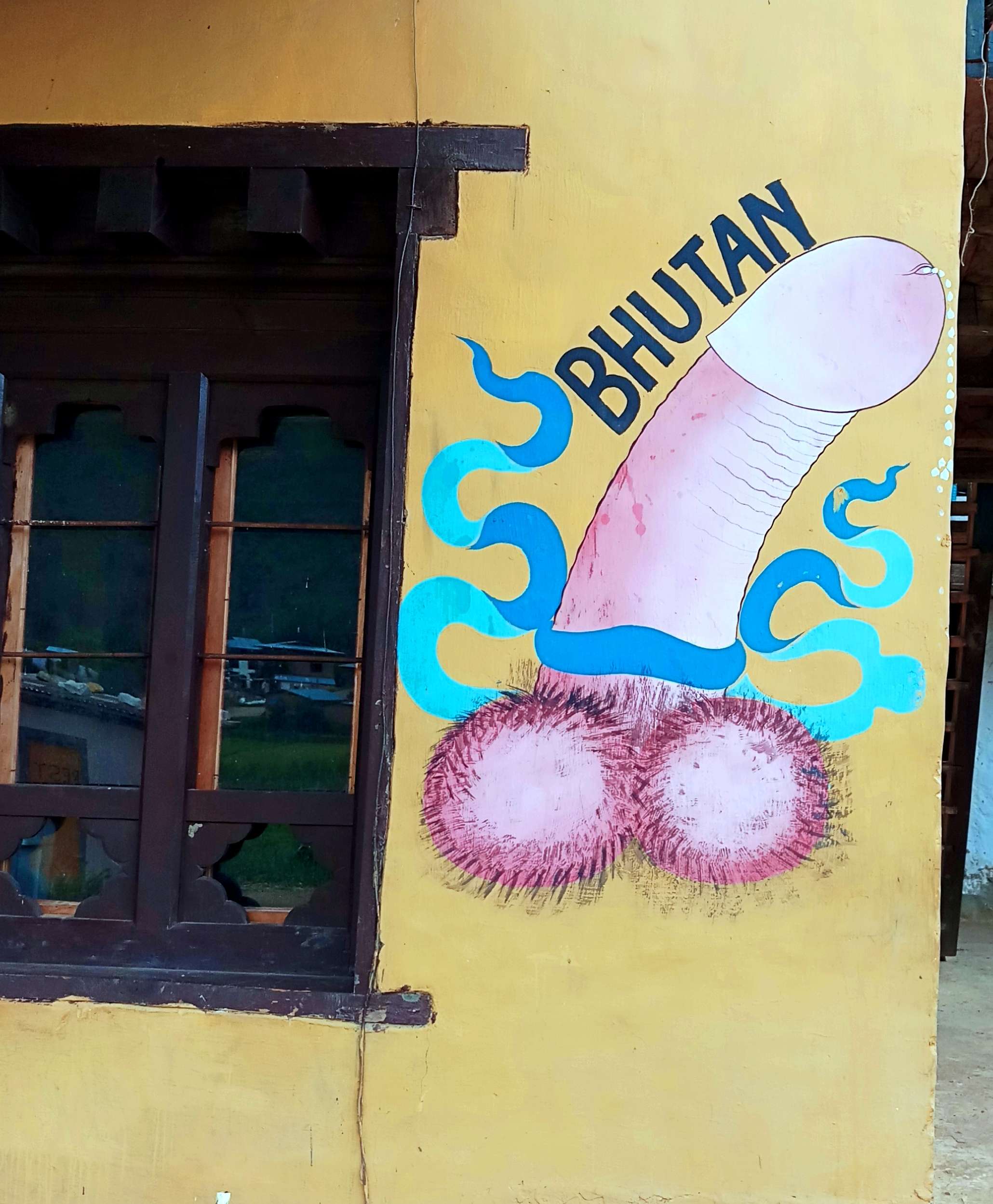
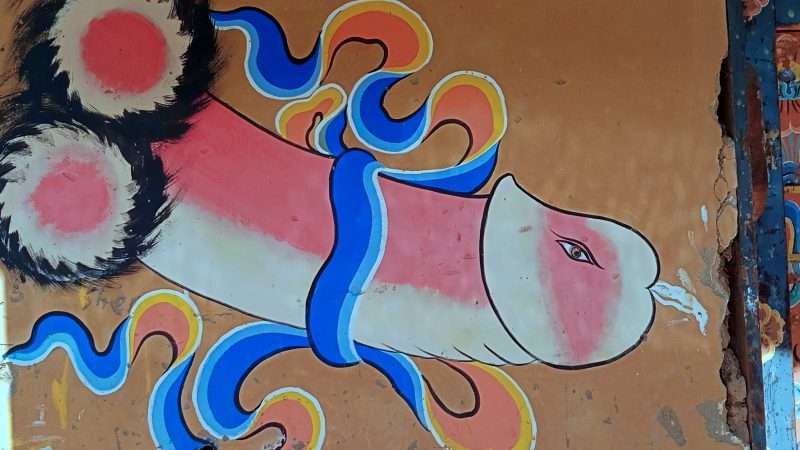
One of the most common places to encounter phallic imagery in Bhutan is on the walls of homes. Walking through Bhutanese villages, it’s not unusual to see colorful and often exaggerated depictions of phalluses painted on the walls of houses. These paintings serve as a form of protection, believed to ward off evil spirits and bring good fortune to the family living within.
The practice of painting phallic symbols on homes has been passed down through generations and is rooted in the belief that these symbols can protect against the “evil eye” and other malevolent forces. In Bhutanese art, these phallic images are often accompanied by vibrant colors and artistic embellishments. The phalluses may be painted in different positions, some adorned with ribbons, others exaggerated in size, but all are meant to invoke humor, joy, and protection.
While the phallus in other cultures may be viewed as taboo, in Bhutanese culture, it is seen as a sacred and positive symbol. There is no sense of shame or embarrassment associated with these images, as they are believed to embody the playful yet profound spiritual teachings of Drukpa Kunley. Phallic symbols, in fact, remind people of the importance of maintaining a lighthearted approach to life and spirituality.
Chimi Lhakhang: The Temple of Fertility
A key location for understanding the significance of the phallus symbol in Bhutanese culture is Chimi Lhakhang, also known as the “Fertility Temple.” Situated in the Punakha Valley, Chimi Lhakhang was built in honor of Drukpa Kunley and remains one of Bhutan’s most important pilgrimage sites for those seeking fertility blessings.
The story behind Chimi Lhakhang is deeply connected to Drukpa Kunley’s legend. It is said that the Divine Madman subdued a powerful demoness at the site of the temple using his phallus, which he referred to as his “magic thunderbolt.” The temple, thus, became a place where couples wishing for children come to seek blessings. The temple’s lama blesses visitors by tapping them on the head with a large wooden phallus, a practice believed to grant fertility and prosperity.
Inside Chimi Lhakhang, you will find phallic symbols everywhere, from paintings on the walls to small statues and offerings. Visitors often take home miniature wooden or metal phalluses as souvenirs or protective charms. This temple encapsulates how deeply phallic imagery is woven into the spiritual and everyday life of the Bhutanese people.

Phallic Symbols in Bhutanese Art
In Bhutan, the phallus is not merely a religious or protective symbol but is also an important element in Bhutanese art. Phallic imagery has been incorporated into Bhutanese paintings, murals, and sculptures for centuries. Artists in Bhutan use vibrant colors and playful designs to bring these symbols to life, often exaggerating their features for both aesthetic and symbolic reasons.
Bhutanese art, especially murals, plays a significant role in communicating spiritual messages, and phallic symbols are frequently integrated into larger compositions that depict Buddhist teachings and legends. In traditional Bhutanese homes, it’s common to see phallic symbols painted alongside other important religious symbols like the eight auspicious signs of Buddhism.
One of the fascinating aspects of phallic art in Bhutan is its ability to provoke both spiritual reverence and humor. Bhutanese artists often imbue their work with a sense of playfulness, reflecting the teachings of Drukpa Kunley. This approach to phallic imagery challenges societal norms and taboos, encouraging people to view the phallus as a powerful, life-affirming symbol rather than something to be hidden or repressed.
The Role of Phallic Symbols in Bhutan Tours
For travelers on Bhutan tours, encountering phallic symbols is often a surprising but intriguing experience. Many tourists are curious about the prevalence of these symbols, and local guides are happy to explain their cultural and spiritual significance. Visiting places like Chimi Lhakhang or walking through villages adorned with phallic art offers a unique insight into Bhutanese culture that is unlike anything found elsewhere in the world.
Travelers interested in Bhutanese art and culture will find that the phallic symbol is a key part of the Bhutanese aesthetic. Many tour operators, including Omsha Travel, incorporate visits to temples, villages, and art galleries where phallic imagery is prominent, giving tourists a well-rounded understanding of this distinctive aspect of Bhutanese life.
Conclusion
The phallus symbol in Bhutan is a captivating blend of tradition, belief, and art. Rooted in the teachings of Drukpa Kunley, the “Divine Madman,” it represents both protection from evil spirits and the life-giving force of fertility. Far from being a taboo, the phallus is embraced as a sacred and humorous symbol that brings blessings and joy to the people of Bhutan.
Whether found in the playful depictions on Bhutanese homes or the solemn rituals of Chimi Lhakhang, phallic symbols are an essential part of Bhutanese art and culture. They offer a glimpse into the unique spirituality of Bhutan, where humor, protection, and sacredness come together in an extraordinary way. For visitors, understanding the phallus symbol is key to understanding the deeper layers of Bhutan’s spiritual and artistic landscape, making it one of the most fascinating aspects of a Bhutan tour.