
When it comes to Bhutan travel, most visitors think of soaring Himalayan peaks, pristine monasteries, and rich cultural traditions. Yet, one of the most intriguing aspects of Bhutan’s natural heritage is its national animal, the Takin. Unlike any other creature in the world, the takin is not only a symbol of Bhutan’s unique biodiversity but also a reflection of the country’s deep-rooted spiritual and mythological traditions. In this blog, we will explore why the takin is called the takin, its origin, history, and the fascinating stories behind its mythical existence, all while providing insights into places to visit in Bhutan and the opportunities offered by Bhutan tour operators.
What is a Takin?
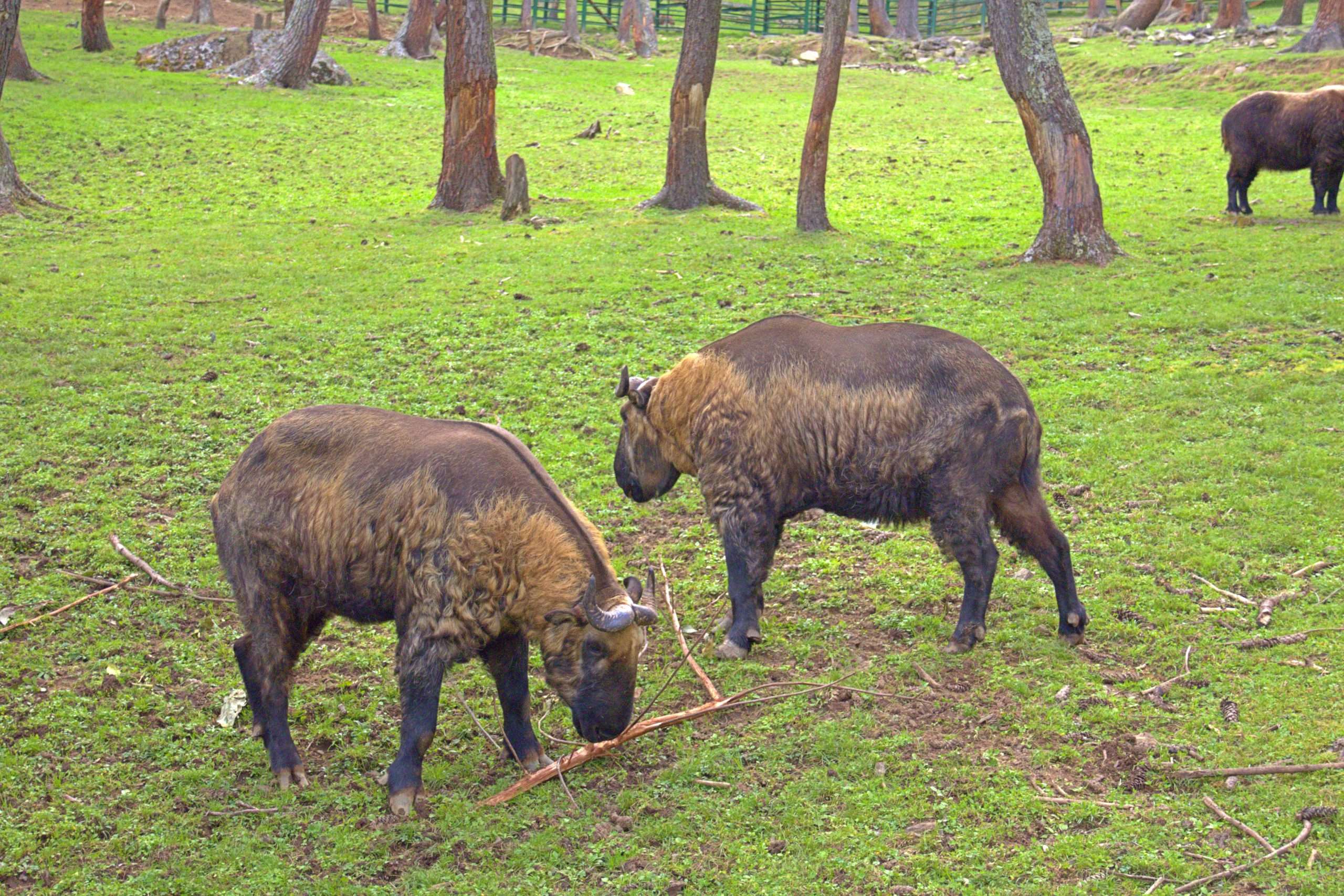
The Takin (Budorcas taxicolor) is a large, hoofed mammal that belongs to the goat-antelope family. Found in the high-altitude regions of the eastern Himalayas, the takin roams the alpine meadows and dense forests, perfectly adapted to the rugged mountainous terrain. With its sturdy, muscular build, a broad snout, and a distinctively humped nose, the takin has a remarkable appearance that is often described as a cross between a cow, a goat, and a musk ox.
Native to Bhutan, India, China, and parts of northern Myanmar, but this particular subspecies Takin (Budorcas taxicolor whitie) is endemic to Bhutan. The takin is considered vulnerable due to habitat loss and poaching. However, in Bhutan, this revered animal enjoys protection, both for its role in the ecosystem and its deep connection to Bhutanese culture and folklore. As Bhutan’s national animal, the takin plays an essential role in Bhutanese identity, making it a must-see for nature lovers exploring Bhutan tour packages.
The Mythological Origins of the Takin
In Bhutan, the takin is known for its association with one of the country’s most beloved saints, Drukpa Kunley, also known as the Divine Madman. This legendary figure plays a pivotal role in the animal’s name and origin story, tying it deeply to Bhutan’s mythological traditions.
When visiting Bhutan, especially through a Bhutan travel agency or guided Bhutan tour, one of the most interesting stories you will hear is the legend of the takin’s creation. This story traces back to the 15th century and involves the charismatic and eccentric saint, Drukpa Kunley. Famous for his unconventional approach to Buddhism, Drukpa Kunley, known as the Divine Madman, used humor, riddles, and unconventional actions to spread his teachings.
According to the most popular legend, during one of Drukpa Kunley’s travels, he was asked by his followers to perform a miracle. In response, he humorously demanded a whole goat and cow for lunch. After eating the meal, he took the bones of the two animals, combined them, and miraculously created a new creature with the head of a goat and the body of a cow. This animal came to life as the Takin.
This mythical story of the takin’s creation has cemented its status as a sacred and revered animal in Bhutan. Today, visitors to Bhutan can learn about this fascinating legend while on Bhutan tour packages or during cultural excursions organized by Bhutan tour operators.

The Importance of the Takin in Bhutanese Culture
The takin is more than just an animal in Bhutan—it is a cultural icon and an embodiment of the country’s values and spiritual beliefs. Its close association with Drukpa Kunley, a symbol of irreverence and spiritual wisdom, underscores Bhutan’s unique approach to Buddhism, which often blends serious religious devotion with humor and folklore.
In recognition of its cultural and spiritual significance, the takin was declared Bhutan’s national animal in 1985. It represents not only the country’s reverence for nature but also its commitment to preserving wildlife and natural habitats. This commitment to conservation is evident in Bhutan’s policy of environmental protection, where over 70% of the land is under forest cover, and wildlife protection is prioritized.
For those exploring places to visit in Bhutan, the Motithang Takin Preserve in Thimphu is one of the top spots to see this majestic animal up close. Originally a mini-zoo, the preserve was transformed into a wildlife sanctuary to provide a more natural habitat for the takins. Visitors can observe the takins as they graze peacefully in their lush surroundings while learning about Bhutan’s conservation efforts.
Takin and Its Role in Bhutanese Ecosystems
The takin plays a crucial role in the fragile ecosystems of Bhutan’s high-altitude regions. As herbivores, they graze on leaves, grasses, and shrubs, helping to maintain the balance of vegetation in the alpine meadows and forests they inhabit. Takins are also well-adapted to the harsh environments of the Himalayas, thriving in elevations between 3,000 to 4,500 meters, where they endure extreme temperatures.
For wildlife enthusiasts on a Bhutan tour, spotting a takin in its natural habitat is a rare and rewarding experience. Some of the best places to catch a glimpse of this elusive creature are the high-altitude regions of Jigme Dorji National Park and Sakteng Wildlife Sanctuary, both of which are rich in biodiversity and a must-visit for those interested in Bhutan’s wildlife.

Conservation Efforts and Takin Preservation
Bhutan’s commitment to wildlife conservation has been instrumental in protecting the takin. Although the species is listed as “vulnerable” by the IUCN due to habitat loss and hunting in other parts of its range, Bhutan has taken significant steps to safeguard the takin population. The Motithang Takin Preserve in Thimphu serves as both a sanctuary for the takin and an educational center, raising awareness about the importance of protecting Bhutan’s wildlife.
As part of a Bhutan tour package, visiting the Motithang Takin Preserve provides a unique opportunity to learn more about Bhutan’s wildlife conservation initiatives and its dedication to protecting endangered species. The preserve is also home to other animals, including the Himalayan serow and sambar deer, making it an excellent stop for nature enthusiasts.

Conclusion
The takin, with its mysterious origins and cultural significance, embodies the essence of Bhutan—a country where nature and spirituality are intertwined. As you embark on your Bhutan travel adventure, make sure to visit the Royal Takin Preserve and the many other places to visit in Bhutan where this magnificent animal roams. Whether you’re interested in its mythological background or its role in Bhutanese wildlife, the takin is a creature that will undoubtedly leave a lasting impression.
Book your Bhutan tour package today and experience the beauty and mystery of the takin, Bhutan’s national animal.