Trekking in Bhutan
Trekking Style in Bhutan
Trekking in Bhutan is unlike trekking anywhere else in the Himalayas. Almost all treks in Bhutan are camping-based. Your tour operator provides tents, sleeping bags, kitchen tents, and a dedicated cook. Unlike Nepal, there are no tea houses or lodges along the trails. It is a complete wilderness experience.
Independent trekking in Bhutan is not permitted — all treks must be arranged through a licensed Bhutanese tour operator. Trekkers embark on a fully guided journey, sleeping in tents at designated campsites along the route. Each morning, the support crew walks ahead of the group to set up camp, so by the time you arrive, your tents are pitched and a steaming cup of tea awaits in the dining tent — a welcome comfort after hours on the trail.
Every trekking group is accompanied by a trained guide and an experienced trek chef, supported by assistants and local horsemen. Instead of porters, horses or yaks carry the bulk of your gear, food supplies, and camping equipment. Trekkers only need to carry a light daypack with personal essentials like a camera, toiletries, snacks, and a water bottle.
Trekking Trail
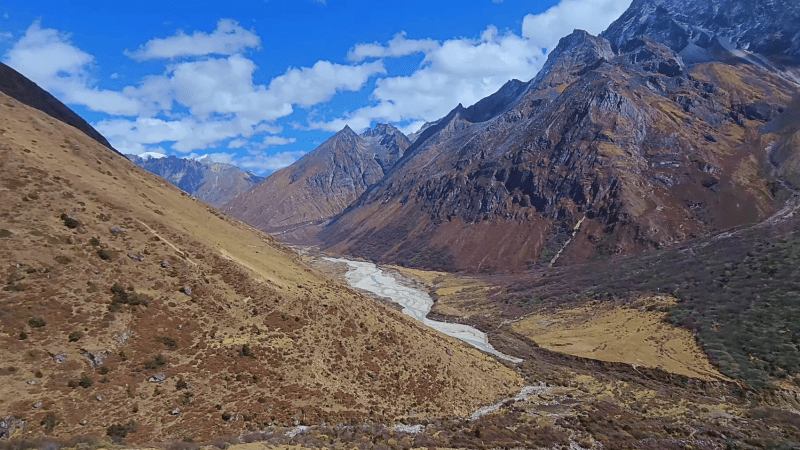
Trekking in Bhutan is physically demanding, as it involves long, steady climbs up hillsides and traversing mountainous terrain with dramatic changes in elevation. On most treks, the average daily ascent is around 500 meters, spread across 8 to 12 kilometers of hiking. Campsites can be widely spaced, meaning some days may require seven to nine hours of trekking, while others may involve a shorter three to four hours of brisk walking.
The trails are diverse and often challenging—you’ll cross moraine fields, walk over long stretches of rounded river rocks that can be tough on the feet, and occasionally navigate muddy paths. At times, you may need to hop across small streams or negotiate uneven ground. On high passes, it’s not uncommon to encounter snow, even outside the winter months.
Trekkers should also be prepared for unforeseen changes. Despite careful planning, itineraries may need to be adjusted due to force majeure—a blocked trail from heavy snowfall, a broken bridge caused by sudden rains, or icy conditions making it unsafe for horses to pass.
Bhutan’s treks are an adventure into the raw Himalayas, and part of that experience is embracing the unexpected challenges—and the extraordinary rewards that come with them.
Meals on trek
You will be supplied with lavish, freshly prepared meals throughout your trek, so there’s no need to bring food with you. However, you may wish to pack a few energy bars or trail mix for a quick snack while walking. Our skilled trekking chefs are known for conjuring up delicious dishes even at the highest altitudes, and many trekkers remark that camp meals often surpass those served in city hotels.
Alongside traditional Bhutanese dishes, you’ll be treated to a variety of Chinese, Indian, and continental cuisine, ensuring every meal is satisfying and diverse.
Breakfast typically includes toast, eggs, sausages, ham, fresh fruit juice, tea, and coffee. You may also enjoy oatmeal, baked beans, peanut butter, or drinking chocolate to start your day with warmth and energy.
Lunch is served hot and packed for the trail, featuring rice, noodles, vegetables, meat, fruit, boiled eggs or potatoes, and juice for refreshment.
Afternoon Tea/Coffee is a welcome pause after trekking, served with biscuits and sometimes light snacks like peanuts or salted popcorn.
Dinner begins with a steaming bowl of soup, followed by a hearty main course of meat (yak, chicken, fish, pork, or beef) and vegetables, paired with either white or Bhutan’s famed red rice. Fresh fruits and tea or coffee complete the evening meal.
On a Bhutan trek, meals are not just nourishment—they are a highlight of the day, offering warmth, comfort, and the pleasure of sharing good food under the stars.
Water on trek
During your city tours in Bhutan, you will be supplied with bottled drinking water. Once you are on the trek, however, the approach changes to ensure both safety and sustainability.
Our trek assistants collect fresh water from mountain streams and rivers along the route. This water is boiled each morning and provided for you to fill your bottles before setting off for the day. Additional boiled water will also be available at camp in the evenings.
If you prefer to collect water directly from streams while trekking, we recommend using your own purification tablets or filters for extra safety.
This system ensures you always have access to safe, clean drinking water, while minimizing the use of plastic bottles and protecting Bhutan’s pristine environment.
Segregation of clothes
A day before your trek begins, you will need to separate the clothes and gear you’ll need on the trek from those you’ll wear in the city.
All items required for the trek should be packed into a duffel bag, which will be carried by horses or yaks along the route. This includes your trekking clothes, warm layers, sleeping essentials, and personal items for use at the campsites.
Your city clothes and any other belongings that you won’t need on the trail can be packed into your hard suitcase. This suitcase will be safely stored at the OMSHA Travel office while you are trekking and will be returned to you once you complete your journey.
This system keeps your load light and organized, while ensuring you have everything you need on the trek—and nothing extra weighing you down.
Our Trekking Guides
Our trekking guides are experienced, skilled, and highly respected professionals in Bhutan’s adventure travel industry. Their foremost responsibility is your safety and well-being on the trail, and they are fully prepared to handle any situation that may arise in the mountains.
Each guide undergoes annual training in emergency first aid and Acute Mountain Sickness (AMS) awareness. They are trained to prevent, recognize, and treat altitude-related illnesses and can respond swiftly to ensure trekkers remain safe. They are also adept at spotting and avoiding potential hazards, such as slippery trails, unstable rocks, or sudden weather changes.
Beyond safety, our guides are walking encyclopedias of the Himalayas. They share insights on climate zones, campsite altitudes, distances between stops, and local customs. Their deep knowledge of mountain culture, geology, flora, and fauna enriches every trek, turning each step into an opportunity for learning.
Our guides are not only tough and capable—they are also patient teachers and supportive companions, ready to show you everything you need to know about trekking at high altitude and helping you gain confidence as you journey through Bhutan’s rugged and beautiful landscapes.