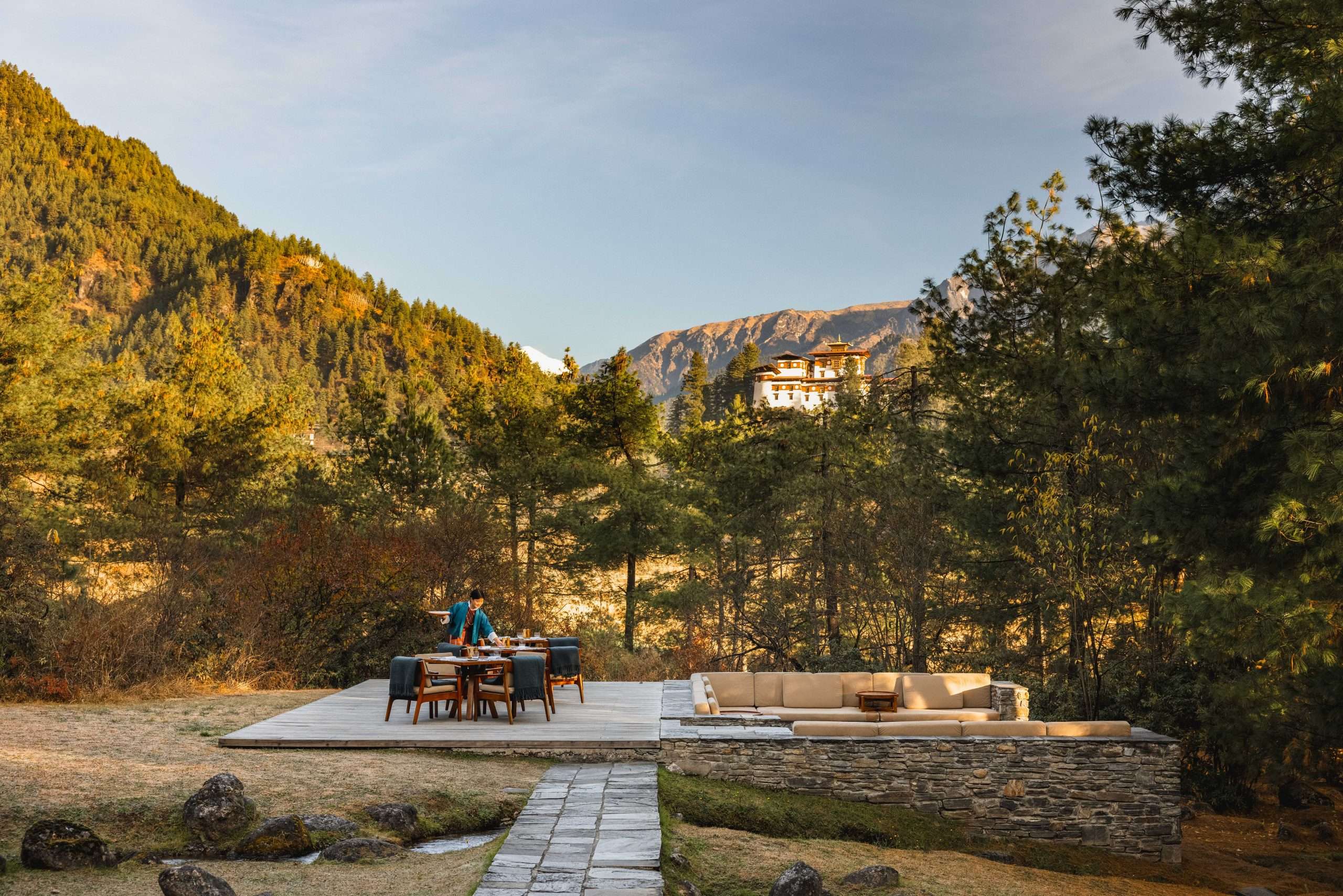
In the Kingdom of Bhutan, luxury is often quieter, more personal and more meaningful. It can mean waking up to a Himalayan valley with no crowds outside your window, having a private guide take you to a little-known temple, enjoying a traditional hot-stone bath after a day of hiking, or visiting a local Bhutanese family in their home, sharing Suja and stories, and experiencing the warmth and authenticity of everyday Bhutanese life.
Bhutan has deliberately developed tourism around a “high-value, low-volume” approach. The country’s tourism model is designed to protect its culture, environment and communities while giving visitors a more intimate experience.
For travelers accustomed to luxury in places such as the Maldives, Dubai or Europe, Bhutan offers something quite different: luxury through space, privacy, authenticity, nature and time.
So, what does a luxury trip to Bhutan actually look like?
What Luxury Means in Bhutan
True luxury is having a meaningful and authentic experience that you could not easily create on your own.
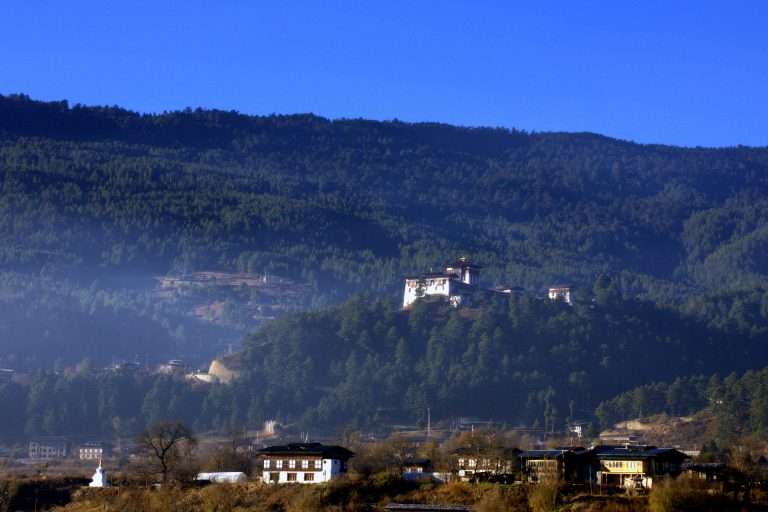
Imagine starting your morning with a hike to Khamsum Yulley Namgyal Chorten before the busiest part of the day, followed by breakfast overlooking the temple and the beautiful Punakha Valley.
Later, rather than rushing from one attraction to another, your private guide might take you to a peaceful monastery where you can learn about Bhutanese Buddhist traditions. With prior arrangement and in a respectful manner, you might offer tea or a simple meal to the young monks, spend some quiet time with them, and learn about their daily life. It is not about creating a staged experience, but about sharing a genuine moment of human connection.
In the afternoon, you might visit a traditional farmhouse or village, meet local people, learn about Bhutanese architecture, taste local food, visit an artisan workshop, or simply sit with a cup of Suja while looking across a Himalayan valley.
These are the moments that can make a luxury journey truly special.
The Sustainable Development Fee (SDF) is also part of this model. For international visitors, the current SDF is US$100 per adult per night, with reduced rates for children; Indian visitors have a separate rate of Nu. 1,200 per person per night. The SDF supports areas including education, healthcare, environmental protection, infrastructure and cultural preservation.
In other words, part of the cost of visiting Bhutan contributes to the country’s broader tourism and development philosophy.
Where to Stay: Bhutan’s Luxury Hotels & Resorts
Bhutan has a growing collection of luxury hotels and lodges, from internationally recognized brands to distinctive Bhutanese properties.
A lodge with spectacular mountain views may be perfect for someone seeking solitude but less suitable for a traveler who wants easy access to cultural attractions.
A wellness-focused resort may be ideal for a couple seeking relaxation but less appropriate for a family looking for active outdoor experiences.
A heritage property may be the perfect choice for someone fascinated by Bhutanese architecture and traditions.
Ultimately, luxury travel in Bhutan is about getting more meaning from your time in Bhutan.
The hotel becomes part of the experience rather than the experience itself.
This is where local expertise matters.
We can help travelers look beyond the room and consider the entire experience: location, atmosphere, service, activities, accessibility, surroundings and how the property fits into the rest of the journey.
The best choice depends on what you want from your journey.
How Luxury Hospitality in Bhutan Really Works
Before choosing hotels, it helps to understand how luxury travel in Bhutan is structured.
The Circuit Model vs. the Standalone Model
Bhutan is a country of distinct valleys, each with its own landscape, culture and character. A typical luxury journey may take you through Paro, Thimphu, Punakha, Gangtey (Phobjikha) and Bumthang, with most itineraries covering three to five valleys over seven to fourteen days.
Luxury accommodation generally follows two different models.
The first is the circuit model. Brands such as Aman and Six Senses have developed a network of lodges across several of Bhutan’s key destinations. Guests can move from one property to another while remaining within the same hospitality experience throughout the journey. From accommodation and service to private guides, drivers and transfers between valleys, the experience can be seamlessly coordinated from arrival to departure.
The second is the standalone or boutique model. Properties such as Gangtey Lodge, COMO Uma, Bhutan Spirit Sanctuary and Pemako offer their own distinctive interpretation of Bhutanese luxury. Rather than staying with one brand throughout the trip, travellers can combine different hotels in different valleys, creating a more varied and personalised experience.
This approach can be especially rewarding because each property brings something different to the journey—whether it is wellness, contemporary design, traditional Bhutanese architecture, intimate service or a spectacular natural setting.
For many travellers, the ideal option is a hybrid itinerary that combines both styles. You might spend a few nights at a Six Senses property to enjoy its wellness facilities, continue to Gangtey Lodge for its intimate atmosphere and beautiful views over the Phobjikha Valley, and finish your journey at Amankora Paro, surrounded by the dramatic scenery of the Paro Valley.
The best luxury journeys in Bhutan are not necessarily about staying with one hotel brand from beginning to end. Often, they are carefully curated to combine different landscapes, experiences and styles of hospitality, creating a journey that feels varied, seamless and uniquely personal.
The Best Luxury Hotels in Bhutan: Amankora, Six Senses, COMO Uma & Pemako
Luxury hospitality in Bhutan is different from luxury in most other destinations. The appeal is not simply large rooms, elaborate restaurants, or high-end amenities. The best properties are designed around Bhutan’s landscapes, architecture, spirituality, food, wellness and culture.
For travelers planning a high-end private journey, four names stand out: Amankora, Six Senses Bhutan, COMO Uma and Pemako. Each offers a distinctly different interpretation of luxury, and choosing between them often depends less on price than on the kind of Bhutan experience you want.
- Amankora
Five lodges across Paro, Thimphu, Punakha, Gangtey and Bumthang · 76 suites · Best for: seamless ultra-luxury circuits
Amankora is the name that established the modern ultra-luxury lodge concept in Bhutan. The first lodge opened in Paro in 2004, and the brand has since developed a five-lodge circuit spanning Bhutan’s western and central valleys. Today, the five properties comprise 76 suites in total.
Kerry Hill’s design philosophy for Amankora was radical at the time: introduce stabilized earth technology to Bhutanese traditional construction, preserving the aesthetic while dramatically extending structural life. His lodges use a “plywood box within a building shell” concept. Sleek minimalist interiors. Fortress-like exteriors. Nothing generic. Awarded Two MICHELIN Keys in 2025, the highest hotel recognition in global hospitality.
The real genius of Amankora is not any single lodge. It is the circuit.
Rather than treating Paro, Thimphu, Punakha, Gangtey and Bumthang as separate hotel stays, Amankora connects them into one continuous experience. Guests can travel from lodge to lodge while maintaining the same level of service, design language and attention to detail throughout the journey.
For travelers who want to experience Bhutan comprehensively without constantly changing their expectations of service, this is one of the strongest luxury concepts in the country.
Amankora Paro
24 suites · Best for: Tiger’s Nest, arrival and classic western Bhutan
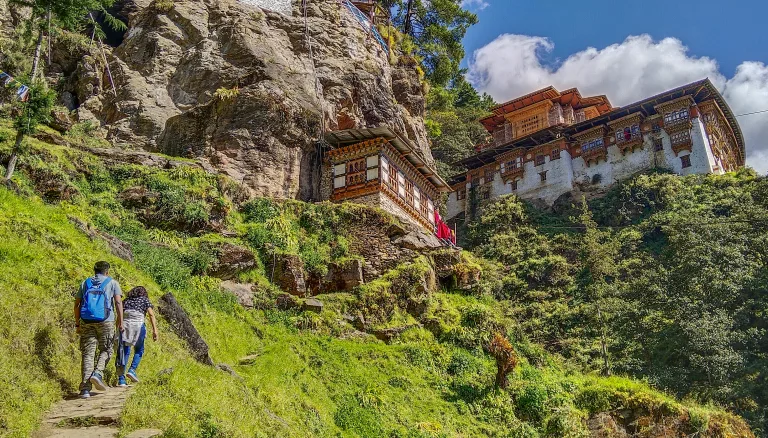
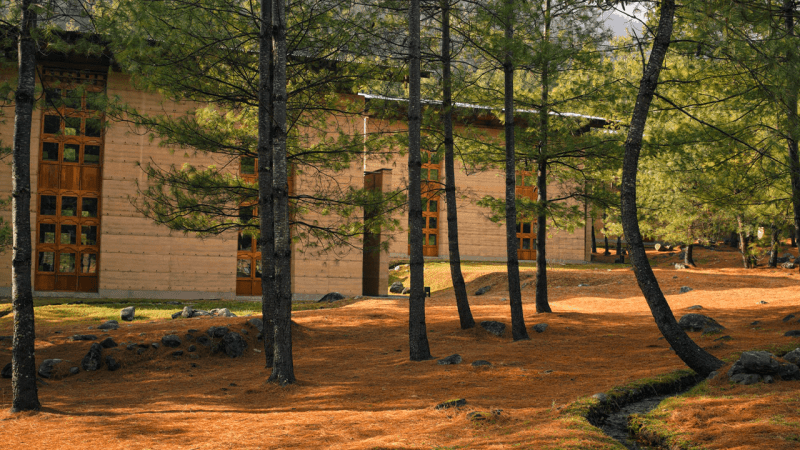
Set among pine forests overlooking the Paro Valley, Amankora Paro is one of the most convenient luxury bases for exploring western Bhutan. The lodge has 24 suites, a two-storey spa and a glass-walled yoga studio. It is also particularly well positioned for guests planning an early visit to Tiger’s Nest.
The atmosphere is unmistakably Amankora: contemporary interiors softened by rustic Bhutanese materials, traditional bukhari wood-burning stoves and expansive views.
For first-time visitors, Paro is often the natural beginning of an Amankora journey.
Amankora Thimphu
16 suites · Best for: city exploration with a secluded mountain-lodge atmosphere
Amankora Thimphu sits in the Motithang area above the capital, surrounded by forest yet close enough to reach Thimphu’s major attractions.
The lodge is deliberately fortress-like, reflecting the architecture of a traditional Bhutanese dzong. Its 16 suites create an intimate atmosphere that feels surprisingly removed from the city below.
It is particularly suited to travelers who want to explore the Buddha Dordenma, Tashichho Dzong, National Memorial Chorten, traditional markets and other Thimphu highlights, but return each evening to somewhere quiet and private.
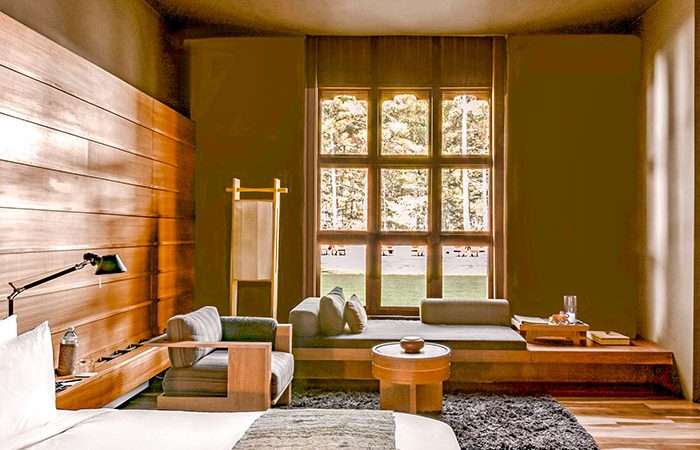
Amankora Punakha
12 suites · Best for: heritage, rice terraces and riverside Bhutan
Amankora Punakha is perhaps the most distinctive of the five lodges.
The property is built around a 300-year-old farmhouse, with the lodge overlooking the lush Punakha Valley and rice fields.
Its setting makes it an exceptional base for visiting Punakha Dzong, Khamsum Yulley Namgyal Chorten, nearby villages and the fertile agricultural landscape of the valley.
The combination of historic architecture, Bhutanese countryside and understated Aman interiors makes Punakha particularly appealing to travelers who want their luxury experience to feel deeply connected to place.
Amankora Gangtey
8 suites · Best for: nature, hiking and black-necked cranes
In Phobjikha Valley, Amankora Gangtey becomes much more about landscape than urban access.
The lodge has eight secluded suites overlooking the valley and Gangtey Goemba. It is surrounded by rural farmland, hiking trails and expansive mountain scenery.
This is the Amankora lodge to choose when the priority is slow travel, walking, photography, birdwatching and immersion in Bhutan’s highland environment.
From October through the winter months, the valley is also famous for the arrival of the endangered black-necked cranes.
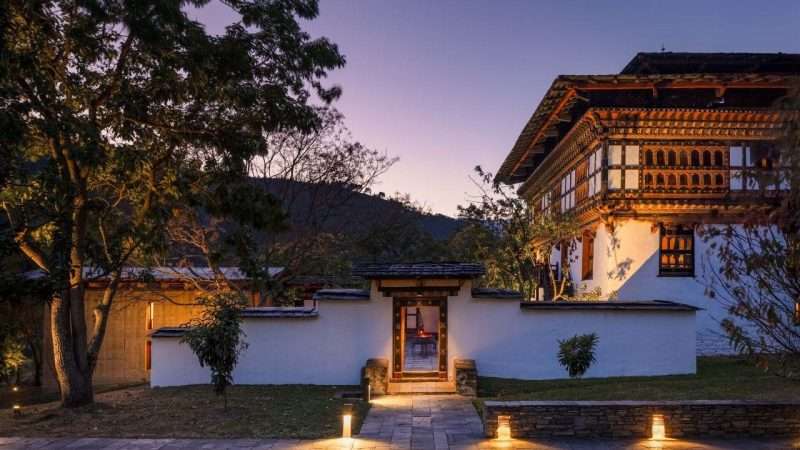
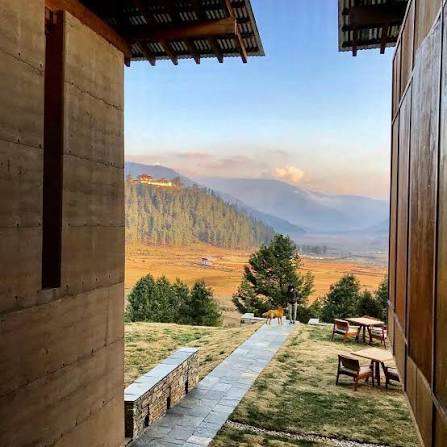
Amankora Bumthang
16 suites · Best for: Bhutan’s spiritual heartland
Amankora Bumthang is the easternmost lodge in the circuit and provides access to one of Bhutan’s most culturally significant regions.
The 16-suite property is adjacent to the Royal Wangdicholing Palace and serves as a base for exploring Bumthang’s ancient monasteries, temples, villages and spiritual sites.
Bumthang is where an Amankora journey begins to feel substantially different from a conventional western Bhutan itinerary. The landscapes become broader, the pace slower and the cultural history deeper.
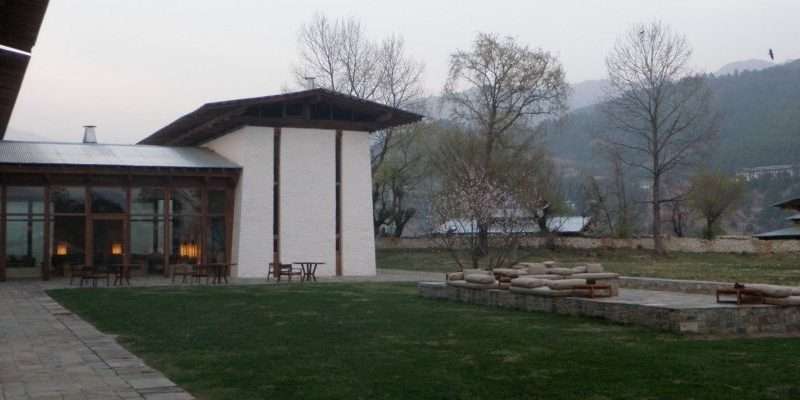
2. Six Senses Bhutan
Five lodges across Paro, Thimphu, Punakha, Gangtey and Bumthang · 82 suites and villas · Best for: wellness, sustainability and experiential luxury
Six Senses took the five-valley luxury-lodge concept and gave it a different personality.
Where Amankora is about understated Aman elegance and seamless service, Six Senses is more explicitly focused on wellness, sustainability, food, nature and personal wellbeing.
The Bhutan collection consists of five properties with 82 suites and villas, and the brand allows travelers to stay at one lodge or create a multi-valley journey through all five.
Six Senses Thimphu — “Palace in the Sky”
Best for: views, wellness and a dramatic arrival in Thimphu
Perched high above Thimphu among apple orchards and pine forests, Six Senses Thimphu is known as the “Palace in the Sky.”
The property combines dramatic architecture with expansive views over the capital and surrounding mountains. It is close enough to explore Thimphu but feels removed from the city.
For travelers who want to combine sightseeing with spa treatments, yoga, meditation and time simply enjoying the property, Thimphu is arguably the flagship experience of the Six Senses circuit.
Six Senses Punakha — “Flying Farmhouse”
Best for: architecture, valley views and warm-weather relaxation
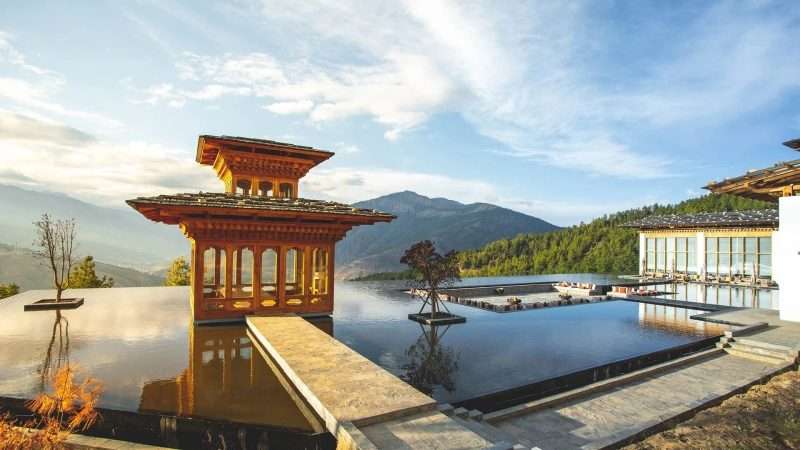
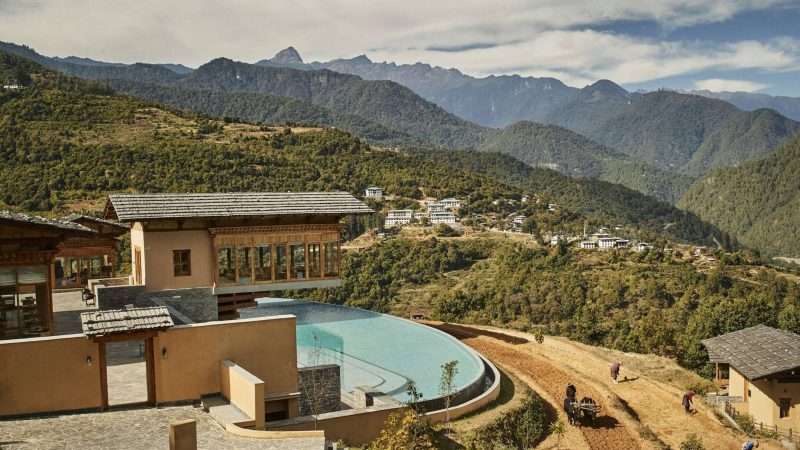
Six Senses Punakha is one of the most visually striking luxury hotels in Bhutan.
Known as the “Flying Farmhouse,” the property combines contemporary architecture with the agricultural landscape of Punakha Valley. Its lower elevation gives it a warmer climate than the other Six Senses properties, making it particularly attractive in winter.
The lodge offers suites and villas, a swimming pool, yoga and meditation spaces, and easy access to Punakha Dzong and surrounding villages.
Six Senses Paro — “Stone Ruins”
Best for: Tiger’s Nest, history and dramatic landscapes
Six Senses Paro is designed around the remains of a historic stone fortress, giving the property its “Stone Ruins” identity.
Its location makes it particularly convenient for guests who want to hike Tiger’s Nest early in the morning. The lodge itself is also an attraction, with its historic setting and dramatic mountain views.
For travelers who want to combine a major Bhutanese cultural experience with high-end wellness and hospitality, this is an excellent final or opening stop.
Six Senses Gangtey — “Traditional Birdwatching Bridge”
Best for: black-necked cranes, nature and solitude
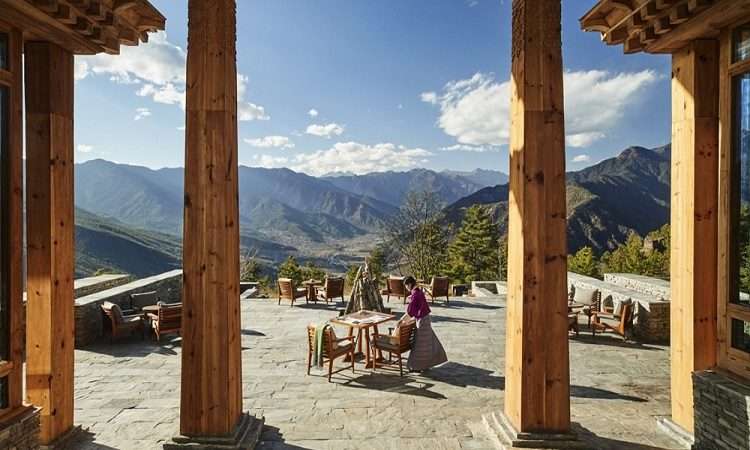
Six Senses Gangtey sits in Phobjikha Valley, one of Bhutan’s most beautiful high-altitude landscapes.
The lodge’s design was inspired by a traditional Bhutanese birdwatching bridge, with large windows that open the property toward the valley. It has eight suites and one two-bedroom villa.
The property is particularly special from October onward, when black-necked cranes arrive in the valley for the winter.
For photographers, birdwatchers and travelers seeking quiet mountain scenery, Gangtey is one of the most rewarding stops on the Six Senses circuit.
Six Senses Bumthang — “Forest Within a Forest”
Best for: spirituality, ancient Bhutan and slow travel
Bumthang is the spiritual heartland of Bhutan, and Six Senses approaches it through its “Forest Within a Forest” concept.
The property sits near the Chamkhar Chhu and provides access to some of the country’s oldest monasteries, temples, sacred sites and traditional villages.
This is the lodge for travelers who are willing to travel farther east in exchange for a deeper cultural experience.
The Six Senses Difference
Six Senses is especially strong for travelers who see luxury as wellbeing rather than material excess.
Its wellness philosophy runs through the properties, from spa treatments and yoga to meditation, sleep-focused programs and personalized experiences. Sustainability is also an important part of the brand’s Bhutan operation.
If Amankora is about seamless luxury travel, Six Senses is about transformative luxury travel.
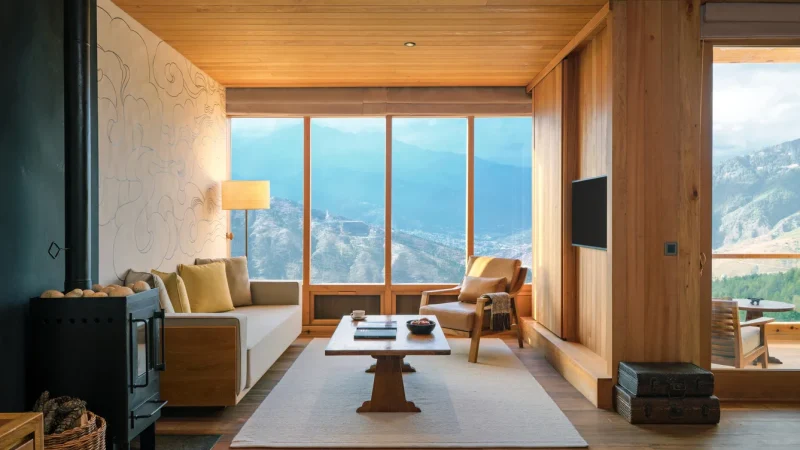
Six Senses Gangtey — “Traditional Birdwatching Bridge”
Best for: black-necked cranes, nature and solitude
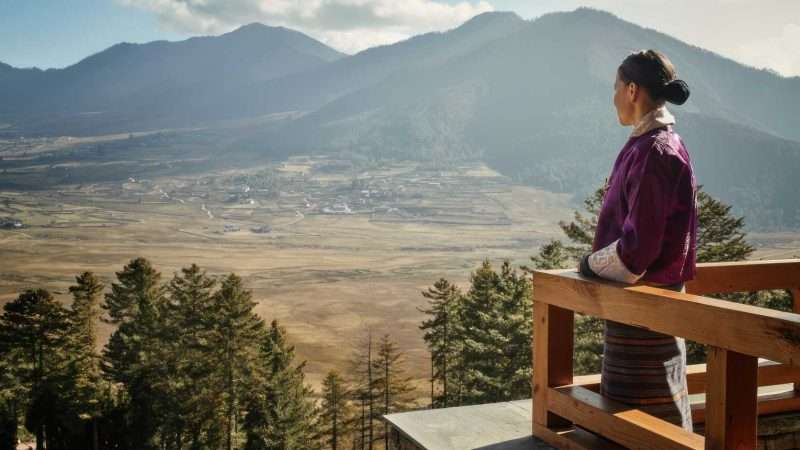
Six Senses Gangtey sits in Phobjikha Valley, one of Bhutan’s most beautiful high-altitude landscapes.
The lodge’s design was inspired by a traditional Bhutanese birdwatching bridge, with large windows that open the property toward the valley. It has eight suites and one two-bedroom villa.
The property is particularly special from October onward, when black-necked cranes arrive in the valley for the winter.
For photographers, birdwatchers and travelers seeking quiet mountain scenery, Gangtey is one of the most rewarding stops on the Six Senses circuit.
Six Senses Bumthang — “Forest Within a Forest”
Best for: spirituality, ancient Bhutan and slow travel
Bumthang is the spiritual heartland of Bhutan, and Six Senses approaches it through its “Forest Within a Forest” concept.
The property sits near the Chamkhar Chhu and provides access to some of the country’s oldest monasteries, temples, sacred sites and traditional villages.
This is the lodge for travelers who are willing to travel farther east in exchange for a deeper cultural experience.
The Six Senses Difference
Six Senses is especially strong for travelers who see luxury as wellbeing rather than material excess.
Its wellness philosophy runs through the properties, from spa treatments and yoga to meditation, sleep-focused programs and personalized experiences. Sustainability is also an important part of the brand’s Bhutan operation.
If Amankora is about seamless luxury travel, Six Senses is about transformative luxury travel.
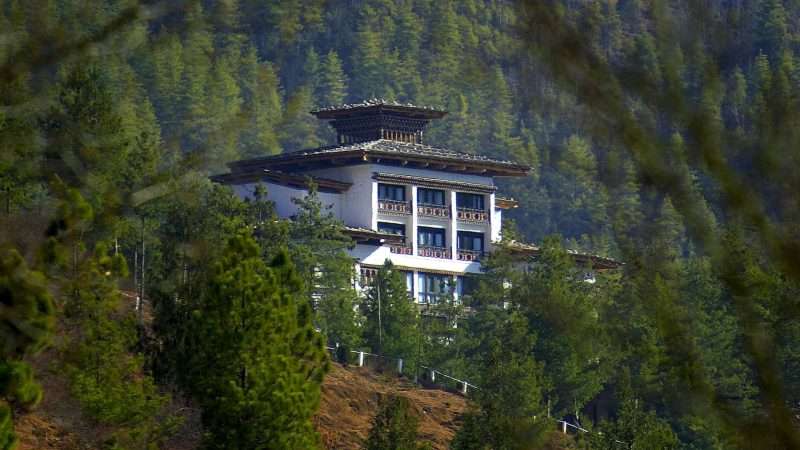
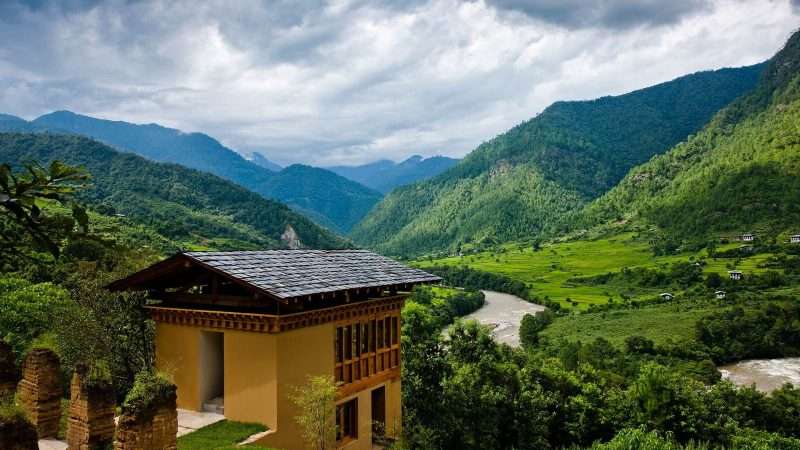
COMO Shambhala Wellness
Wellness is central to the COMO identity.
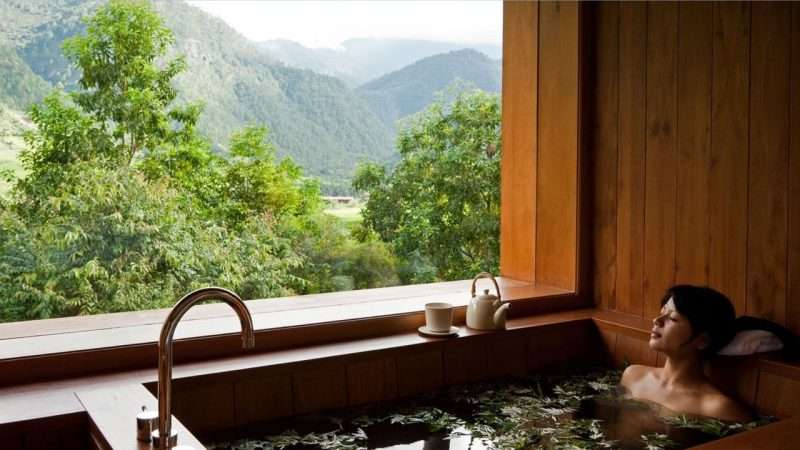
Guests can combine sightseeing with yoga, meditation, Bhutanese hot-stone baths, spa treatments and personalized wellness programs. That makes COMO particularly appealing to travelers who don’t want their Bhutan itinerary to become a continuous sequence of sightseeing and long drives.
Bukhari and the Culinary Experience
COMO Uma Paro’s Bukhari is another major attraction.
The restaurant focuses on seasonal ingredients and combines Bhutanese influences with international cuisine. For travelers who care as much about food as accommodation, COMO is often one of the strongest luxury choices in Bhutan.
Our view: If Amankora represents classic ultra-luxury and Six Senses represents wellness-led experiential luxury, COMO Uma represents quiet, refined and highly polished luxury without the need for a five-lodge circuit.
4. Pemako
Thimphu and Punakha · Best for: design, privacy, contemporary Bhutanese luxury and adventurous travelers
Pemako is one of the most interesting developments in Bhutan’s luxury-hotel scene because its two properties are completely different.
Pemako Thimphu is an urban luxury sanctuary in the capital.
Pemako Punakha is a highly private tented resort immersed in the landscape.
Together, they offer a compelling alternative to the established international luxury brands.
Pemako Thimphu — The Urban Fortress
66 rooms and suites · Best for: luxury in the capital
Pemako Thimphu occupies the property formerly known as Taj Tashi and sits in the heart of the capital.
Its architecture evokes a Bhutanese fortress, while the interiors and facilities provide the contemporary comforts expected from a top-end city hotel.
The property currently offers 66 rooms and suites, along with fine dining, a swimming pool, spa and other luxury facilities.
Its biggest advantage is location.
Guests can use Pemako Thimphu as a comfortable urban base while exploring the Buddha Dordenma, Memorial Chorten, Tashichho Dzong, local markets, museums and restaurants.
For travelers who want a full-service luxury hotel rather than a remote lodge, Pemako Thimphu is particularly practical.
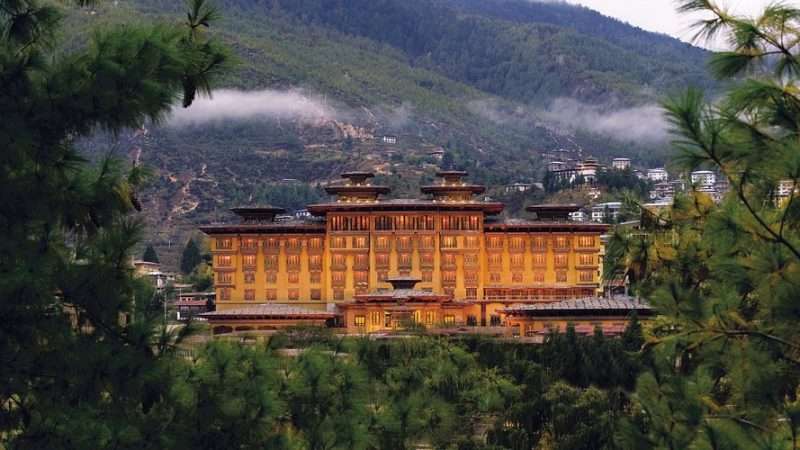
Pemako Punakha — Tented Luxury in the Wilderness
21 luxury tented villas · Best for: privacy, design and immersive nature
Pemako Punakha is something completely different.
Set along the Mo Chhu River, the property combines luxury tented accommodation with Bhutanese architectural references and an extraordinary natural setting.
The accommodation includes 19 luxury tented villas, one two-bedroom tented villa and one presidential tented villa. The individual villas feature private temperature-controlled pools, expansive decks and valley views.
The design concept was created by renowned hospitality designer Bill Bensley, and the result is much more theatrical than the restrained aesthetic associated with Aman.
The experience begins before guests even reach their villa, with a dramatic arrival across a bridge and through the natural landscape.
The Design
This is where Pemako Punakha really stands apart.
The interiors combine contemporary luxury with Bhutanese motifs, dark woods, copper details, local craftsmanship and carefully selected cultural references.
The large private villas feel more like luxury residences than traditional hotel rooms.
For guests who want a private pool, expansive outdoor space and a feeling of being surrounded by wilderness, Pemako Punakha is one of Bhutan’s most distinctive options.
Dining and Wellness
Pemako Punakha also places considerable emphasis on food and wellness.
Alchemy House focuses on Bhutanese cuisine in a heritage-inspired setting, while Soma provides international all-day dining. The Five Nectars Bar offers another setting for relaxed drinks and riverside views.
The Lotus Realm Spa draws inspiration from Sowa-Rigpa, Bhutan’s traditional system of medicine, and incorporates treatments, hot-stone bathing, sauna and steam facilities.
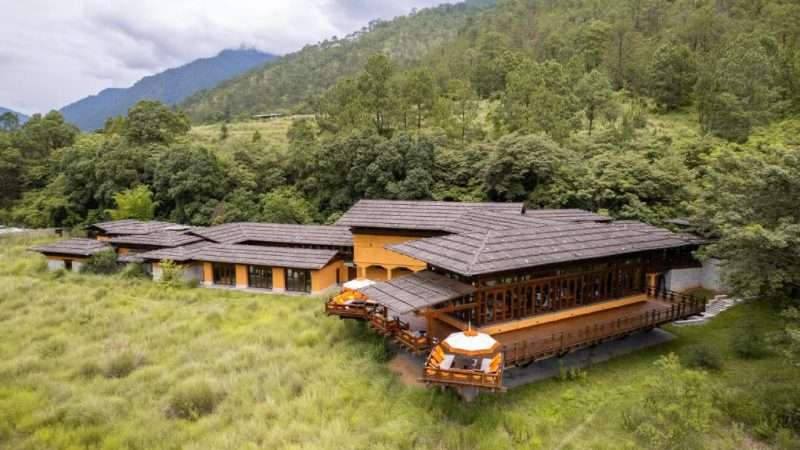
5. Gangtey Lodge
Phobjikha Valley · 12 Farmhouse Suites · Best for: quietcation travelers, nature lovers and black-necked crane season
Gangtey Lodge is proof that in Bhutan, boutique scale can sometimes be more impressive than size.
With just 12 Farmhouse Suites, Gangtey Lodge is an independent property with a distinctly personal character. In 2025, it received Two MICHELIN Keys, placing it in the same recognition category as Amankora, and was also featured on Condé Nast Traveler’s Gold List. For a twelve-suite property, that is remarkable recognition.
The setting is equally compelling.
Gangtey Lodge overlooks the spectacular Phobjikha Valley, a high-altitude glacial valley surrounded by forests, farmland and traditional villages. At around 3,000 metres, the landscape feels dramatically different from the warmer valleys of western Bhutan.
During winter, Phobjikha becomes one of Bhutan’s most important habitats for the endangered black-necked cranes, which migrate from the Tibetan Plateau. Gangtey Lodge has dedicated viewing areas that allow guests to observe the birds without disturbing them.
The Farmhouse Suites
The twelve suites are designed around the landscape.
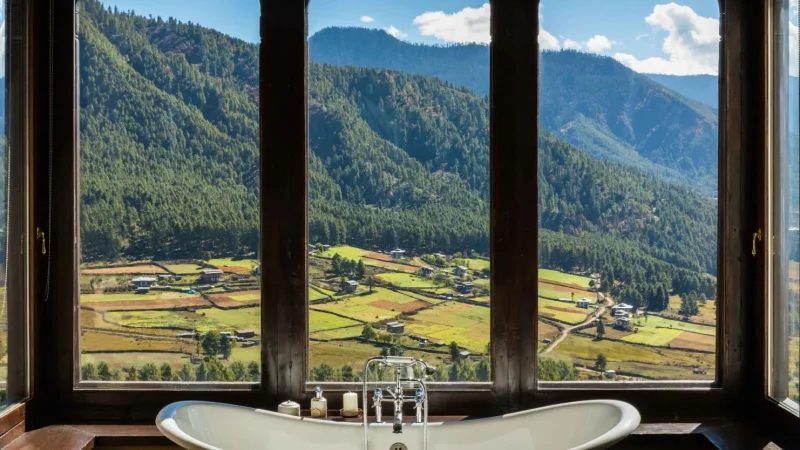
Large panoramic windows frame views across the valley toward Gangtey Monastery, while traditional timber details, exposed beams and heated stone floors create a feeling that is more country farmhouse than conventional luxury hotel.
One of the most memorable features is the freestanding roll-top bathtub positioned beside the panoramic windows.
The idea is simple: make the valley itself the centerpiece of the room.
The Quietcation Philosophy
Gangtey Lodge deliberately embraces a slower, lower-stimulation style of hospitality.
There is no need for constant entertainment, background music or technological distraction. Instead, the experience revolves around reading, walking, observing wildlife, enjoying the scenery and simply being present.
The lodge describes this philosophy as a “quietcation” — a deliberate opportunity to disconnect from the noise and pace of everyday life.
Guests can also walk to the nearby monastic college for meditation and spend time experiencing the spiritual side of the valley.
For couples celebrating an anniversary, travelers looking for genuine solitude, or guests who want to step away from a demanding work schedule, Gangtey Lodge is one of the most distinctive boutique stays in Bhutan.
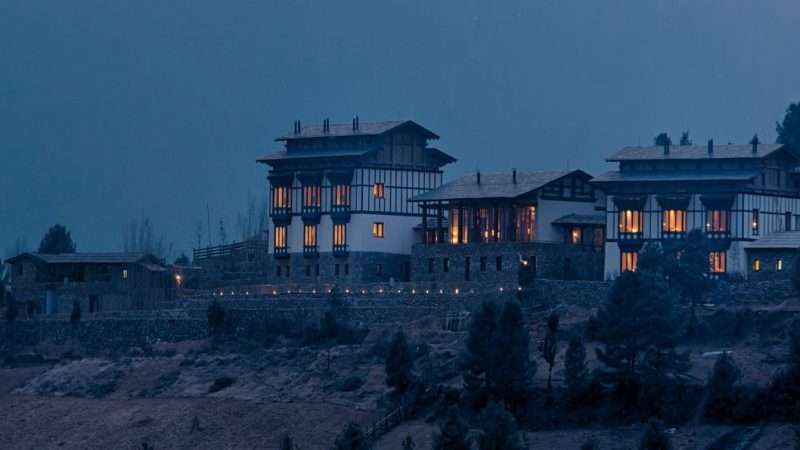
6. &Beyond Punakha River Lodge
Mo Chhu River, Punakha · Maximum 20 guests · Best for: adventure, private tented luxury and experiential travel
&Beyond brings an entirely different personality to Bhutan’s luxury-hotel scene.
The brand is internationally known for luxury safari lodges, and its Punakha property translates elements of that safari philosophy into the Himalayan landscape.
The result is a luxury experience built around nature, adventure and active exploration rather than simply relaxation.
With a deliberately small guest capacity, the lodge feels intimate and highly private.
Safari DNA in the Himalayas
The biggest difference is the style of experience.
While many luxury Bhutan properties emphasize meditation, wellness and quiet contemplation, &Beyond Punakha puts greater emphasis on adventure.
Guests can experience activities such as:
- Whitewater rafting on the Mo Chhu
- Mountain biking
- Archery
- Hiking
- Visits to Khamsum Yulley Namgyal Chorten
- Outdoor experiences around the Punakha Valley
The idea is similar to a luxury safari: spend the day exploring the landscape and return to an exceptionally comfortable base in the evening.
Tented Suites and River Views
The accommodation follows the safari-lodge concept.
Tented suites blur the boundary between indoor comfort and the surrounding landscape, with large openings, outdoor spaces and views of the river and mountains.
Some rooms also incorporate dramatic bathing experiences designed around the night sky.
This is luxury for travelers who would rather do something than simply admire the view.
For adventurous couples, active honeymooners and travelers who want their Bhutan trip to feel energetic and immersive, &Beyond Punakha offers a very different alternative to the more contemplative luxury lodges.
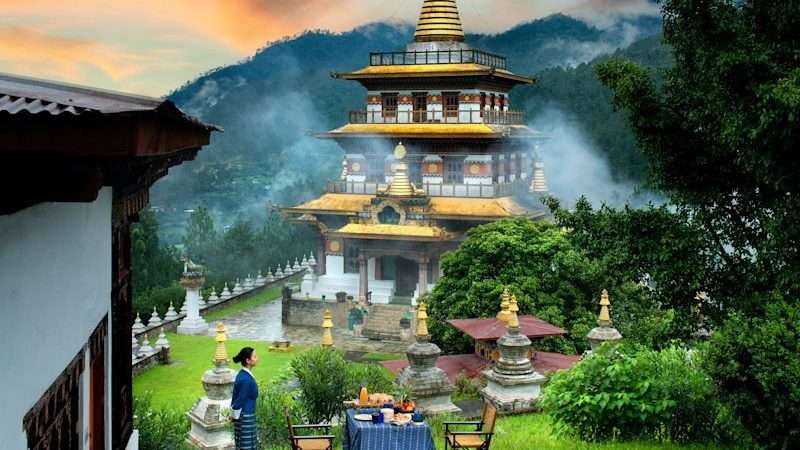
7. Zhiwa Ling Heritage
Paro Valley · 45 suites · Best for: cultural depth, Bhutanese craftsmanship and indigenous authenticity
Zhiwa Ling Heritage offers something that the major international luxury brands cannot replicate in quite the same way: a deeply Bhutanese interpretation of luxury.
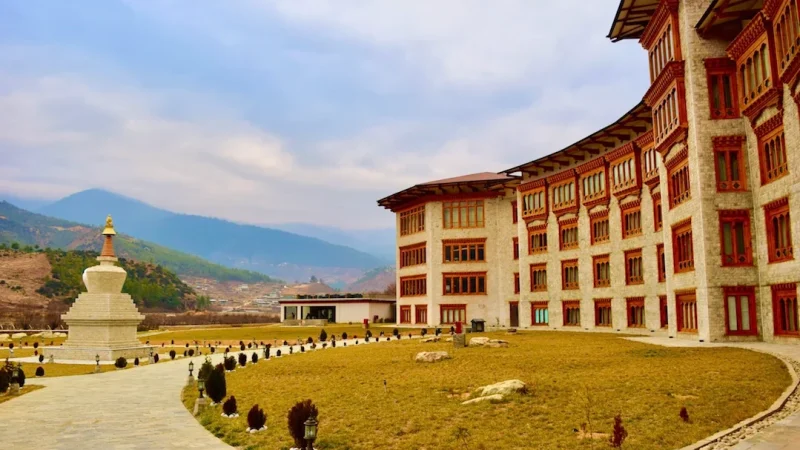
The property is Bhutanese-owned and built around traditional Bhutanese architectural and cultural principles. Rather than importing an international luxury concept and adapting it to Bhutan, Zhiwa Ling places Bhutanese craftsmanship at the center of the guest experience.
That makes it particularly attractive to travelers who want their accommodation to feel like an extension of the destination.
A Hotel Built by Bhutanese Artisans
The property was constructed over several years with the involvement of local craftsmen.
Traditional Bhutanese building techniques are visible throughout the property, from the timber structure to the intricate painted details, carved woodwork and decorative elements.
The result is not simply a hotel decorated in a Bhutanese style. The architecture itself is part of the cultural experience.
One of the property’s most distinctive features is its temple, which creates a genuine spiritual space within the hotel rather than a purely decorative interpretation of Bhutanese religion.
Traditional Experiences
Zhiwa Ling also places considerable emphasis on hands-on cultural experiences.
Guests can participate in traditional Bhutanese cooking, try ceramic painting with local artisans and experience traditional wellness treatments.
The Menlha Spa combines modern spa facilities with Bhutanese wellness traditions, including outdoor hot-stone baths.
For travelers who prioritize cultural authenticity over international-brand recognition, Zhiwa Ling is one of the strongest choices in Paro.
It is also an excellent alternative for guests who want a high-end property but would prefer their money to support a distinctly Bhutanese hospitality operation.
8. Bhutan Spirit Sanctuary
Neyphu Valley, Paro · 28 rooms · Best for: wellness retreats, mindfulness and transformative stays
Bhutan Spirit Sanctuary is different from almost every other luxury property on this list.
It is not simply a luxury hotel with a spa.
It is a wellness retreat with accommodation.
Located in the peaceful Neyphu Valley, approximately fifteen minutes from Paro International Airport, the sanctuary is designed around a fully integrated approach to wellness.
For travelers arriving in Bhutan primarily to slow down, recover, meditate and reconnect with themselves, this can be a destination in its own right.
The Wellness-Inclusive Model
The fundamental difference is the all-inclusive wellness philosophy.
Rather than treating spa treatments as optional extras, the sanctuary integrates wellness into the daily stay.
Packages can include farm-to-table meals, non-alcoholic beverages, yoga, meditation and daily wellness treatments.
Guests also undergo a consultation with a practitioner of traditional Bhutanese medicine, allowing the wellness team to develop a more personalized program.
Treatments draw on Bhutanese traditions including Ku Nye, hot-oil therapies and other traditional practices.
Designed for Recovery
The property includes treatment rooms, sauna and steam facilities and a heated indoor swimming pool surrounded by large windows overlooking the valley.
The emphasis is on recovery rather than entertainment.
That makes Bhutan Spirit Sanctuary particularly suitable for travelers who want to spend several days doing very little beyond wellness, meditation, gentle activities and treatments.
It is not necessarily the right choice for someone looking for nightlife, elaborate entertainment or a traditional luxury-resort atmosphere.
But for a genuine wellness retreat in Bhutan, it is one of the most specialized options available.
9. Dhensa Boutique Resort
Punakha Valley · 24 rooms across six cottages · Best for: understated luxury, privacy and valley serenity
Dhensa Boutique Resort takes a completely different approach to luxury.
There is no international luxury brand behind it. There is no attempt to create an architectural spectacle. And the property does not rely on the kind of global recognition associated with Aman or Six Senses.
Its appeal is much simpler:
A beautiful setting, excellent accommodation and genuine tranquility.
Located on a hillside overlooking the Punakha Valley, Dhensa consists of 24 rooms spread across six cottages.
The design uses natural materials and clean lines, with the architecture deliberately framing the surrounding landscape rather than competing with it.
Kibu Spa and Wood-Fired Hot Tubs
Wellness is an important part of the Dhensa experience, but it is presented in an understated way.
The Kibu Spa includes a steam room and sauna, while outdoor wood-fired hot tubs overlook the surrounding forest and valley.
There is no feeling of a massive commercial spa operation.
Instead, the experience is private, quiet and closely connected to nature.
The Perfect Punakha Base
Dhensa is particularly useful for travelers who want to spend several nights exploring Punakha rather than treating the valley as a single overnight stop.
The property provides access to some of Bhutan’s best-known landmarks, including:
- Punakha Dzong
- Punakha Suspension Bridge
- Dochula Pass
- Khamsum Yulley Namgyal Chorten
- Traditional villages and rice terraces
For travelers who want quality without unnecessary extravagance, Dhensa can offer one of the strongest value-to-experience propositions in Punakha.
Taj Paro Resort & Spa
One of the newer additions to Bhutan’s luxury hotel scene is Taj Paro Resort & Spa, located in the Paro Valley. The resort combines contemporary luxury with Bhutanese character and offers views towards the surrounding Himalayan landscape and Tiger’s Nest. Taj describes the property as being surrounded by protected forests, with rooms overlooking forests, mountains and the monastery.
For a luxury itinerary, Taj Paro can work particularly well at the beginning or end of a Bhutan journey, allowing travelers to combine cultural exploration with time to relax and enjoy the property.
Taj Gangtey Resort & Spa
For travelers looking to explore beyond western Bhutan, Taj Gangtey Resort & Spa offers a luxury base in the peaceful Phobjikha Valley.
The resort has 35 valley-facing rooms and is positioned among the landscapes of Gangtey, with access to experiences around Gangtey Monastery and the famous black-necked crane habitat.
This makes Taj Gangtey particularly appealing for travelers who want to combine luxury, nature, tranquility and cultural experiences.
A stay here can also give travelers more time to appreciate the valley rather than visiting Gangtey simply as a short stop between destinations.
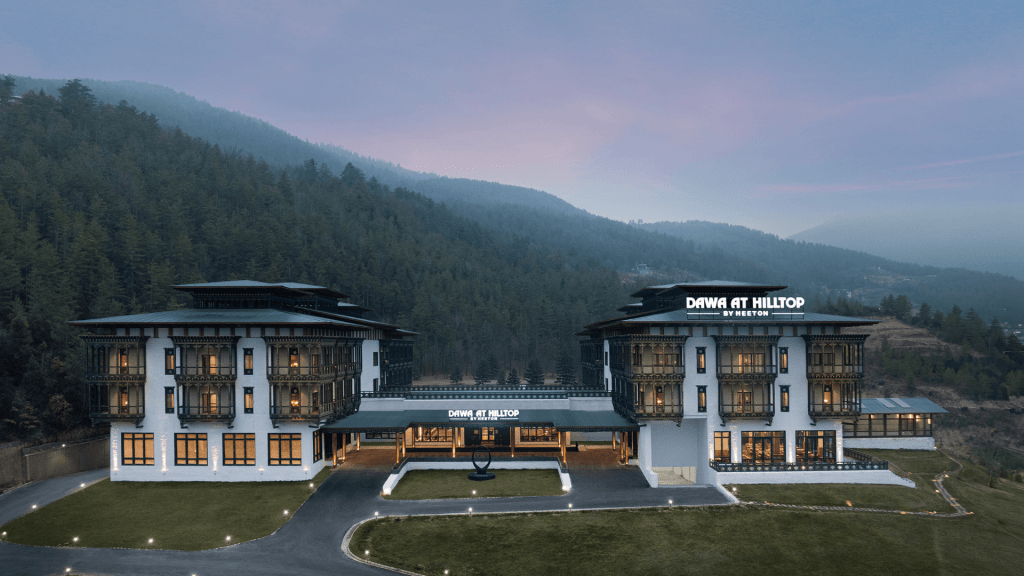
Dawa at Hilltop by Heeton
Another contemporary luxury option in Paro is Dawa at Hilltop by Heeton.
Perched above Paro Valley, Dawa at Hilltop combines modern design with Bhutanese-inspired aesthetics and offers panoramic views of the valley and surrounding mountains. The property features spacious rooms, a Dawa Suite, wellness facilities, the Chelela Spa and a large infinity-edge pool.
Its location, close to Paro International Airport and Paro’s major cultural attractions, makes it particularly convenient for travelers who want comfort, privacy and wellness without being far from the cultural heart of the valley.
For travelers who enjoy a more contemporary interpretation of Bhutanese luxury, Dawa at Hilltop can be an excellent choice.
The Luxury Experience Is Often About the Combination
One of the biggest advantages of traveling privately in Bhutan is that you do not have to choose a single hotel brand for the entire journey.
In fact, combining different properties can create a much more interesting trip.
You might begin in Paro at Zhiwa Ling or COMO Uma, where cultural exploration and Tiger’s Nest are the focus.
Move to Thimphu and stay at Pemako or Le Meridien for a sophisticated base in the capital.
Continue to Punakha at Pemako Punakha, &Beyond or Dhensa, depending on whether you prefer design, adventure or quiet.
Then spend several nights in Gangtey at Gangtey Lodge for nature, meditation and black-necked cranes.
And if you are continuing east, finish with Amankora or Six Senses Bumthang for a deeper exploration of Bhutan’s spiritual heartland.
That is the real advantage of a bespoke Bhutan journey.
Luxury is not simply about where you sleep. It is about matching the right hotel, valley, experience and pace to the traveler.
For some guests, that means the seamless five-lodge experience of Amankora. For others, it means the wellness philosophy of Six Senses, the cultural authenticity of Zhiwa Ling, the quiet of Gangtey Lodge, the adventure of &Beyond or the intimate atmosphere of a small boutique property.
The best luxury itinerary is the one that makes every valley feel different — while still feeling completely effortless.
The Best Luxury Strategy: Combine Them
For many travelers, the answer isn’t choosing one brand for the entire trip.
A thoughtfully designed Bhutan journey can combine different properties according to the character of each valley.
For example:
Paro: COMO Uma Paro
Thimphu: Pemako Thimphu
Punakha: River Lodge (&Beyond)
Gangtey: Gangtey Lodge
Bumthang: Amankora Bumthang
Or, for a wellness-focused journey:
Paro → Six Senses Paro
Thimphu → Six Senses Thimphu
Punakha → Six Senses Punakha
Gangtey → Six Senses Gangtey
Bumthang → Six Senses Bumthang
The advantage of Bhutan is that the hotel itself can become part of the journey. Paro is about Tiger’s Nest and arrival. Thimphu is about culture and the capital. Punakha is about rivers, agriculture and architecture. Gangtey is about nature and black-necked cranes. Bumthang is about spirituality and ancient Bhutan.
The best luxury itineraries therefore don’t simply ask, “Which is the most expensive hotel?”
They ask:
“Which property best fits the experience we want from each valley?”
That is where a luxury Bhutan journey becomes truly personalized.
The Art of Slow Travel in Bhutan
If your idea of a perfect holiday is getting away from traffic, crowds and the constant noise of modern life, Bhutan offers something increasingly rare—the opportunity to slow down, breathe deeply and reconnect with nature, culture and yourself.
Slow travel is about appreciating the journey rather than simply collecting destinations. Instead of visiting ten places in a single day, you might spend an entire morning exploring a monastery, listening to the sound of prayer wheels or simply sitting quietly as prayer flags move gently in the mountain breeze. Or simply walking through the Gangtey Nature Trail in the beautiful Phobjikha Valley, surrounded by pine forests, mountain scenery and peaceful countryside without looking at the clock, breathing in the fresh mountain air, listening to birdsong and enjoying the quiet moments that make a journey truly memorable.
Privacy: What Does It Really Mean in Bhutan?
Privacy in Bhutan does not necessarily mean having a private island or a villa surrounded by an artificial beach.
It means having fewer people around you.
Bhutan’s tourism philosophy and relatively low-volume approach help preserve a sense of space and tranquility. The SDF is also intended to support an intimate visitor experience.
For luxury travelers, privacy can be created through thoughtful itinerary design.
For example:
Early starts:
Visit popular attractions before the main flow of visitors.
Private transportation:
Travel with your own vehicle rather than joining a group.
Flexible scheduling:
Spend longer at places you enjoy instead of following a fixed timetable.
Less crowded destinations:
Include valleys and cultural sites beyond the standard Paro–Thimphu–Punakha circuit.
Private experiences:
Arrange activities around your interests rather than choosing from a generic list.
This is where a good local travel company can make a significant difference.
Things to Keep in Mind When Planning Luxury Travel in Bhutan
1. Book early for peak seasons
Luxury properties have limited inventory, and some of Bhutan’s most desirable hotels have relatively few rooms or villas.
If you are traveling during popular periods, especially autumn and spring, planning well ahead is advisable.
2. Don’t make the itinerary too ambitious
Luxury and rushing do not belong together.
A seven-day itinerary packed with every major destination may look impressive on paper but can become tiring.
Allow time for the mountains, road journeys, meals, hiking and unexpected discoveries.
3. Choose hotels based on the experience
Do not select a hotel only because it has five stars.
Ask:
What do I want to feel when I wake up?
A forest retreat, a valley view, a heritage property, a wellness resort or a contemporary luxury lodge can create completely different experiences.
4. Consider the season
Bhutan changes dramatically throughout the year.
Spring brings flowers and clear mountain landscapes. Autumn is known for excellent visibility and pleasant conditions. Winter can provide quieter travel and crisp Himalayan scenery, while summer brings greener valleys.
The best season depends on what you want to do.
5. Build in flexibility
Mountain weather can affect road journeys and flights.
A well-planned luxury itinerary should leave some room for adjustment rather than treating every hour as fixed.
6. Don’t overlook local experiences
Some of the best experiences may cost very little.
A conversation with a local artisan, visiting a farmhouse, watching an archery match or sitting quietly at a monastery can be more memorable than an expensive hotel dinner.
7. Use a knowledgeable local operator
A luxury hotel can provide excellent accommodation, but a local travel specialist can help connect the hotel to the destination.
The right guide can explain the history of a temple, introduce you to local customs, adjust the day’s schedule and recommend experiences based on your interests.
That local knowledge is often one of the most valuable parts of luxury travel in Bhutan.
A Sample Luxury Bhutan Journey
Day 1 – Arrive in Paro & Transfer to Thimphu
Day 2 – Explore Thimphu
Day 3 – Thimphu to Phobjikha Valley
Day 4 – Discover Phobjikha at Your Own Pace
Day 5 – Phobjikha to Punakha via Dochula Pass
Day 6 – Punakha: Culture & Local Experiences
Day 7 – Punakha to Paro
Day 8 – Tiger’s Nest
Day 9 – Departure from Paro
For a longer journey, adding Bumthang can transform the trip from a classic western Bhutan visit into a deeper exploration of the country.
The Real Meaning of Luxury in Bhutan
Luxury travel in Bhutan is not about escaping reality.
It is about reconnecting with it.
It is waking up in a quiet Himalayan valley. It is walking through a pine forest without hearing traffic. It is sitting inside a centuries-old monastery. It is sharing tea with a local family. It is enjoying a beautifully designed room after a long mountain walk. It is having a guide who understands that you would rather spend another hour at a monastery than visit another attraction.
The finest luxury hotels in Bhutan can provide exceptional comfort, privacy and service. But the country’s greatest luxury cannot be built by a hotel.
It is Bhutan itself.
The mountains.
The silence.
The culture.
The spirituality.
The forests.
The space.
And the freedom to experience them slowly.
For travelers looking for something beyond conventional five-star tourism, Bhutan offers a rare proposition: a luxury journey where the destination itself is the experience.
And that may be the most luxurious thing of all.
From Luxury Accommodation to a Luxury Journey
A private Bhutan journey should be designed around your interests, preferred hotels, travel dates and desired pace rather than simply following a standard package.
OMSHA Travel specializes in private, tailor-made Bhutan journeys, including luxury hotels, private guides and vehicles, visa and SDF assistance, and customized cultural and nature experiences.
If your idea of luxury is privacy, authenticity, beautiful hotels and enough time to actually enjoy Bhutan, a tailor-made itinerary is often the best way to experience the Kingdom.
We design tailor-made journeys where the right accommodation, the right experiences and our local knowledge come together to make your time in Bhutan more meaningful.