EXCELLENTVerified Esperienza meravigliosa Abbiamo appena terminato un tour di 7 giorni con Omsha Travel. È stata un'esperienza meravigliosa, l'organizzazione è stata perfetta e il proprietario il Sig.Nawang è stato di una gentilezza e disponibilità estrema.Sonam, la nostra guida e Tashi il nostro autista sono stati dei perfetti compagni di viaggio. Ci hanno aiutato a capire un paese bellissimo e ad approfondire la cultura buddista. Siamo immensamente grati a tutto il team per la qualità dei servizi ricevuti.Consigliamo vivamente Omsha Travel a tutti coloro che desiderano visitare il Bhutan.Posted onVerified A travel agency in Bhutan that is 100% recommendable. Very professional. Our ten-day trip was wonderful and very enriching. Our guide and driver were highly professional and attentive, making the experience extremely comfortable and exciting. The agency’s management was outstanding—everything was perfect and very professional. One of the best experiences we have had. Highly recommended. Congratulations.Posted onVerified Peaceful and unique Bhutan My experience was truly amazing from start to finish. Our guide was incredibly knowledgeable, kind and genuinely passionate about what they do! Our guide, Sonam was absolutely outstanding, she took the time to carefully explain each place we went to, sharing deep historical and cultural background in a way that was engaging and easy to understand. She never rushed us, always made sure we were comfortable, and answered every question with patience and enthusiasm. You could really feel how much she cared about making this experience meaningful for us. Thanks to Sonam, this tour was not just informative but truly memorable. I can’t recommend her and OMSHA highly enough.Posted onVerified Magical Tiger’s Nest The experience of hiking up the Tiger’s Nest was spiritual and breath-taking! It was our dream come true. Our guide, Sonam was very considerate with all our requests and needs. She is very knowledgeable of the touristy and local information that made our tour curated to our needs. We love her and our driver Takshi!Posted onVerified Omsha is the best! Had a wonderful trip organised by Omsha - Mr Na Wang responds very quickly and warmly to my inquiries, so I felt very welcomed even before the trip. I had the best combination of Sonam and Dashi, it was like traveling with friends! I learnt so much from them about Bhutan, but best of all they were attentive, thoughtful and made my trip such a memorable one. I miss them and Bhutan very much and will not hesitate to travel with Bhutan with them and Omsha again~ It's hard to put in words the magic of Bhutan, but traveling with Omsha is definitely the way to go.Posted onVerified Great first glimpse of Bhutan! My dad and I travelled to Bhutan for the first time and I decided to go with OMSHA because of the very reasonable offer I received from Nawang. He was always prompt in replying to all our questions and very flexible in accommodating all our requests in changing the itinerary to fit our needs. Our Guide was Ugyen Sonam and our driver was Tashi. They were both very friendly and professional. Sonam is very knowledgeable on the history and culture of Bhutan and Buddhism. Tashi is a great driver who always made us feel safe. We had a great time and can’t wait to go back to explore more :)Posted onVerified Great experience Excellent tour. Sonam was a terrific guide and really enjoyed the knowledge he shared about the monasteries, Bhutan and Buddhist history. Tashi was an excellent driver, very reliable and professional, always ready to go in the a.m. morning and always on time. Both very kind and very gracious. Nawang the owner was very easy to deal with and very nice meeting in person.Posted onVerified Smooth & Awesome I traveled to Bhutan with Omsha Travels, and it was truly one of the best experiences I’ve ever had. From the moment we landed, every arrangement was perfectly taken care of. Our guide, Ngawang Loday, and driver, Ngawang Kinley, were extremely respectful, professional, and warm, making our journey smooth and genuinely enjoyable. They played a huge role in making the entire experience beautiful and stress-free.A special mention to the travel coordinator, Ngawang, who personally came to meet us, handed over thoughtful gifts, and ensured that everything was going seamlessly throughout the trip. The level of care and hospitality was exceptional. I would definitely recommend Omsha Travels to anyone planning a trip to Bhutan.Posted onVerified Awesome Birding and Cultural Trip to Bhutan We did a 10 day trip in Bhutan with Omsha Travel. We covered the usual cultural sites of Paro, Thimpu and Punakha as well as other locations in Central Bhutan like Phobjikha, Trongsa and Yongkhola for birding activities.The overall booking process was very smooth and easy - Nawang was very responsive and provided itineraries and costs in a very transparent manner.The actual trip was quite flawless - Pema (birding guide) and Tashi (driver) met us at Paro airport and were with us throughout the trip. They made us feel at home right from the start and shared a lot of information and tips about Bhutan throughout the trip. Pema was very knowledgeable about the local bird species and his experience was vital in seeing 100+ bird species, most of which were completely new to me. Bhutan does not have dedicated bird sanctuaries or birding trails/hides - so, most of the birding is done along the highways and local roads - Pema knew exactly where to stop for a specific type of birds.Tashi was a very steady driver all through out (and we had quite a few long driving days) - always ready with a smile and infectious enthusiasm. Overall, it was a beautiful experience in a beautiful country - probably one of the last untouched Himalayan lands. Hopefully, will come back for another trip in spring, when the birds are said to be even more active.Posted onVerified Amazing trip to Bhutan with OMSHA Travel I had a wonderful trip to Bhutan with this agency.My guide Namgay was fantastic – she is very kind, knowledgeable and always helpful.Our driver Tashi was very safe and professional, and I felt comfortable the whole time.I highly recommend this company, especially guide Namgay and driver Tashi.
Bhutan Tour Packages:
Travel Tips:
Blog Posts:
Contact us:
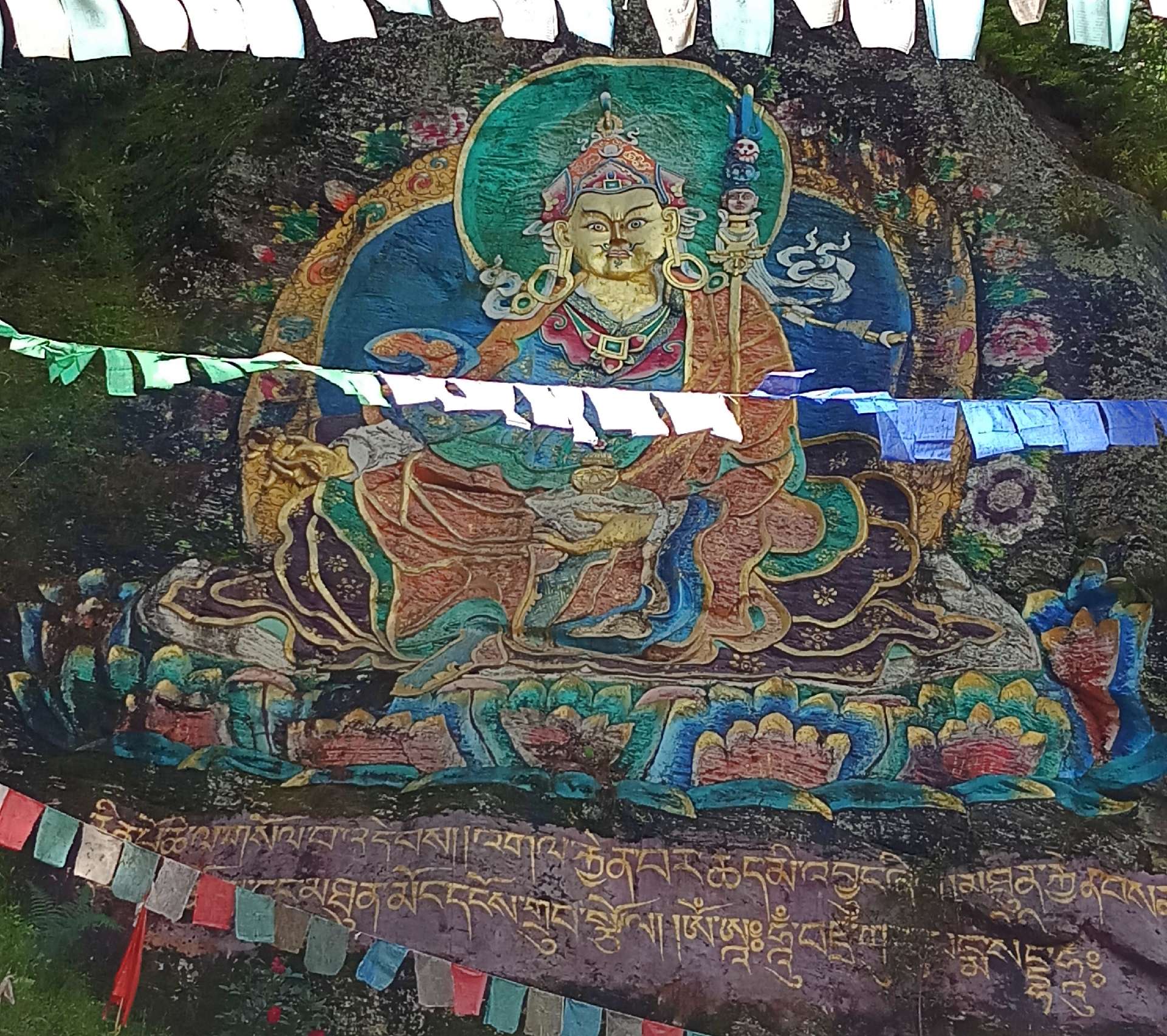
When you travel through Bhutan – whether you’re gazing up at cliff-hugging monasteries or watching monks perform sacred dances – one name echoes everywhere: Guru Padmasambhava, also known as Guru Rinpoche, the “Precious Master.”
Regarded as the Second Buddha, Guru Padmasambhava’s influence isn’t just woven into Bhutan’s monasteries and temples; it’s deeply etched into the country’s spiritual identity. His life, teachings, and miracles continue to shape the very soul of Bhutan, making him one of the most important figures for anyone seeking to understand the kingdom’s faith and culture.
Who Was Guru Padmasambhava?
Guru Padmasambhava was an 8th-century Indian tantric master who traveled across the Himalayas, spreading the teachings of Vajrayana Buddhism. Invited by Tibetan King Trisong Detsen, he helped establish Buddhism in Tibet, taming negative energies and local deities, and converting them into protectors of the Dharma.
His journey didn’t stop there – Bhutan became one of his sacred destinations. According to legend, he flew on the back of a flying tigress from Tibet and landed on a cliff in Paro, where he meditated and subdued local spirits. That very site is now home to the iconic Taktsang Monastery (Tiger’s Nest) – one of Bhutan’s most revered pilgrimage sites.
Why Guru Padmasambhava Is Called the “Second Buddha”
Bhutanese Buddhists believe that Guru Padmasambhava didn’t just bring Buddhism to their land – he transformed it.
- Taming the Wild Spirits: Guru Rinpoche is said to have subdued ferocious mountain gods and spirits, binding them by oath to protect the teachings of Buddhism.
- Hidden Treasures (Terma): He concealed spiritual teachings across the Himalayas, to be revealed by “treasure discoverers” (tertöns) when the time was right.
- Promising Protection: He prophesied that Bhutan would remain a sanctuary for Buddhism in troubled times, a prophecy that Bhutanese people hold close to heart even today.
Guru Padmasambhava’s Footprints Across Bhutan
Wherever you travel in Bhutan, you’ll encounter sacred places linked to Guru Rinpoche:
- Taktsang Monastery (Paro) – The legendary Tiger’s Nest, where Guru meditated for three months.
- Kurje Lhakhang (Bumthang) – Houses the rock with Guru’s body imprint, marking his powerful presence.
Kyichu Lhakhang (Paro) – One of Bhutan’s oldest temples, later blessed by Guru Padmasambhava. - Singye Dzong (Lhuentse) – A remote and spiritually charged fortress monastery tied to Guru’s meditation.
Many of these sites are living pilgrimage destinations, drawing both Bhutanese devotees and international travelers seeking spiritual connection.
Festivals that Keep Guru’s Legacy Alive
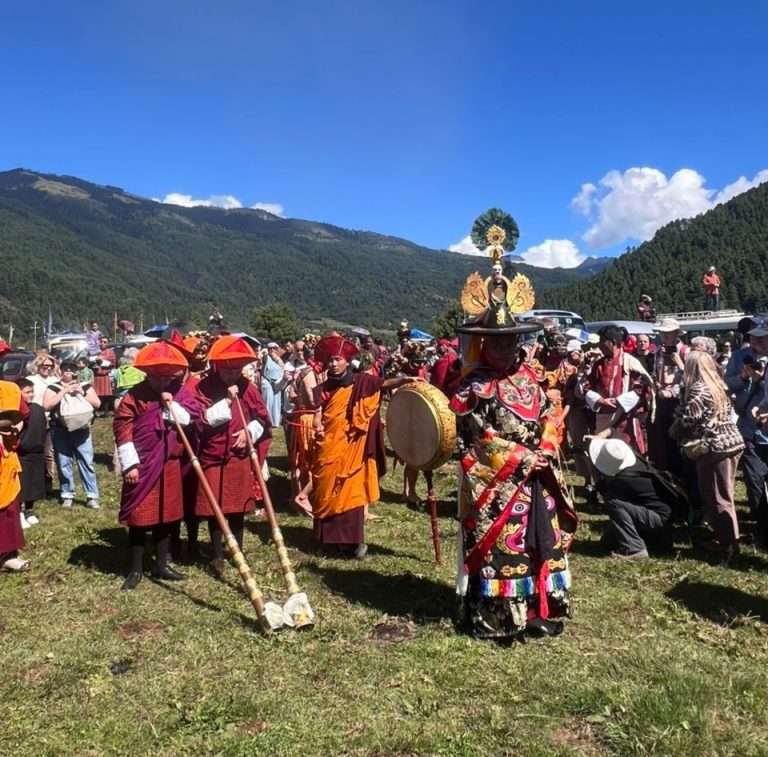
The vibrant Tshechu festivals across Bhutan are rooted in Guru Padmasambhava’s blessings. These annual events feature sacred cham dances performed by monks, reenacting Guru’s life, his eight manifestations, and his triumphs over evil forces.
For Bhutanese, attending a Tshechu isn’t just cultural—it’s spiritual. It’s believed that witnessing these dances and receiving blessings during the festival brings merit, purification, and protection from misfortune.
Guru Padmasambhava and Bhutan’s Spiritual Identity
Bhutan’s deep reverence for Guru Rinpoche is more than devotion – it’s identity.
- Guardian of the Land: Bhutanese believe Guru’s blessings keep the country spiritually protected.
- Symbol of Compassion and Wisdom: He embodies the balance of spiritual power and compassion, inspiring monks, nuns, and laypeople alike.
A Guide for Travelers: For visitors, Guru Rinpoche’s legacy opens a window into Bhutan’s mystical side – a blend of myth, history, and living faith.
Why Travelers Should Learn About Guru Padmasambhava
Understanding Guru Rinpoche enriches every moment you spend in Bhutan.
When you hike to Tiger’s Nest, visit Kurje Lhakhang, or witness a Tshechu, you’re not just sightseeing – you’re walking through centuries of living devotion.
Your journey becomes more meaningful when you connect with the stories that shape the landscapes, temples, and the hearts of the Bhutanese people.
Plan Your Pilgrimage with OMSHA Travel
At OMSHA Travel, we don’t just guide you to Bhutan’s sacred sites – we help you understand their stories. Whether you want to hike to Tiger’s Nest, visit remote monasteries, or experience a Tshechu, we create journeys that honor Bhutan’s spiritual soul.
Ready to follow the footsteps of Guru Padmasambhava? Contact us today to plan your Bhutan trip.