Bhutan Tour Packages:
Adventure
Festivals
Travel Tips:
Blog Posts:
- Traveling from Israel to Bhutan in 2027: Flights, Visa & Travel Guide
- When Is the Best Time to Visit Bhutan in 2027?
- Bhutan SDF 2027: Sustainable Development Fee Explained
- How to Get to Bhutan in 2027: Best Flight Routes via Kathmandu, Delhi, Bangkok & More
- Inside Amankora Bhutan: A Private Journey Through the Himalayas
Contact us:
If you’ve ever dreamed of trekking through pristine landscapes, breathing crisp mountain air, and waking up to the sight of clouds drifting below your feet, Bhutan offers one of the most magical hiking experiences on Earth. Known as the “Land of the Thunder Dragon,” Bhutan’s rugged Himalayan terrain is perfect for passionate hikers seeking untouched trails, cultural immersion, and close encounters with nature.
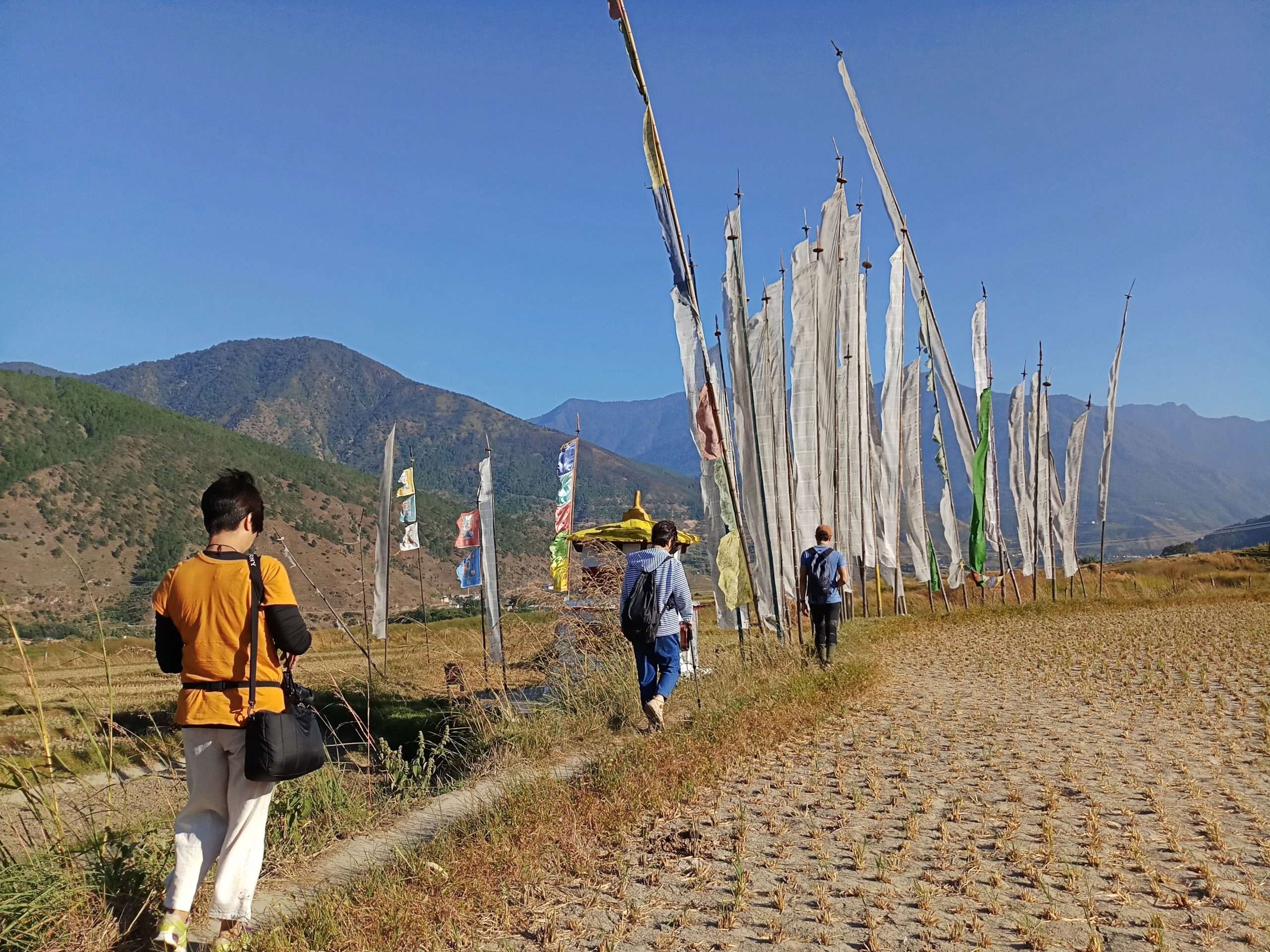
This 9-day hiking above the Clouds itinerary is a blend of culture, hiking, nature, remote villages, and scenic landscapes. You’ll follow ancient trails through pine-scented forests, ridge-top pastures, and serene alpine lakes, while also visiting sacred monasteries and experiencing the warm hospitality of local communities.
Whether you’re camping under a star-filled Himalayan sky or sharing a meal in a mountain village, every moment of this journey offers a unique connection to Bhutan’s heart — its landscapes, its traditions, and its people.
Day 1: Arrival in Paro – Gateway to the Himalayas
The flight to Paro reveals scenic and breathtaking views of Himalayan Mountains of the world. Once you arrive at the Paro International Airport, you will be greeted by our representative (Guide) and then drive to Thimphu (50km) which takes approximately an hour. On the way visit; Tachogang Iron Chain Bridge is located along Paro-Thimphu highway, before Chhuzom. It is just a 10 minutes walk from the highway. It is a great spot for photography with a stunning view and peaceful ambience.
After arriving in Thimphu, I checked into the hotel and freshened up. Lunch at Zombala 2 Restaurant, a popular eatery for both locals and tourists seeking authentic flavors. Try Momos (dumplings), Thukpa: A comforting noodle soup and Ema Datshi: Bhutan’s national dish made with chilies and cheese. Walk through Bhutan’s capital city exploring Clock Tower Square, a prominent landmark adorned with intricate Bhutanese motifs and stroll towards Thimphu’s iconic traffic junction, famously known as the main traffic circle as it has no traffic lights. Instead, you’ll witness a white-gloved traffic officer gracefully directing vehicles in a choreographed style that has become a tourist attraction in its own right.
Then visit Buddha Dordenma Statue, also known as the “Buddha Point,” a massive statue of Buddha Shakyamuni in the Kingdom of Bhutan. Royal Takin Preserve also known as the Mini Zoo by many is a small natural preserve for the Takin – Bhutan’s national animal. Changlimithang Archery Ground to see local folks playing their traditional game archery.
The Centenary Farmers Market (Now Kaja Throm) is a vibrant and dynamic space, offering a diverse range of products and experiences.
Tashichhodzong. This magnificent structure stands proudly on the banks of the Wang Chhu River and serves as both a religious and administrative hub of Bhutan. Now it houses the secretariat building, the throne room and the office of the King and central monk body.
Overnight in Thimphu
Day 02: Thimphu. Phajoding Monastery Hike
The Phajoding–Thujidra hike is one of the most spiritually rewarding and scenic treks near Thimphu. It takes you through pristine pine forests, high mountain ridges, and ancient hermit sites—all steeped in Bhutanese Buddhist tradition.
The hike begins just above Thimphu, ascending steadily through pine and blue cypress forests. After about 2 to 3 hours, you’ll reach Phajoding Monastery (3,600 meters), one of Bhutan’s most sacred sites. Once a major meditation retreat, it now houses young monks and offers breathtaking views over the Thimphu Valley. From Phajoding, you can extend your hike further uphill for about half to 1 hour to reach Thujidra (Thuje Dra)—a remote and revered cluster of hermit meditation caves perched high above the tree line.On a clear day, you can see far into the Himalayan ranges.
Quick Facts:
- Starting Point: Sangaygang or Motithang, Thimphu
- Hike Duration: 2–3 hours to Phajoding, 1.5–2 hours more to Thujidra
- Difficulty: Moderate to Challenging (especially to Thujidra)
- Altitude: Up to 3,900 meters
- Best Season: March–June and September–November
- Highlights: Ancient monasteries, meditation caves, panoramic views, spiritual atmosphere
Overnight in Thimphu
Day 03: Thimphu – Gangtey/Phobjikha
About an hour’s drive from Thimphu, Tashigang Goemba is a peaceful monastery, surrounded by pine and rhododendron forests. Home to a small group of monks, a perfect retreat away from the tourist trail.
From here, a scenic 1.5 to 2-hour hike leads through pristine forest to Lungchutse Goemba, one of Bhutan’s most breathtaking viewpoints. At 3,600 meters, Lungchutse offers panoramic views of the eastern Himalayas — including Jomolhari, Masang Gang, and Gangkhar Puensum on a clear day.
After soaking in the scenery, descend for about 1 to 1.5 hours through the forest to Dochula Pass, famous for its 108 chortens and spectacular Himalayan vistas.
Quick Facts:
- Starting Point: Tashigang Goemba (1 hr drive from Thimphu)
- Hike to Lungchutse: 1.5–2 hours (moderate, uphill)
- Descent to Dochula Pass: 1–1.5 hours (easy downhill)
- Total Duration: 4–5 hours (including stops and photos)
- Best Seasons: Spring (March–May) for rhododendrons, Winter (Oct–Dec) for clear mountain views
- Altitude: Up to 3,600 meters
Dochu-La pass (3,100 meters), which on a clear day offers an incredible view of Himalayan peaks snowclad mountains from the pass. The beauty of this place is further enhanced by the Druk Wangyel Chorten – 108 stupas.
After arrival, hike across Gangtey Nature Trail which is one and a half hours and enjoy the breathtaking view of Phobjikha valley and Crane Information Center where you get information about the valley.
Overnight in Gangtey.
Day 04: Gangtey. Longtey Hike
The Longtey to Phobjikha hike is one of Bhutan’s most rewarding short treks, combining pristine forest trails, panoramic mountain views, and a gentle descent into one of the country’s most beautiful valleys.
Your journey begins with a scenic drive to Longtey village, just 15 minutes beyond Pelela Pass. From here, the trail climbs steadily for about 1.5 hours through a dense forest of dwarf bamboo, rhododendrons, and old-growth fir trees. As you gain elevation, you’re treated to sweeping views of the surrounding ridges and mountain peaks.
At the top of the ridge, the forest opens up into a wide alpine meadow, offering a moment of calm and unmatched vistas. The trail then descends gently into Phobjikha Valley, entering near Kumbu village. Along the way, you may encounter grazing yaks, herders, and migratory birds in season.
Once in the valley, spend time exploring Phobjikha’s traditional villages, visiting remote hilltop temples, and learning about the unique way of life in this high-altitude glacial valley. In winter, the valley becomes the seasonal home of the endangered black-necked cranes, adding a magical touch to your journey.
Quick Facts:
- Start Point: Longtey village (15 min from Pelela Pass)
- Duration: 3–4 hours (including descent into the valley)
- Difficulty: Easy to Moderate
- Best Season: March–May & October–December
- Highlights: Forest hike, mountain views, Phobjikha Valley, local village life, black-necked cranes (Nov–Feb)
Overnight in Gangtey/Phobjikha
Day 05: Gangtey/Phobjikha – Punakha
After breakfast, visit Gangtey Monastery dating back to the 17th century.
Then drive to Punakha. In Punakha, visit Chimi Lhakhang, temple of Fertility blessed by Lam Drukpa Kuenley, who is known as the Divine Madman for his eccentric behaviors. He is also considered a symbol of fertility and many childless couples go to his temple for blessing.
Then visit Punakha Dzong, one of the majestic fortresses which is located between Pho Chu (Male River) and Mo Chu (Female River). Punakha was the ancient capital of Bhutan. Then visit the longest suspension bridge across the dzong.
Overnight in Punakha.
Day 06: Punakha. Kabji Hoka Tsho Hike
Tucked deep in the mountains of Punakha, Kabji Hoka Tsho is a pristine glacial lake that remains one of Bhutan’s best-kept secrets. The hike begins from Kabji Hoka village, about 1.5 to 2 hours’ drive from Punakha town. The trail is moderately challenging, taking around 4 to 5 hours round trip, with a steady ascent through pine, oak, and rhododendron forests. Along the way, you’ll pass traditional farmhouses, grazing yaks, and panoramic views of distant Himalayan ridges.
As you reach Kabji Hoka Tsho, the landscape opens to a serene alpine lake nestled amid rocky cliffs and forested hills. On a clear day, the reflections of the sky and trees in the still waters are nothing short of magical.
This lesser-known trek offers not only natural beauty but also a deeper connection to Bhutanese culture and untouched wilderness.
Quick Facts:
- Starting Point: Kabji Hoka village, Punakha
- Duration: 4–5 hours round trip
- Difficulty: Moderate to Challenging
- Altitude: Around 3,000 meters
- Best Season: March–May and September–November
- Highlights: Sacred alpine lake, forest hike, rural village life, panoramic mountain views
Overnight in Punakha
Day 07: Paro – Punakha
After breakfast 45 minutes hike to Khamsum Yulley Namgyel chorten with the picturesque
view of the rice terraces along the river. Then drive to Paro (3 hrs).
In Paro visit: Hike to Zuri Dzong is a beautiful and gentle trail above Paro town. The trail begins near Ta Dzong and takes about 1 to 1.5 hours round trip. It winds through pine forests and open ridges, offering panoramic views of Paro Valley, the iconic Rinpung Dzong, and surrounding farmlands.
Paro Rinpung Dzong, also known as Paro Dzong, is one of Bhutan’s most iconic fortresses, located in the scenic Paro Valley. Its full name, Rinpung Dzong, translates to “Fortress of the Heap of Jewels”
Visit Namgay Artisanal Brewery. They brew many styles of beer. Enjoy a tasting session. Popular beers include the Red Rice Lager, Bhutanese Pale Ale, and Dark Ale—all made using fresh Himalayan spring water.
Overnight in Paro
Day 08: Paro Tiger’s Nest Hike
Taktsang Monastery: The wooden structure built amazingly, stands bravely on a cliff. It is said that the great Guru Rinpoche flew here on the back of a tigress and set up this monastery when he brought the teachings of the Buddhist Dharma to Bhutan in the 8th Century. From the road, the hike toward Taktsang follows an uphill route and returning back takes approximately 5-6 hours at an average walking pace on a clear, sunny day.
Later we welcome you to visit Bhutanese homes for dinner with them and experience their hospitality. A visit gives you an interesting glimpse into the lifestyle of Bhutan. And try the Hot Stone Bath. A Bhutanese hot stone bath is the perfect way to relax and wind down after a long day of sightseeing and is also believed to have numerous health benefits.
Overnight in Paro
Day 09: Departure from Paro Airport
In the morning drive to Paro airport for departure to your onward destination.
Best Time for This Hiking Itinerary
The best time to enjoy this 9-day Bhutan hiking and cultural adventure is during:
- Spring (March to May):
The mountains burst into color with blooming rhododendrons, wildflowers, and lush greenery. Temperatures are mild, and the skies are often clear, making it ideal for photography. - Autumn (September to November):
Crisp air, golden-hued valleys, and some of the clearest Himalayan views of the year. This is the peak trekking season in Bhutan, offering comfortable daytime temperatures and cool nights. - Why avoid summer (June–August)?: The monsoon brings heavy rain, leeches, and cloud cover that can block mountain views.
- Why avoid deep winter (late December–February)?: While possible for experienced trekkers, many high-altitude passes may be snow-covered and very cold at night.
Plan Your Bhutan Trip with OMSHA Travel
From tailor-made itineraries to comfortable accommodations and knowledgeable guides, OMSHA Travel ensures your Bhutan journey is seamless and unforgettable.
Get in touch: www.omshatravel.com