


 Trustindex verifies that the original source of the review is Google.
 Trustindex verifies that the original source of the review is Google.
 Trustindex verifies that the original source of the review is Google.
 Trustindex verifies that the original source of the review is Google.
 Trustindex verifies that the original source of the review is Google.
 Trustindex verifies that the original source of the review is Google.
 Trustindex verifies that the original source of the review is Google.
 Trustindex verifies that the original source of the review is Google.
 Trustindex verifies that the original source of the review is Google.
 Trustindex verifies that the original source of the review is Google.
Bhutan Tour Packages:
Adventure
Festivals
Travel Tips:
Blog Posts:
- A Guest’s Perspective: Bhutan Through a Traveller’s Eyes: Kindness & Culture
- Traveling from Israel to Bhutan in 2027: Flights, Visa & Travel Guide
- When Is the Best Time to Visit Bhutan in 2027?
- Bhutan SDF 2027: Sustainable Development Fee Explained-updated
- How to Get to Bhutan in 2027: Best Flight Routes via Kathmandu, Delhi, Bangkok & More
Contact us:
Bhutan’s National Dress: Gho and Kira
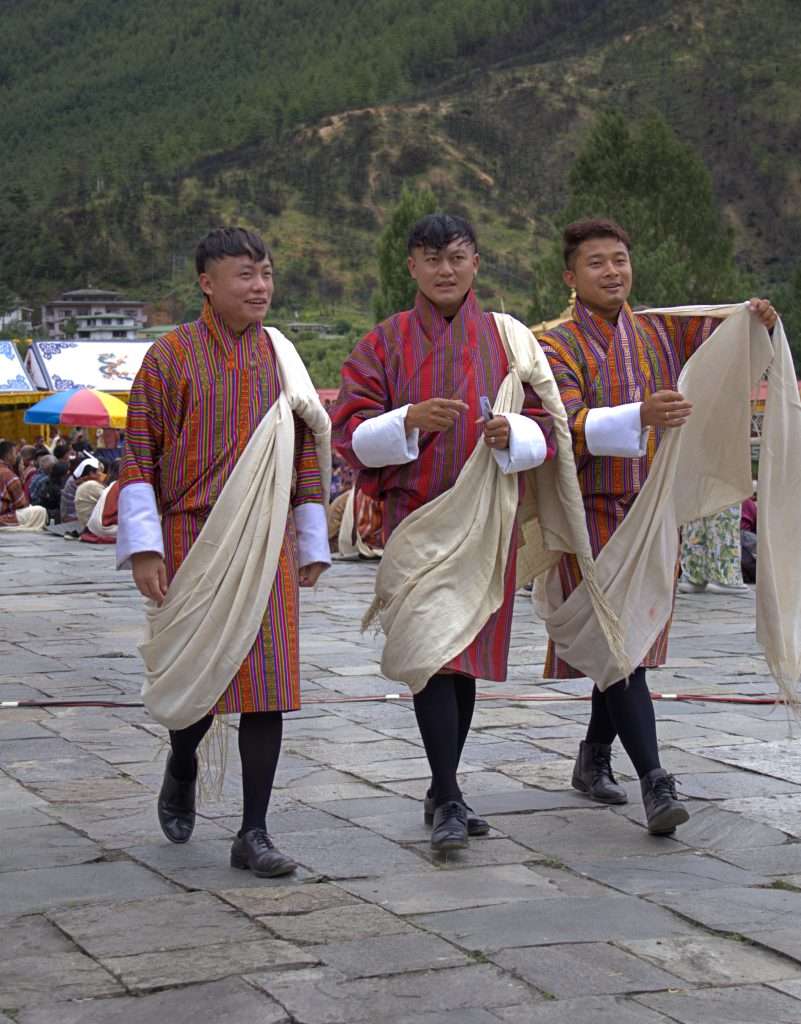
One of the most striking symbols of Bhutanese culture is its traditional attire—the Gho for men and the Kira for women. These beautiful garments are more than just clothing; they represent the country’s rich heritage, identity, and pride.
The Gho
The Gho is a knee-length robe worn by Bhutanese men, tied with a woven belt known as a Kera. The upper folds create a pouch-like pocket, used to carry everyday items. Worn with long socks and traditional boots, the Gho is both practical and dignified, reflecting Bhutan’s cultural elegance.
The Kira
The Kira, worn by women, is a long, rectangular piece of fabric draped gracefully around the body. Fastened at the shoulders with silver brooches called Koma and tied at the waist with a Kera, it is paired with an inner blouse (Wonju) and a jacket (Tego). The result is a stunning, colorful outfit that embodies Bhutanese artistry and tradition.
Cultural Importance
In Bhutan, the national dress is more than tradition—it’s a way of life. The government promotes wearing Gho and Kira in schools, offices, and public spaces to preserve Bhutan’s cultural heritage. During festivals like the Tshechu, locals wear their finest handwoven versions, creating a vibrant display of colors and patterns.
A Unique Experience for Travelers
Travelers to Bhutan are often encouraged to try the Gho or Kira themselves. Wearing the national dress offers a deeper cultural connection, making visits to dzongs, monasteries, and festivals even more special and memorable.