EXCELLENT Based on 155 reviews
 Posted on Tripadvisor
 Kornel P23 August 2026Superb experience in the land of the thunder dragon Absolutely amazing experience, our guide was extremely knowledgeable and had a superb ability to talk about all that he knew. We learned a lot about Bhutan and truly enjoyed every part of our 4 day stay it was quite extensive. Highly recommend to anybody looking to visit and understand Bhutan.Posted on Tripadvisor
 Kierthini N22 August 2026An Authentic, Meaningful Bhutan Experience Thank you, Omsha Travel, for making this journey so much more than just an itinerary. I’m was a solo female traveler from Malaysia and I stayed in Bhutan for 8 days. I had done my own research and revised the itinerary based on the places and experiences I wanted to cover. Mr. Nawang took that and made it happen while also adding in experiences I could have easily missed. That was the best part. He understood what I wanted from this trip and helped me experience and explore Bhutan more wholesomely, with so much thought and hospitality along the way. And then came Mr. Lhazin, quite possibly the best guide I could have asked for. This trip truly became a spiritual journey for me. We spoke about so many things; religion, beliefs, life and perspectives and it was refreshing to exchange opinions and have meaningful conversations. His knowledge of nature was mind blowing, and I genuinely learnt so much from him. Then there was Mr. Tashi, who drove me through all the “scenic” roads I kept requesting because I wanted to experience Bhutan in its rawest form. And he made it happen, while constantly making sure I was safe. These two made sure I ticked off my bucket list while keeping me safe, exactly what my family is always worried about. So, fam, that part was well taken care of! I came to Bhutan looking for an experience, but I’m leaving with stories, perspectives, knowledge and two people I’ll genuinely remember. Thank you, Omsha Travel, Mr. Nawang, Mr. Lhazin and Mr. Tashi, for making my journey through Bhutan so wholesome.Posted on Tripadvisor
 Rivet L22 August 2026A trip of a lifetime with the perfect team I had an amazing time with OMSHA Travel in Bhutan. Since the first email exchange I have felt very well taken care of, they were incredibly responsive and willing to accommodate each and every of my adjustment requests and travel plan changes. After arriving in Bhutan my lovely guide Sonam picked me up from the airport together with the driver Nawang. Sonam is very kind and knowledgeable, I had so many questions about the culture, every day life, food, Buddhism, and she always had an answer to satisfy my curiosity. As it was a private tour, they gave me the flexibility to adjust our route as we were going too! Nawang is a great driver and such a sweet person! The car was very comfortable and all the accommodation chosen for me beautiful and picturesque. People surrounding me were all so very nice, it really felt like making good friends while exploring this beautiful country. I'm definitely coming back some time in the future and I'm definitely recommending OMSHA to all my friends! Thank you Sonam and Nawang!Posted on Tripadvisor
 Tomasz P16 August 2026Mindful experience and more Great experience and exploring of Bhutan with lovely people. We had a tailor made offer for our near 4 day stay. Appreciate the flexibility and helpfulness in organization of our trip and the full package. Friendly and knowledgeable guide helped us to understand the country, culture and people. We enjoyed every moment of this fascinating trip.Posted on Tripadvisor
 Jorg H12 July 2026perfect days in Bhutan We were so lucky to have Sonam as our guide for our 8 day tour of Bhutan. Everything along the way was perfect and we had no difficulties at all. Sonam was friendly, funny and entertaining, but what really blew us away was her knowledge of the history of Bhutan and Buddhism and her ability to tell the stories and legends of the various characters in Buddhism that we encountered. He knowledge really helped to enhance our enjoyment of Bhutan as well as our other travels into Tibet and China. I also want to mention our driver Nawang. He was a very calm and careful driver and we appreciated his driving over some challenging roads. We never felt scared or nervous and he never lost his cool, or became frustrated with other drivers. Overall, our guide and driver team made our trip to Bhutan easy, educational, fun, interesting, safe and fantastic!! The tour itself was well thought out, customized according to our interests, competitively priced and communication with Ngawang (not sure about spelling) the owner was very timely and clear.Posted on Tripadvisor
 Rita D3 July 2026Excellent Price to Value Tour Fabulous Tour! We appreciated that OMSHA was responsive from inquiry to final booking. Price to value was excellent. We liked the selected itinerary and appreciated that we could make changes as needed. Our guides Sonam and Tashi were knowledgeable and professional and we had great conversations. It felt more like traveling with friends than with a tour. I would highly recommend OMSHA. You won't be disappointed!Posted on Tripadvisor
 Michael S16 June 2026Hassle free and flexible Communication was quick and clear from the start. Personable. Individualized itineraries but hassle free. Flexible. Tour guide was great at adjusting plans to better fit my style as the trip progressed. Undoubtedly the way to go. No regrets!Posted on Tripadvisor
 rayaro15 June 2026Marvelous Bhutan We had a group of friends and family on 7 days tour of Western Bhutan. Level of service provided by OMSHA travel was unmatched in many areas. From the pick up at the airport, Sonam and Ganesh kept our exploration of Bhutan flawless. Our requests to visit specific areas and activities were accommodated. We spent a night in a homestay in Gasa, visited hot springs, had a lovely riverside birthday picnic and attended Folklore Show that was a highlight of our trip. Nawang handled all communications and financial details thoroughly and transparently.Posted on Tripadvisor
 Wander340623001438 June 2026Amazing Bhutan We traveled to Bhutan in June 2026, and Omsha Travels made our holiday a truly wonderful experience. From the very beginning, the booking process was seamless and professional. The entire trip was planned to perfection, allowing us to relax and fully enjoy the beauty, culture, and unique environment of Bhutan. A special thanks to the owner for the warm hospitality and excellent arrangements. We are also grateful to our tour guide, Lhazin Dorji, whose knowledge and enthusiasm helped us gain a deeper understanding of Bhutan’s rich culture and way of life. He was really accommodating and helped fulfill our every wish. Our driver was equally wonderful, ensuring a safe, comfortable, and enjoyable journey. This holiday gave us unforgettable memories and a genuine glimpse into the amazing lifestyle and traditions of Bhutan. We are very happy clients and would highly recommend Omsha Travels to anyone planning a visit. We look forward to returning again in the future!Posted on Tripadvisor
 Anya B7 June 2026Unforgettable trip to Bhutan! A wonderful experience from start to finish! One of the most memorable trips we have taken. Sonam was knowledgeable, attentive & passionate about sharing Bhutan. We appreciated the warmth and kindness shown throughout the journey. We leave Bhutan with wonderful memories and a much greater appreciation for this remarkable country.
Bhutan Tour Packages:
Adventure
Festivals
Travel Tips:
Blog Posts:
- Inside Amankora Bhutan: A Private Journey Through the Himalayas
- Planning to Visit Bhutan for Festivals in 2027? Best Festivals, Dates & Planning Guide
- Bhutan Travel Guide 2027: Everything You Need to Know Before You Go
- Visit Druk Wangyel Festival in December: A Guide to Dochula Pass
- Nabji Lhakhang Drup 2026: An Offbeat Bhutan Festival in December
Contact us:
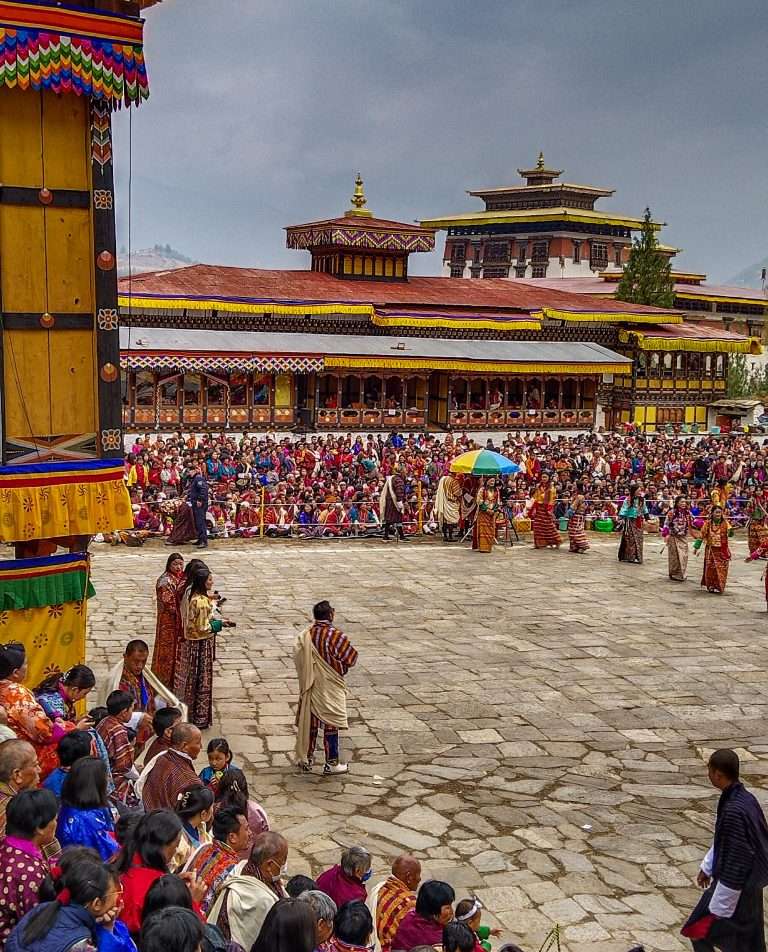
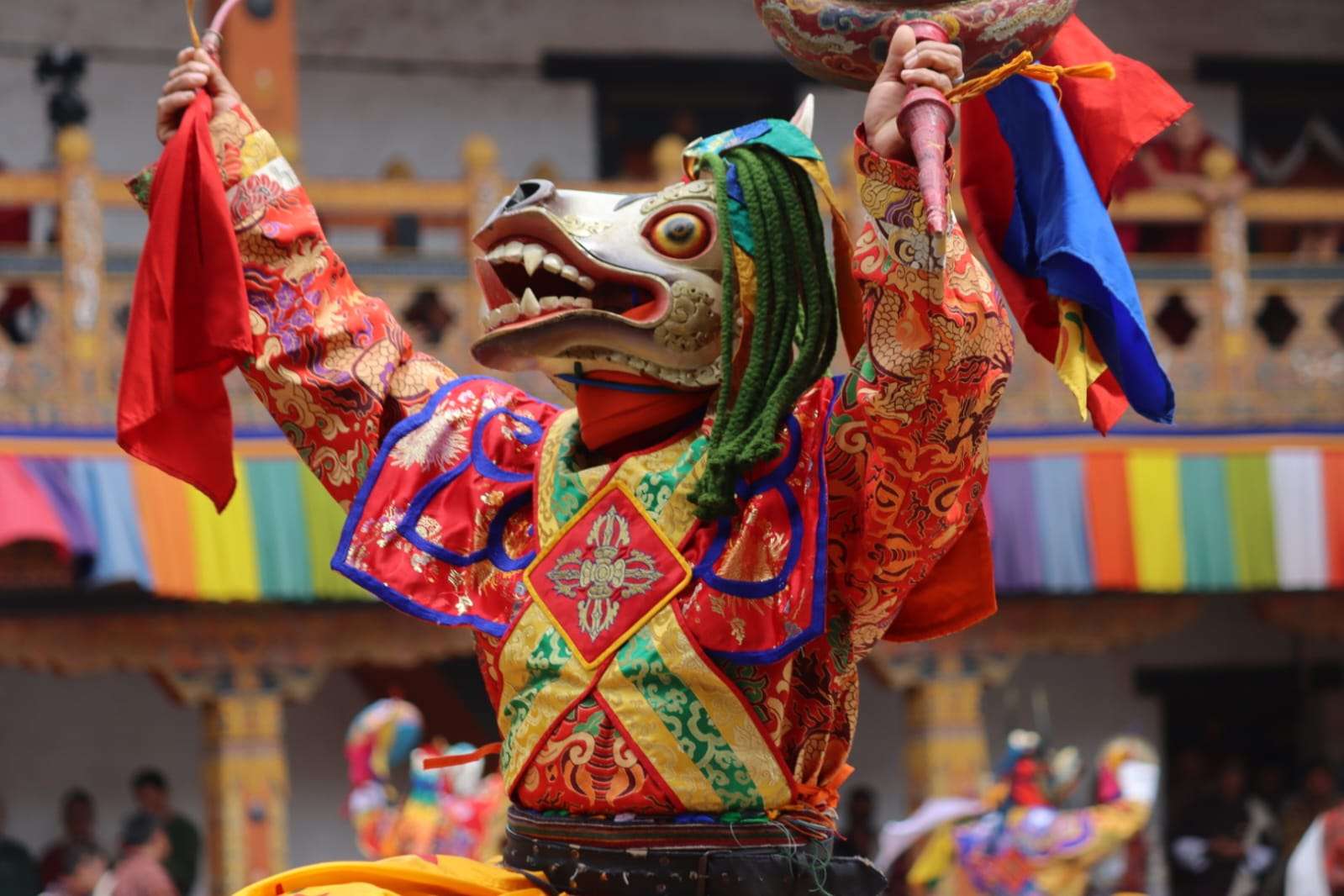
Bhutan is one of the few places in the Himalayas where a festival is not simply a cultural performance arranged for visitors. A Tshechu is a living religious tradition: monks perform sacred mask dances, communities gather in their finest traditional dress, families receive blessings, and ancient Buddhist stories are brought to life through music, colour and movement.
If you are planning a trip to Bhutan in 2027, choosing your festival carefully can completely change the character of your journey. Some festivals are grand and relatively easy to combine with a first visit to Bhutan, while others take you deep into the valleys and villages where very few international travellers go.
The 2027 festival calendar currently includes major celebrations from February through December. Because Bhutanese festivals follow the lunar calendar, travellers should reconfirm dates before making non-refundable flight and hotel bookings. The dates below are based on the current 2027 festival calendar published by the Association of Bhutanese Tour Operators (ABTO) and other current Bhutan festival listings.
Bhutan Festivals in 2027 at a Glance
Here are some of the most interesting festivals to consider when planning your Bhutan holiday:
Festival | Location | 2027 Dates |
Punakha Dromchoe | Punakha | 13–15 February |
Punakha Tshechu | Punakha | 16–18 February |
Paro Tshechu | Paro | 18–22 March |
Gomphu Kora | Trashi Yangtse | 16–18 March |
Gasa Tshechu | Gasa | 16–18 March |
Ura Yakchoe | Bumthang | 18–22 April |
Nimalung Tshechu | Bumthang | 12–14 June |
Wangdue Tshechu | Wangdue Phodrang | 8–10 October |
Thimphu Tshechu | Thimphu | 10–12 October |
Gangtey Tshechu | Phobjikha | 13–15 October |
Haa Tshechu | Haa | 6–8 November |
Jambay Lhakhang Drup | Bumthang | 14–17 November |
Druk Wangyel Tshechu | Dochula | 13 December |
The 2027 dates are still described as tentative in some published calendars, so treat the calendar as a planning guide rather than a substitute for final confirmation.
Grand Festivals for Short Trips
If you have limited time in Bhutan — a long weekend, five days or a week — and want to experience the full grandeur of a Bhutanese festival, these are among the best choices.
They take place in important dzong towns with relatively good road access, accommodation and established tourism infrastructure. They also attract large numbers of Bhutanese pilgrims, creating an extraordinary atmosphere of devotion and celebration.
Paro Festival
18th–22nd March 2027 | Rinpung Dzong, Paro
The Paro Tshechu is probably the best-known Bhutanese festival internationally and one of the most spectacular choices for a first-time visitor.
Held in and around the historic Rinpung Dzong in Paro, the festival features several days of sacred mask dances, traditional music and religious ceremonies. The final morning is especially important, when the enormous Thongdrel is unfurled before dawn.
The sight of thousands of Bhutanese gathering to receive blessings from the sacred image is unforgettable.
Paro is also Bhutan’s main gateway, making this festival particularly convenient for a short trip. You can combine the festival with the Tiger’s Nest, Kyichu Lhakhang, Paro valley sightseeing and a few days in Thimphu and Punakha.
The 2027 Paro Tshechu is currently scheduled for 18–22 March 2027.
Best for: First-time visitors, photographers, couples and travellers with 5–8 days.
Planning tip: Accommodation in Paro becomes highly sought-after around the festival, so early booking is strongly recommended.
Thimphu Festival
10th–12th October 2027 | Tashichho Dzong, Thimphu
The Thimphu Tshechu is one of Bhutan’s largest and most famous festivals.
Held in the capital at Tashichho Dzong, it brings together people from different parts of Bhutan. Locals arrive dressed in their finest gho and kira, while monks perform elaborate Cham dances portraying Buddhist teachings and spiritual stories.
Because Thimphu is Bhutan’s capital, it is particularly easy to combine the festival with museums, monasteries, markets, cafés, local crafts and excursions around the Thimphu Valley.
The current 2027 calendar places Thimphu Tshechu on 10–12 October 2027.
Best for: Families, first-time visitors, photographers and travellers who want a major festival without travelling deep into Bhutan.
Punakha Festival
Punakha Dromchoe: 13th–15th February
Punakha Tshechu: 16th–18th February 2027
If you want a festival combined with one of Bhutan’s most beautiful landscapes, Punakha is difficult to beat.
The Punakha celebrations consist of two closely connected events: the Punakha Dromchoe, followed immediately by the Punakha Tshechu.
The Dromchoe is particularly distinctive, featuring a dramatic recreation of the battle against Tibetan forces in the 17th century. It is followed by the colourful Tshechu, with sacred mask dances and religious ceremonies.
The current 2027 schedule is:
- Punakha Dromchoe: 13–15 February
- Punakha Tshechu: 16–18 February
That gives travellers the opportunity to experience almost a full week of festivities in one of Bhutan’s most spectacular dzong settings.
Best for: Travellers who want history, architecture, religion and scenery together.
Planning tip: Punakha’s warmer valley climate makes February particularly pleasant compared with Bhutan’s higher valleys.
Wangdue Phodrang Festival
8th–10th October 2027 | Wangdue Phodrang
The Wangdue Tshechu is an excellent alternative to the more internationally famous Paro and Thimphu festivals.
Wangdue Phodrang lies along the popular western Bhutan route between Thimphu and Punakha, so it can be incorporated naturally into a longer western Bhutan itinerary.
The festival offers the atmosphere of a major Bhutanese celebration while generally feeling less internationally crowded than Paro.
The 2027 festival is currently scheduled for 8–10 October, immediately before the Thimphu Tshechu on 10–12 October.
Best for: Repeat visitors, photographers and travellers who want a major festival with a somewhat different atmosphere.
Intimate & Immersive Festivals
Not every Bhutanese festival is about enormous crowds.
If you prefer a more intimate experience, consider travelling beyond the major western dzongs. Smaller festivals can bring you closer to village communities and religious traditions, often with far fewer international visitors.
Haa Tshechu
6th–8th November 2027 | Haa Valley
Haa Valley is one of western Bhutan’s quieter destinations, and its festival offers a very different atmosphere from Paro or Thimphu.
The Haa Tshechu takes place at Lhakhang Karpo, the White Temple, and provides an opportunity to experience a festival where local community participation remains central.
The current 2027 calendar lists the festival for 6–8 November.
Combine the festival with the Haa Valley’s mountain scenery, local villages and highland walks for a deeper cultural journey.
Best for: Slow travellers, photographers, repeat visitors and travellers looking for a quieter festival.
Tamshing Phala Chhoepa
10th–12th October 2027 | Bumthang
Bumthang is considered the spiritual heartland of Bhutan, and Tamshing Lhakhang is one of its most important sacred sites.
The Tamshing festival is associated with the Pema Lingpa tradition and has a distinctly devotional atmosphere. Unlike the biggest dzong festivals, the setting feels smaller and more intimate.
The current calendar lists 10–12 October 2027.
Because Tamshing falls at almost the same time as Thimphu Tshechu, it can be an excellent choice for travellers who have already experienced the capital’s major festival and want something more intimate.
Gasa Tshechu
16th–18th March 2027 | Gasa
Gasa is one of Bhutan’s most remote districts and is famous for its hot springs, rugged mountain landscape and proximity to the northern Himalayan wilderness.
The Gasa Tshechu is significantly smaller than Paro or Thimphu, making it appealing to travellers who want to get away from the major festival crowds.
The 2027 calendar currently lists 16–18 March, overlapping with the final days of the Gomphu Kora festival and immediately before/alongside the Paro festival period.
Best for: Adventurous travellers and repeat visitors with additional time.
Ura Yakchoe
18th–22nd April 2027 | Ura, Bumthang
For travellers looking for something genuinely different from a large dzong Tshechu, Ura Yakchoe is one of Bhutan’s most compelling choices.
Held in the historic village of Ura in Bumthang, the celebration is deeply connected with local religious traditions and the sacred relic at the centre of the festival.
Rather than feeling like a performance watched from a grand stadium-like courtyard, the celebration unfolds within the village environment.
The current 2027 calendar lists 18–22 April.
Best for: Cultural travellers, photographers and repeat visitors.
Lean-Season Festivals
Bhutan’s spring and autumn festival periods are popular, but there are excellent reasons to consider travelling outside the traditional peak seasons.
Summer festivals can offer greener landscapes, fewer international visitors and a slower travel experience. Winter festivals can be particularly atmospheric, with crisp mountain air and clear Himalayan views.
Nimalung Tshechu
12th–14th June 2027 | Bumthang
Nimalung Tshechu takes place in the Bumthang Valley during the early summer.
Bumthang is generally cooler than the lower valleys, and the landscape becomes intensely green during this season. The combination of mountain scenery, monasteries and local religious celebrations makes June an interesting time for travellers who want to experience Bhutan away from the busiest periods.
The 2027 calendar currently lists 12–14 June.
Best for: Repeat visitors, culture-focused travellers and those comfortable with summer travel.
Druk Wangyel Tshechu
13th December 2027 | Dochula Pass
The Druk Wangyel Tshechu is unlike the traditional monastery and dzong festivals found throughout Bhutan.
It is held at Dochula Pass, surrounded by the famous 108 Druk Wangyel Chortens and, on a clear winter day, spectacular Himalayan views.
The festival was established in honour of the Fourth King and the Royal Bhutan Army, and its dances are distinctive because they commemorate Bhutan’s modern military history.
The 2027 festival is scheduled for 13 December.
December can be cold, particularly at Dochula’s elevation, but clear winter skies can provide exceptional mountain views.
Best for: Winter travellers, photographers and visitors looking for a one-day festival experience.
Trongsa Tshechu
5th – 9th January 2028 | Trongsa Dzong, Trongsa
If you want to experience a traditional Bhutanese festival during the quieter winter season, Trongsa Tshechu is an excellent choice.
Held in the historic courtyard of Trongsa Dzong, the festival usually takes place in December or January, according to the Bhutanese lunar calendar. Unlike the better-known Paro and Thimphu Tshechus, Trongsa sees considerably fewer international visitors, allowing you to experience the festival in a more local and intimate atmosphere.
The three-day celebration features sacred mask dances, traditional music, religious ceremonies and local communities gathering in their finest ghos and kiras. The dramatic setting of Trongsa Dzong, perched high above the Mangde Chhu valley, adds another dimension to the experience.
Winter also makes Trongsa particularly appealing for travellers looking for a quieter Bhutan journey. The roads and valleys are generally less busy, while clear winter days can provide beautiful views of the surrounding mountains.
For travellers with more time, the festival can be incorporated into a central Bhutan itinerary, linking Punakha, Trongsa and Bumthang rather than simply attending the festival and returning west.
Best for: Repeat visitors, culture-focused travellers, photographers and those looking for a quieter winter festival.
Remote & Expedition Festivals
Some festivals require much more than simply driving to a dzong town.
Bhutan’s eastern and central regions offer festivals where the journey itself becomes part of the experience. These are particularly attractive for repeat visitors or travellers with two weeks or more.
Gomphu Kora Festival
16th–18th March 2027 | Trashi Yangtse
Gomphu Kora is one of eastern Bhutan’s most fascinating religious festivals.
The temple sits in a peaceful valley in Trashi Yangtse, far from the main western tourist circuit. During the festival, pilgrims gather to circumambulate the sacred site and participate in religious ceremonies.
The 2027 festival is currently scheduled for 16–18 March.
Reaching Gomphu Kora requires considerably more time than visiting Paro or Thimphu, but the reward is a much more immersive eastern Bhutan experience.
Best for: Repeat visitors, photographers and travellers planning an East Bhutan journey.
Nabji Lhakhang Drup
Late December 2027–Early January 2028 — Date to be Confirmed
Nabji deserves a special mention, but it is important to plan this festival based on the officially confirmed 2027/28 calendar rather than relying on an early published date.
The Association of Bhutanese Tour Operators’ 2027 tentative calendar currently places Nabji Lhakhang Drup in January 2028, from 12–14 January, rather than December 2027.
Nabji is located in a subtropical area of Trongsa and is associated with an important religious tradition connected with Guru Rinpoche and the peace treaty between rival kings.
For travellers interested in lesser-known Bhutanese traditions, Nabji can be an extraordinary cultural journey. However, the logistics are more demanding than a standard western Bhutan festival tour.
Best for: Experienced travellers, repeat visitors and those willing to spend additional time in central Bhutan.
Which Bhutan Festival Should You Choose?
The right festival depends largely on how much time you have.
If you have 5–7 days
Choose Paro Tshechu.
It is the easiest major festival to combine with Paro, Tiger’s Nest and Thimphu.
If you have around one week
Choose Punakha Tshechu.
You can combine the festival with Punakha Dzong, Dochula, Thimphu and Paro.
If you have 7–10 days
Consider Thimphu Tshechu or Wangdue Tshechu.
These can be incorporated into a classic western Bhutan itinerary without excessive driving.
If you have 10–14 days
Consider Bumthang.
Ura Yakchoe, Nimalung Tshechu, Tamshing Phala Chhoepa or Jambay Lhakhang Drup allow you to explore Bhutan’s spiritual heartland while attending a festival.
If you have two weeks or more
Consider eastern Bhutan.
Gomphu Kora and other eastern festivals can be combined with Trashigang, Trashi Yangtse, Mongar and other less-visited destinations.
How Far in Advance Should You Book a Bhutan Festival Trip?
Festival travel requires more planning than an ordinary Bhutan holiday.
1. Book accommodation early
Hotels in festival towns can fill quickly, particularly during:
- Paro Tshechu
- Punakha Tshechu
- Thimphu Tshechu
- Wangdue Tshechu
- Jambay Lhakhang Drup
For smaller festivals, accommodation choices can be limited rather than simply sold out.
2. Plan your route around the festival
Don’t choose a festival first and then try to squeeze it into a standard itinerary.
Instead, build the journey around the festival dates.
For example:
Paro → Thimphu → Punakha → Paro
works naturally for a western Bhutan festival journey.
For Bumthang:
Paro → Thimphu → Punakha → Trongsa → Bumthang → Paro
allows considerably more time for the journey and cultural experiences.
3. Allow some flexibility
Mountain roads, weather and festival programmes can affect travel schedules.
A private Bhutan journey gives you more flexibility than a fixed group departure. Your local guide can also help you adjust sightseeing around the actual festival programme.
4. Don’t assume every day is the same
A Tshechu usually runs for several days, but the most important dances and the Thongdrel are often associated with particular days.
If your priority is seeing the Thongdrel, make sure your itinerary includes the appropriate final day.
What Should You Expect at a Bhutanese Festival?
A Bhutanese festival is much more than watching monks dance.
You may see:
- Sacred mask dances
- Traditional music and instruments
- Religious rituals
- Elaborate costumes
- Bhutanese families dressed in their finest national dress
- Monks performing Cham dances
- Blessings and religious ceremonies
- Local food and community gatherings
- Sacred Thongdrel displays
- Pilgrims circumambulating temples and monasteries
Most importantly, remember that these are religious events first and tourist attractions second.
Dress respectfully, follow your guide’s instructions and avoid interrupting religious ceremonies for photographs.
Photography Tips for Bhutan Festivals
Festivals are among the best opportunities for photography in Bhutan, but patience is important.
Bring a camera with a suitable zoom lens if you have one, but you do not need professional equipment to capture memorable moments.
Early morning is especially important on days when a Thongdrel is displayed.
At the same time, remember that some moments are sacred. Always follow local instructions about where photography is permitted.
A good local guide can also help you understand what is happening rather than simply photographing the costumes and dances.
Why Travel With a Local Bhutanese Tour Operator?
Planning a festival trip is different from booking an ordinary sightseeing holiday.
The festival dates determine accommodation, driving routes and sometimes the entire structure of your itinerary.
A local Bhutanese operator can help coordinate:
- Festival accommodation
- Private transportation
- Licensed Bhutanese guide
- Airport transfers
- Festival timing
- Cultural sightseeing
- Route adjustments
- Less-visited villages and monasteries
- Local experiences around the festival
For travellers looking beyond a standard checklist itinerary, a private customized Bhutan festival tour can make it possible to combine the festival with hikes, village visits, farmhouses, hot-stone baths, photography or deeper cultural experiences.
You can also explore our detailed guide on Bhutan Festival Tours for customized cultural itineraries.
Final Thoughts: The Best Bhutan Festival Is the One That Fits Your Journey
There is no single “best” festival in Bhutan.
Paro is ideal for a first visit and a spectacular introduction to Bhutanese culture.
Punakha combines an extraordinary dzong setting with one of Bhutan’s most fascinating religious celebrations.
Thimphu offers the scale, colour and energy of the country’s capital.
Wangdue provides a major festival experience with a slightly different atmosphere.
Ura, Tamshing and Nimalung offer a deeper connection with Bumthang’s spiritual traditions.
And Gomphu Kora takes you much further from the conventional Bhutan itinerary into the country’s eastern landscapes.
Whichever festival you choose, don’t think of the experience as simply attending an event. Build your Bhutan journey around the festival, rather than trying to fit the festival into your journey.
That is when a Bhutan festival becomes more than something you watch — it becomes part of the journey itself.
Plan Your 2027 Bhutan Festival Trip with OMSHA Travel
Because Bhutan requires all visitors to travel through a licensed operator, and because festival-season hotels and flights fill up fast, the smartest first step is getting a custom itinerary and accurate cost estimate built around your chosen festival dates.
Contact OMSHA Travel for a tailored 2027 Bhutan festival itinerary and tour cost — they can match your dates, budget, and trip length to the right festival (or combination of festivals), confirm the latest lunar-calendar dates closer to travel, and handle your visa, SDF, and logistics from start to finish.