EXCELLENT Based on 155 reviews
 Posted on Tripadvisor
 Kornel P23 August 2026Superb experience in the land of the thunder dragon Absolutely amazing experience, our guide was extremely knowledgeable and had a superb ability to talk about all that he knew. We learned a lot about Bhutan and truly enjoyed every part of our 4 day stay it was quite extensive. Highly recommend to anybody looking to visit and understand Bhutan.Posted on Tripadvisor
 Kierthini N22 August 2026An Authentic, Meaningful Bhutan Experience Thank you, Omsha Travel, for making this journey so much more than just an itinerary. I’m was a solo female traveler from Malaysia and I stayed in Bhutan for 8 days. I had done my own research and revised the itinerary based on the places and experiences I wanted to cover. Mr. Nawang took that and made it happen while also adding in experiences I could have easily missed. That was the best part. He understood what I wanted from this trip and helped me experience and explore Bhutan more wholesomely, with so much thought and hospitality along the way. And then came Mr. Lhazin, quite possibly the best guide I could have asked for. This trip truly became a spiritual journey for me. We spoke about so many things; religion, beliefs, life and perspectives and it was refreshing to exchange opinions and have meaningful conversations. His knowledge of nature was mind blowing, and I genuinely learnt so much from him. Then there was Mr. Tashi, who drove me through all the “scenic” roads I kept requesting because I wanted to experience Bhutan in its rawest form. And he made it happen, while constantly making sure I was safe. These two made sure I ticked off my bucket list while keeping me safe, exactly what my family is always worried about. So, fam, that part was well taken care of! I came to Bhutan looking for an experience, but I’m leaving with stories, perspectives, knowledge and two people I’ll genuinely remember. Thank you, Omsha Travel, Mr. Nawang, Mr. Lhazin and Mr. Tashi, for making my journey through Bhutan so wholesome.Posted on Tripadvisor
 Rivet L22 August 2026A trip of a lifetime with the perfect team I had an amazing time with OMSHA Travel in Bhutan. Since the first email exchange I have felt very well taken care of, they were incredibly responsive and willing to accommodate each and every of my adjustment requests and travel plan changes. After arriving in Bhutan my lovely guide Sonam picked me up from the airport together with the driver Nawang. Sonam is very kind and knowledgeable, I had so many questions about the culture, every day life, food, Buddhism, and she always had an answer to satisfy my curiosity. As it was a private tour, they gave me the flexibility to adjust our route as we were going too! Nawang is a great driver and such a sweet person! The car was very comfortable and all the accommodation chosen for me beautiful and picturesque. People surrounding me were all so very nice, it really felt like making good friends while exploring this beautiful country. I'm definitely coming back some time in the future and I'm definitely recommending OMSHA to all my friends! Thank you Sonam and Nawang!Posted on Tripadvisor
 Tomasz P16 August 2026Mindful experience and more Great experience and exploring of Bhutan with lovely people. We had a tailor made offer for our near 4 day stay. Appreciate the flexibility and helpfulness in organization of our trip and the full package. Friendly and knowledgeable guide helped us to understand the country, culture and people. We enjoyed every moment of this fascinating trip.Posted on Tripadvisor
 Jorg H12 July 2026perfect days in Bhutan We were so lucky to have Sonam as our guide for our 8 day tour of Bhutan. Everything along the way was perfect and we had no difficulties at all. Sonam was friendly, funny and entertaining, but what really blew us away was her knowledge of the history of Bhutan and Buddhism and her ability to tell the stories and legends of the various characters in Buddhism that we encountered. He knowledge really helped to enhance our enjoyment of Bhutan as well as our other travels into Tibet and China. I also want to mention our driver Nawang. He was a very calm and careful driver and we appreciated his driving over some challenging roads. We never felt scared or nervous and he never lost his cool, or became frustrated with other drivers. Overall, our guide and driver team made our trip to Bhutan easy, educational, fun, interesting, safe and fantastic!! The tour itself was well thought out, customized according to our interests, competitively priced and communication with Ngawang (not sure about spelling) the owner was very timely and clear.Posted on Tripadvisor
 Rita D3 July 2026Excellent Price to Value Tour Fabulous Tour! We appreciated that OMSHA was responsive from inquiry to final booking. Price to value was excellent. We liked the selected itinerary and appreciated that we could make changes as needed. Our guides Sonam and Tashi were knowledgeable and professional and we had great conversations. It felt more like traveling with friends than with a tour. I would highly recommend OMSHA. You won't be disappointed!Posted on Tripadvisor
 Michael S16 June 2026Hassle free and flexible Communication was quick and clear from the start. Personable. Individualized itineraries but hassle free. Flexible. Tour guide was great at adjusting plans to better fit my style as the trip progressed. Undoubtedly the way to go. No regrets!Posted on Tripadvisor
 rayaro15 June 2026Marvelous Bhutan We had a group of friends and family on 7 days tour of Western Bhutan. Level of service provided by OMSHA travel was unmatched in many areas. From the pick up at the airport, Sonam and Ganesh kept our exploration of Bhutan flawless. Our requests to visit specific areas and activities were accommodated. We spent a night in a homestay in Gasa, visited hot springs, had a lovely riverside birthday picnic and attended Folklore Show that was a highlight of our trip. Nawang handled all communications and financial details thoroughly and transparently.Posted on Tripadvisor
 Wander340623001438 June 2026Amazing Bhutan We traveled to Bhutan in June 2026, and Omsha Travels made our holiday a truly wonderful experience. From the very beginning, the booking process was seamless and professional. The entire trip was planned to perfection, allowing us to relax and fully enjoy the beauty, culture, and unique environment of Bhutan. A special thanks to the owner for the warm hospitality and excellent arrangements. We are also grateful to our tour guide, Lhazin Dorji, whose knowledge and enthusiasm helped us gain a deeper understanding of Bhutan’s rich culture and way of life. He was really accommodating and helped fulfill our every wish. Our driver was equally wonderful, ensuring a safe, comfortable, and enjoyable journey. This holiday gave us unforgettable memories and a genuine glimpse into the amazing lifestyle and traditions of Bhutan. We are very happy clients and would highly recommend Omsha Travels to anyone planning a visit. We look forward to returning again in the future!Posted on Tripadvisor
 Anya B7 June 2026Unforgettable trip to Bhutan! A wonderful experience from start to finish! One of the most memorable trips we have taken. Sonam was knowledgeable, attentive & passionate about sharing Bhutan. We appreciated the warmth and kindness shown throughout the journey. We leave Bhutan with wonderful memories and a much greater appreciation for this remarkable country.
Bhutan Tour Packages:
Adventure
Festivals
Travel Tips:
Blog Posts:
- Visit Druk Wangyel Festival in December: A Guide to Dochula Pass
- Nabji Lhakhang Drup 2026: An Offbeat Bhutan Festival in December
- Punakha Dromchoe 2027: Dates, Festival Guide & Bhutan Tour Packages
- Punakha Tshechu 2027: Dates, Festival Guide & Bhutan Tour Packages
- Best Time to Visit Bhutan: Month-by-Month Travel Guide
Contact us:
Tucked between India and China in the eastern Himalayas, Bhutan is unlike anywhere else on earth. It’s the only carbon-negative country on the planet, the birthplace of “Gross National Happiness,” and a nation that has deliberately chosen a slower, more protected path into modernity. If you’re planning your first trip here, a little preparation goes a long way. Here’s everything you need to know before you land.
1. Bhutan Measures Success in Happiness, Not Just GDP
Bhutan is famous for pioneering the concept of Gross National Happiness (GNH) as a measure of national progress, alongside — not instead of — economic growth. The philosophy rests on four pillars: sustainable development, environmental conservation, cultural preservation, and good governance. It shapes everything from tourism policy to school curricula, so don’t be surprised if it comes up in conversation with locals and guides.
2. You’ll Pay a Sustainable Development Fee (SDF)
Bhutan runs a “high value, low volume” tourism model rather than mass tourism. Every international tourist (excluding Indian nationals, who pay a much lower regional rate) pays a Sustainable Development Fee of USD 100 per person, per night, which funds free healthcare, free education, and environmental and cultural preservation projects. This rate is fixed through August 2027. Children aged 6–11 pay half, and kids under 6 are exempt. On top of the SDF, there’s a one-time non-refundable visa fee of about USD 40.
The SDF does not cover your hotel, food, guide, or transport — those are separate costs you’ll arrange with a licensed tour operator or hotel.
3. Independent Travel in Bhutan: Still Best with a Tour Operator
Bhutan has made travel more accessible in recent years by allowing visitors to independently arrange their own accommodations, transportation, and guides (guides remain mandatory). Even so, Bhutan isn’t a country where you can simply book a flight and show up — planning your trip through a licensed Bhutanese tour operator is strongly recommended and, in many cases, necessary.
Booking accommodation independently in Bhutan isn’t straightforward either, since many hotels aren’t listed on standard booking platforms or don’t accept online reservations directly. An experienced local operator can offer personalized itineraries — from luxury stays to cultural journeys to off-the-beaten-path adventures — and adds real value for activities like trekking, attending festivals, or specialized interests such as birdwatching or cycling. Operators also bring local knowledge, handle day-to-day logistics, and make sure you have the right permits in place, so your trip runs more smoothly from start to finish.
Contact OMSHA Travel is a certified tour operator and can be found on the official Bhutan Travel website.
4. There’s Only One International Airport — and It’s a Famously Tricky Landing
Paro International Airport is Bhutan’s only international gateway, set in a narrow valley surrounded by peaks up to 18,000 feet. The approach requires a steep, manual descent that only a small number of specially certified pilots are qualified to fly. It’s frequently cited as one of the most challenging commercial landings in the world — but also one of the most spectacular, with close-up views of terraced fields and Himalayan ridgelines just before touchdown.
5. Buddhism Shapes Daily Life
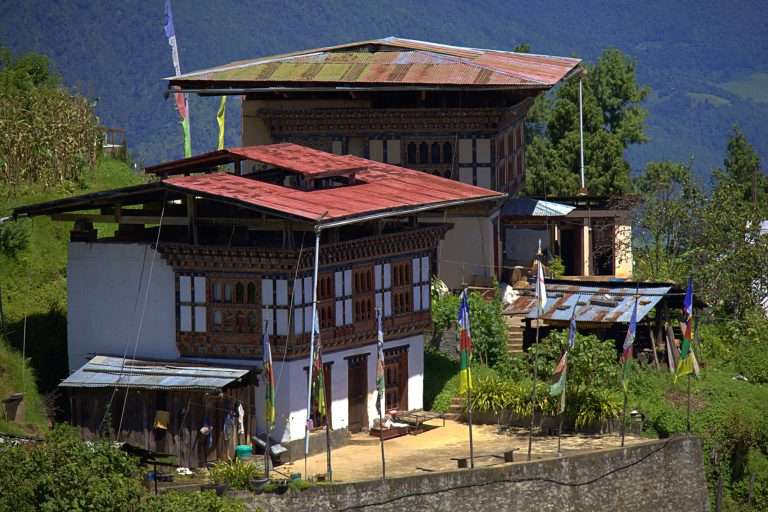
Bhutan is a deeply Buddhist kingdom, and Vajrayana Buddhism (the Drukpa Kagyu school) influences architecture, festivals, art, and daily etiquette. Prayer flags, prayer wheels, and monasteries (dzongs) are everywhere. Photography rules inside temples and dzongs are strict — always ask your guide before taking pictures of religious sites or monks.
6. Dzongs Are More Than Just Fortresses
A dzong is a fortress-monastery that traditionally houses both religious and administrative offices — a striking symbol of how spiritual and civic life intertwine in Bhutan. Punakha Dzong, at the confluence of two rivers, is widely considered the most beautiful in the country, while Thimphu’s Tashichho Dzong houses the throne room of the King.
7. Tiger’s Nest Is a Must — But It’s a Real Hike
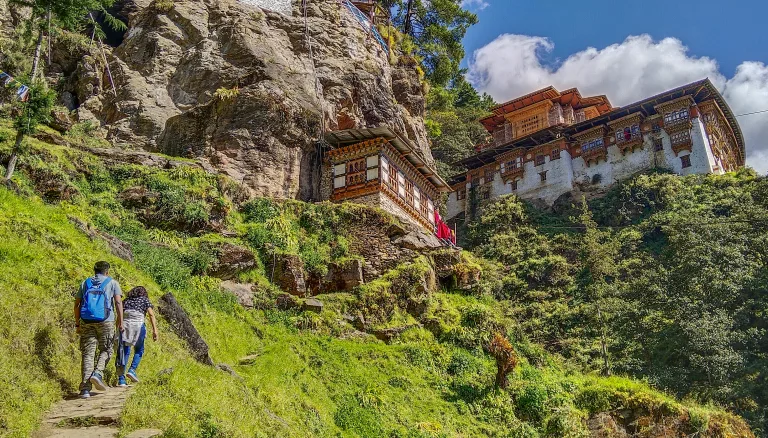
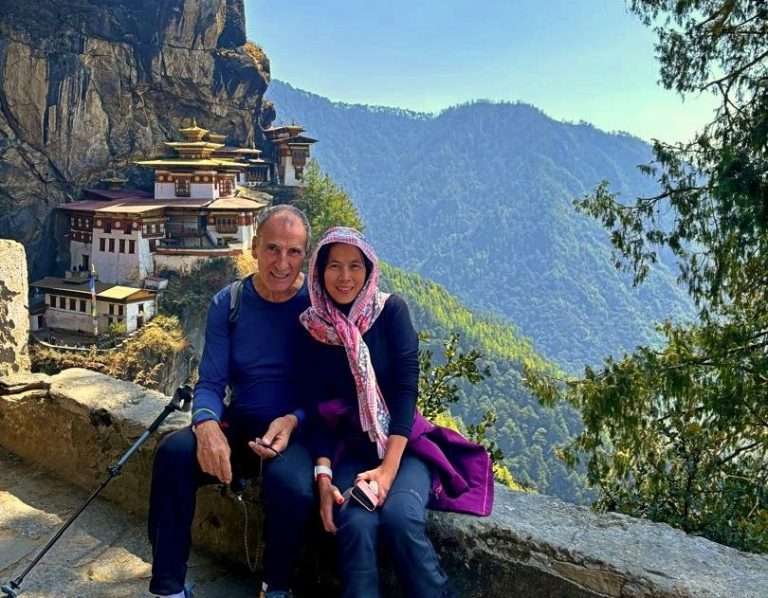
Paro Taktsang, or “Tiger’s Nest Monastery,” clings to a cliff face 3,000 feet above the Paro Valley and is Bhutan’s most iconic image. Reaching it requires a hike of roughly 3–5 hours round trip on foot (or partway by mule), so plan for it physically and wear proper shoes.
8. The National Dress Code Is Taken Seriously
Bhutanese citizens are required to wear traditional dress — the gho (a knee-length robe for men) and kira (an ankle-length dress for women) — in schools, government offices, and formal occasions. As a visitor, you won’t be required to wear one, but dressing modestly (covered shoulders and knees) is expected, especially at religious sites.
9. It’s the World’s Only Carbon-Negative Country
Thanks to dense forest cover — protected by law to remain at least 60% of the country’s land — and low industrial output, Bhutan absorbs more carbon than it emits. Environmental conservation isn’t just policy talk here; it’s written into the constitution.
10. The Currency Is the Ngultrum, Pegged to the Indian Rupee
Bhutan’s currency is the Ngultrum (BTN), fixed 1:1 with the Indian Rupee, and Indian Rupees are widely accepted alongside it (though large INR 500/2,000 notes can sometimes be restricted). Credit cards are accepted in cities and larger hotels, but cash is essential in rural areas.
11. Best Time to Visit: A Season-by-Season Breakdown
Bhutan has a distinct four-season climate, and each brings a different experience:
- Spring (March–May): One of the two peak seasons. Valleys bloom with rhododendrons and magnolias, skies are generally clear, and temperatures are mild — ideal for trekking and sightseeing. This is also when the Paro Tshechu often falls.
- Summer / Monsoon (June–August): The rainy season, with heavy afternoon downpours, especially in the south and central valleys. Landscapes turn lush and green, and it’s the quietest, least crowded time to visit — good for budget-conscious travelers who don’t mind carrying a rain jacket, though some mountain passes and trekking routes can be affected.
- Autumn (September–November): The most popular season and arguably the best all-around time to visit. Skies are crisp and clear, mountain views are at their finest, and this is when the largest festivals — including the Thimphu Tshechu — take place.
- Winter (December–February): Cold, especially at night, with occasional snow in higher valleys like Paro and Bumthang. Days are often sunny with excellent visibility, and it’s the least crowded and sometimes most affordable time to travel, though some high-altitude treks and mountain passes may be closed.
If festivals and mountain views are your priority, aim for spring or autumn. If you prefer solitude and don’t mind rain or cold, summer and winter both have their own quiet charm.
12. Don’t Miss a Tshechu (Festival)
A tshechu is a vibrant religious festival held annually in each district, featuring masked dances performed by monks that depict stories from Buddhist mythology. Paro and Thimphu’s tshechus are the largest and most popular with visitors — if your trip dates align, it’s worth building your itinerary around one.
13. Internet and Connectivity Are Better Than You’d Expect
Wi-Fi is widely available in hotels and cafes in cities like Thimphu and Paro, and local SIM cards are easy to buy on arrival. That said, connectivity thins out quickly in remote valleys, so don’t expect signal everywhere.
14. Try the National Dish: Ema Datshi
Bhutanese cuisine centers on chilies as a vegetable, not just a spice. Ema datshi — chilies stewed in melted cheese — is the national dish and appears at nearly every meal. Red rice, pork, and butter tea (suja) round out the everyday table. Come with an open mind (and a tolerance for heat).
15. Bhutan Was a Monarchy That Chose Democracy
Bhutan transitioned from an absolute to a constitutional monarchy in 2008, with the reigning monarch actively steering the shift toward parliamentary democracy rather than being forced into it — a rare path among modern nations. The King remains a deeply respected figure across the country.
16. Language and Communication
Bhutan’s national language is Dzongkha, spoken mainly in the western regions, though the country is home to several other local languages and dialects, including Sharchopkha in the east and Lhotshamkha in the south. English, however, is the medium of instruction in schools and widely spoken in tourism, hospitality, and government, so most visitors get by comfortably without knowing any Dzongkha.
That said, learning a few words goes a long way with locals:
- Kuzuzangpo la – Hello
- Kadinche la – Thank you
- La – A polite particle added to the end of sentences as a sign of respect
Your guide will speak fluent English throughout your trip and can help translate in more remote areas where English is less common.
Frequently Asked Questions (FAQs)
Q: Do I need a guide to travel around Bhutan? A licensed guide is mandatory for most international tourists for travel outside Thimphu and Paro, and is arranged automatically as part of your tour package. Independent, guide-free travel is only permitted in a few designated areas.
Q: How much does a trip to Bhutan cost overall? Beyond the USD 100/night SDF and USD 40 visa fee, expect to pay for accommodation, meals, guide, and transport separately, which can range widely depending on hotel category — from mid-range “clean and safe” certified hotels to luxury properties like Amankora or Six Senses.
Q: Is Bhutan safe for solo travelers, including women? Yes, Bhutan is widely regarded as one of the safest countries in Asia to visit, with very low crime rates. Since travel outside the main towns requires a guide, solo travelers are rarely truly alone on the road.
Q: Can I use my phone and get internet access in Bhutan? Yes — local SIM cards are inexpensive and easy to buy on arrival at Paro airport or in Thimphu, and most hotels and cafes in major towns offer Wi-Fi. Coverage becomes patchier in remote valleys and during treks.
Q: What altitude should I prepare for? Most tourist areas, including Paro (about 7,300 ft) and Thimphu (about 7,700 ft), sit at moderate elevation that rarely causes altitude sickness. Some treks and passes climb much higher, so check your specific itinerary if you’re planning trekking routes.
Q: Is Bhutan vegetarian/vegan-friendly? Yes. While pork and meat dishes are common, vegetarian dishes like ema datshi (chili and cheese) and red rice are staples, and most hotels and restaurants catering to tourists can accommodate vegetarian and vegan requests with advance notice.
Q: Can I extend my visa or trip once I’m in Bhutan? Extensions can be arranged in person at the Department of Immigration before your original permit expires, though it’s best to finalize your travel dates before applying to avoid complications.
Q: What should I pack? Layered clothing is essential year-round due to temperature swings between day and night, along with comfortable walking shoes for hikes like Tiger’s Nest, modest clothing for temple visits, and a rain layer if traveling during the summer monsoon.
Bottom line: Bhutan isn’t a destination you visit on a whim — the fees, visa process, and single airport all encourage careful planning. But that same “high value, low volume” philosophy is exactly why the country feels so untouched, peaceful, and genuinely different from anywhere else you’ll travel. Book through a licensed operator, budget for the SDF, pack for both temple visits and mountain hikes, and go in with curiosity rather than a checklist — Bhutan rewards travelers who slow down.